 Back
Implantation and Placenta Formation in Human Development
Study Guide - Smart Notes
 Tailored notes based on your materials, expanded with key definitions, examples, and context.
Implantation and Early Embryonic Development
Implantation Process
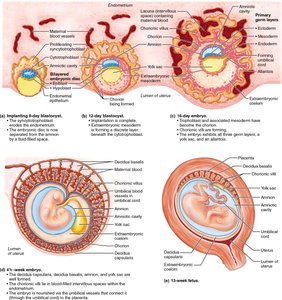
Implantation is the process by which the embryo embeds itself into the uterine wall, initiating the formation of the placenta. This event is critical for establishing a successful pregnancy and occurs approximately six to seven days after ovulation.
Blastocyst Nourishment: Before implantation, the blastocyst floats in the uterine cavity for two to three days, nourished by glycoprotein-rich uterine secretions.
Window of Implantation: The endometrium becomes receptive to implantation due to elevated levels of estrogens and progesterone. Cell adhesion molecules bind the trophoblast to the endometrial epithelium.
Trophoblast Invasion: Trophoblast cells secrete digestive enzymes and growth factors, thickening the endometrium and triggering an inflammatory response. Immune cells such as lymphocytes, natural killer cells, and macrophages invade the area.
Layer Formation: The trophoblast differentiates into two layers:
Cytotrophoblast: The inner cellular layer.
Syncytiotrophoblast: The outer multinucleated layer that invades the endometrium and digests uterine cells.
Blastocyst Embedding: The blastocyst burrows into the endometrium, surrounded by maternal blood from degraded vessels. Endometrial cells proliferate to cover and seal the blastocyst.
Implantation Failure: If the endometrium is not receptive, the blastocyst may fail to implant. Most zygotes do not implant or are spontaneously aborted due to genetic or uterine issues.
Hormonal Regulation of Implantation
Hormones play a crucial role in maintaining the uterine environment and supporting early pregnancy.
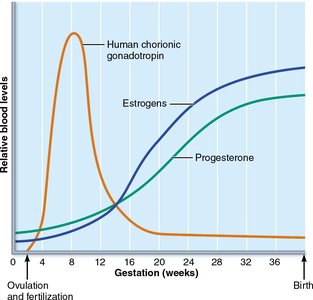
hCG Secretion: The syncytiotrophoblast secretes human chorionic gonadotropin (hCG), which acts like luteinizing hormone (LH) to maintain the corpus luteum and its secretion of progesterone and estrogens.
Corpus Luteum Rescue: hCG prevents menstruation by sustaining the corpus luteum, which would otherwise degenerate and lead to loss of the uterine lining.
Pregnancy Testing: hCG is detectable in blood two days after implantation and is the basis for pregnancy tests.
Placental Hormone Shift: By the end of the second month, the placenta takes over hormone production, and the corpus luteum degenerates.
Placenta Formation (Placentation)
Development of the Placenta
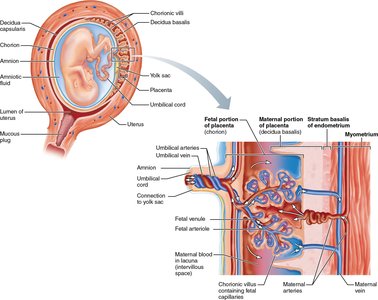
The placenta is a temporary organ essential for fetal nutrition, gas exchange, waste removal, and hormone production. It forms from both embryonic and maternal tissues.
Chorion Formation: Extraembryonic mesoderm from the embryoblast lines the trophoblast, forming the chorion.
Chorionic Villi: The chorion develops fingerlike projections called chorionic villi, which become highly vascularized and are immersed in maternal blood.
Decidua Formation: The endometrium beneath the embryo becomes the decidua basalis, while the part facing the uterine cavity is the decidua capsularis. The chorionic villi and decidua basalis together form the placenta.
Placental Maturation: As the fetus grows, villi in the decidua capsularis degenerate, while those in the decidua basalis proliferate. The placenta is fully functional by the end of the third month.
Maternal-Fetal Exchange: Oxygen and nutrients diffuse from maternal to embryonic blood, while wastes move in the opposite direction. Maternal and fetal blood supplies are separated by embryonic barriers, preventing direct mixing.
Placental Hormones
The placenta produces several hormones essential for pregnancy maintenance and fetal development.
hCG: Maintains the corpus luteum in early pregnancy.
Estrogens and Progesterone: Support the uterine lining, inhibit uterine contractions, and promote mammary gland development.
Other Hormones: The placenta also secretes human placental lactogen and relaxin, which contribute to metabolic changes and preparation for childbirth.
Summary Table: Key Structures and Functions in Implantation and Placentation
Structure | Origin | Main Function |
|---|---|---|
Blastocyst | Embryo (pre-implantation) | Implants into endometrium |
Trophoblast | Outer layer of blastocyst | Invades endometrium, forms placenta |
Cytotrophoblast | Trophoblast (inner layer) | Cellular support for implantation |
Syncytiotrophoblast | Trophoblast (outer layer) | Secretes hCG, invades endometrium |
Chorion | Embryonic tissue | Forms chorionic villi, part of placenta |
Decidua basalis | Maternal endometrium | Maternal portion of placenta |
Placenta | Embryonic and maternal tissues | Nutrient/gas exchange, hormone production |
Additional info: The placenta also acts as an immunological barrier, protecting the fetus from maternal immune attack, and produces hormones that modulate maternal metabolism to support fetal growth.
