 Back
BackChapter 21: Immune System
Study Guide - Smart Notes
 Tailored notes based on your materials, expanded with key definitions, examples, and context.
The Immune System: Overview
Functions of the Immune System
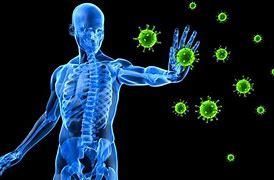
The immune system is the body's defense mechanism against harmful invaders such as bacteria, viruses, fungi, and other disease-causing organisms. It identifies foreign "non-self" cells and mounts a defensive attack to protect the body, while also promoting healing after injury or infection.
Defense against pathogens: Recognizes and eliminates harmful agents.
Surveillance: Detects abnormal cells, including cancer cells.
Healing: Facilitates tissue repair after injury or infection.
How Pathogen Invasion Occurs
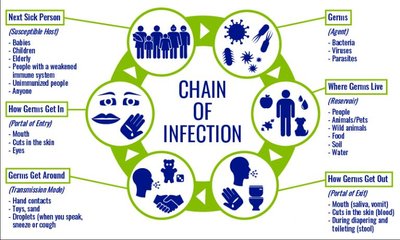
Pathogens invade the body through a series of steps known as the chain of infection:
Agent: Pathogens (bacteria, viruses, fungi, parasites, cancer cells).
Reservoir: Where pathogens live (e.g., humans, animals, soil, water, food).
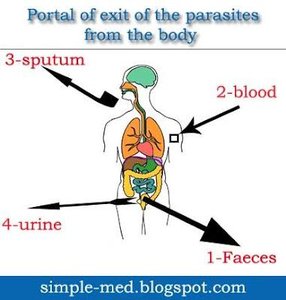
Portal of Exit: How pathogens leave the reservoir (e.g., mouth, blood, urine, feces).
Mode of Transmission: How pathogens travel (e.g., contact, droplets, vectors).
Portal of Entry: How pathogens enter a new host (e.g., cuts, ingestion, inhalation, mucous membranes).
Susceptible Host: Anyone who can be infected, especially those with weakened immune systems.
Types of Pathogens
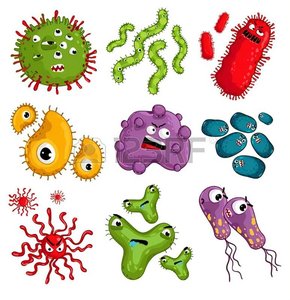
Pathogens are organisms or agents that cause disease or injury. The immune system identifies these as non-self and initiates a defensive response.
Bacteria
Viruses
Fungi
Parasites
Cancer cells
Donor cells (in transplantation)
How Pathogens Spread
Reservoirs and Transmission
Pathogens can live in various reservoirs and are transmitted through different modes:
Reservoirs: Normal flora (skin/gut), food, body fluids, animals, soil, water.
Transmission:
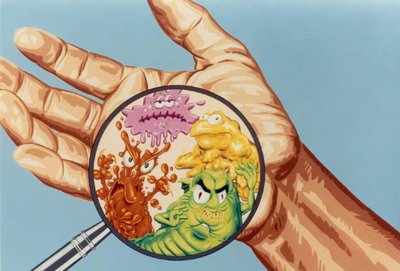
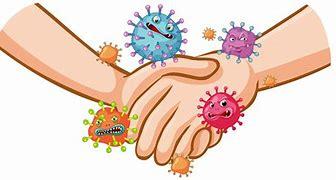
Contact: Direct (person-to-person) or indirect (surface-to-person).
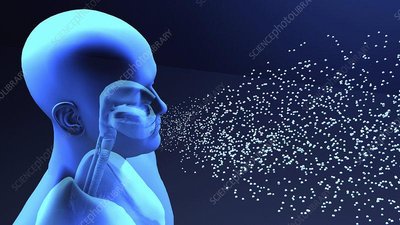
Droplet: Respiratory droplets travel short distances (e.g., sneezing, coughing).
Airborne: Pathogens remain suspended and travel longer distances.
Vector: Carried by insects or animals (e.g., mosquitoes, flies).
Lines of Defense in the Immune System
Three Lines of Defense
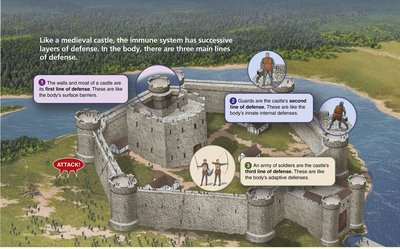
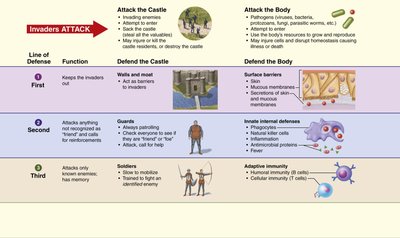
The immune system is organized into three main lines of defense, analogous to the defenses of a medieval castle:
First Line (Surface Barriers): Skin and mucous membranes act as physical and chemical barriers to prevent pathogen entry.
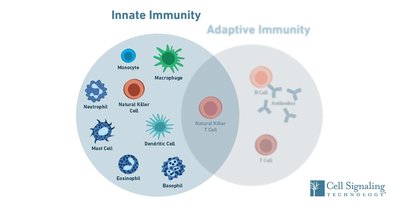
Second Line (Innate Internal Defenses): Includes phagocytes, natural killer cells, inflammation, antimicrobial proteins, and fever.
Third Line (Adaptive Defenses): Specific, acquired immunity involving B and T lymphocytes.
Innate (Nonspecific) Defenses
First Line of Defense: Surface Barriers
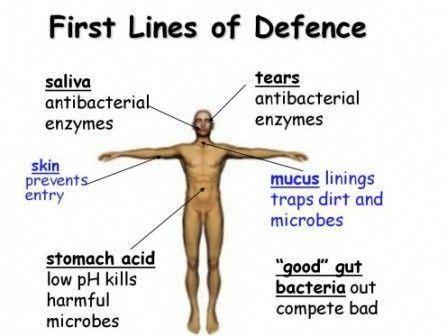
The first line of defense consists of physical and chemical barriers that prevent pathogen entry:
Skin: Forms a mechanical barrier; acidic secretions inhibit bacterial growth.
Mucous membranes: Trap pathogens in respiratory and digestive tracts.
Chemical barriers: Include acid (skin, stomach, vagina), enzymes (saliva, tears), mucin, and defensins.
Mechanical actions: Cilia in the respiratory tract sweep out debris; nasal hairs filter particles.
Second Line of Defense: Internal Innate Defenses
If pathogens breach surface barriers, the second line of defense is activated. This includes:
Phagocytes: Neutrophils and macrophages ingest and destroy invaders.
Natural Killer (NK) Cells: Destroy infected or abnormal cells by inducing apoptosis.
Inflammation: Localized response to injury or infection, characterized by redness, heat, swelling, and pain.
Antimicrobial proteins: Interferons and complement proteins hinder pathogen replication and enhance immune responses.
Fever: Systemic response that raises body temperature to inhibit pathogen growth.
Phagocytosis
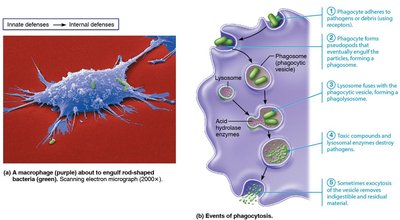
Phagocytes engulf and digest pathogens through a series of steps:
Adherence to pathogen
Engulfment and formation of a phagosome
Fusion with lysosome to form a phagolysosome
Destruction of pathogen by enzymes and toxic compounds
Exocytosis of indigestible material
Opsonization
If phagocytes cannot adhere to or digest a pathogen, the immune system uses opsonins (antibodies or complement proteins) to coat the pathogen, making it easier for phagocytes to bind and ingest it.
Natural Killer (NK) Cells
NK cells are large granular lymphocytes that patrol the blood and lymph, targeting cells lacking "self" markers (MHC). They kill by inducing apoptosis and secrete chemicals that enhance inflammation.
Inflammation
Inflammation is a nonspecific response to tissue injury or infection. Its main signs are redness, heat, swelling, and pain. The process involves:
Release of inflammatory chemicals (e.g., histamine, kinins, prostaglandins)
Vasodilation and increased vascular permeability
Phagocyte mobilization (leukocytosis, margination, diapedesis, chemotaxis)
Benefits include isolating the injury, preventing spread, disposing of debris, and preparing for repair.
Antimicrobial Proteins
Interferons (IFNs): Proteins that interfere with viral replication and activate immune cells.
Complement System: A group of plasma proteins that enhance inflammation, promote phagocytosis, and directly lyse pathogens.
Fever
Fever is an abnormally high body temperature induced by pyrogens (substances released by pathogens or immune cells). It enhances immune function and inhibits pathogen growth.
Adaptive (Specific) Defenses
Third Line of Defense: Adaptive Immunity
The adaptive immune system is slower to respond but highly specific and has memory. It involves:
Humoral Immunity: Mediated by B cells and antibodies; targets extracellular pathogens.
Cellular Immunity: Mediated by T cells; targets infected or abnormal cells.
Humoral Immunity
B cells recognize antigens and differentiate into plasma cells (produce antibodies) and memory cells.
Antibodies neutralize, agglutinate, precipitate antigens, and activate complement.
Cellular Immunity
T cells mature in the thymus and include helper T cells (activate other immune cells) and cytotoxic T cells (destroy infected cells).
Antigen-presenting cells (macrophages, dendritic cells, B cells) display antigens to T cells to initiate the response.
Summary Table: Innate vs. Adaptive Immunity
Feature | Innate Immunity | Adaptive Immunity |
|---|---|---|
Speed | Immediate, fast | Slower (days to weeks) |
Specificity | Nonspecific (general) | Highly specific (antigen-dependent) |
Memory | No memory | Has memory (stronger on re-exposure) |
Main Cells | Phagocytes, NK cells, etc. | B and T lymphocytes |
Key Terms and Concepts
Pathogen: Disease-causing organism or agent.
Antigen: Substance that triggers an immune response.
Antibody: Protein produced by B cells that binds to specific antigens.
Phagocytosis: Process by which cells engulf and digest particles.
Opsonization: Coating of pathogens to enhance phagocytosis.
Inflammation: Localized response to injury or infection.
Fever: Systemic increase in body temperature in response to infection.
