 Back
BackInnate Defenses of the Immune System: First and Second Lines
Study Guide - Smart Notes
 Tailored notes based on your materials, expanded with key definitions, examples, and context.
Immune System Overview
Introduction to the Immune System
The immune system is essential for protecting the body against bacteria and other harmful pathogens. It provides resistance to disease through a combination of innate and adaptive mechanisms. The immune system is not a single organ system, but a functional system composed of various cells, tissues, and molecules that work together to defend the body.
Innate (nonspecific) defense system: Provides immediate, general protection; includes first and second lines of defense.
Adaptive (specific) defense system: Targets particular foreign substances; takes longer to respond.
Innate Defenses
First Line of Defense: Surface Barriers
The first line of defense consists of surface barriers such as skin and mucous membranes, along with their secretions. These barriers physically block most microorganisms from entering the body and produce chemicals that inhibit or destroy pathogens.
Skin: Acts as a physical barrier; keratin is resistant to weak acids, bases, bacterial enzymes, and toxins.
Mucous membranes: Provide mechanical barriers; mucin traps microorganisms.
Acid mantle: Acidity of skin and mucous secretions inhibits microbial growth.
Enzymes: Lysozyme in saliva, respiratory mucus, and lacrimal fluid kills microorganisms; stomach enzymes destroy pathogens.
Defensins: Antimicrobial peptides that inhibit microbial growth.
Lipids in sebum and dermicidin in sweat: Toxic to some bacteria.
Respiratory system: Mucus-coated hairs in nose trap particles; cilia sweep mucus toward mouth.
When surface barriers are breached (e.g., by cuts), the second line of defense is activated to protect deeper tissues.
Second Line of Defense: Cells and Chemicals
If pathogens penetrate surface barriers, the innate system employs cellular and chemical defenses. These include phagocytes, natural killer cells, inflammation, antimicrobial proteins, and fever.
Phagocytes: White blood cells that ingest and digest foreign invaders.
Natural killer (NK) cells: Nonphagocytic lymphocytes that kill cancer and virus-infected cells by inducing apoptosis.
Inflammatory response: Triggered by injury; involves macrophages, mast cells, white blood cells, and inflammatory chemicals.
Antimicrobial proteins: Interferons and complement proteins attack microorganisms or hinder their reproduction.
Fever: Systemic response to infection; increases metabolic rate and sequesters iron and zinc.
Phagocytosis
Phagocytosis is the process by which phagocytes engulf and destroy pathogens. The steps include:
Recognition and adherence to pathogen's carbohydrate signature.
Engulfment of the pathogen into a vesicle called a phagosome.
Fusion of phagosome with lysosome to form a phagolysosome.
Acidification and digestion of pathogen by lysosomal enzymes.
Release of indigestible waste from the phagocyte.
Some pathogens evade phagocytosis by hiding their surface carbohydrates. The immune system uses opsins (antibodies/proteins) to coat pathogens, making them easier for phagocytes to grab.
Natural Killer (NK) Cells
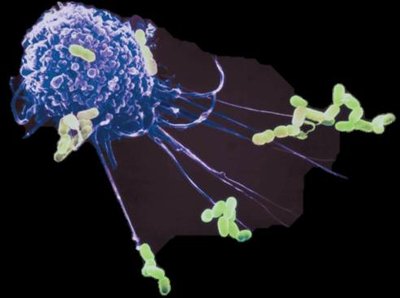
NK cells patrol blood and lymph, targeting cells that lack "self" cell-surface receptors. They kill by inducing apoptosis and secrete chemicals that enhance inflammation.
Inflammation
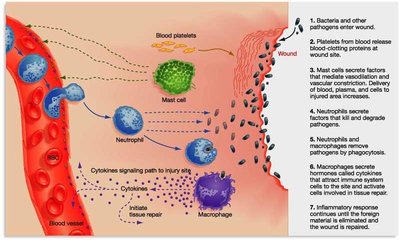
Inflammation is a tissue response to injury, triggered by trauma, heat, chemicals, or infection. It prevents the spread of damaging agents, disposes of debris and pathogens, alerts the adaptive immune system, and sets the stage for repair.
Cardinal signs of acute inflammation: Redness, heat, swelling, pain (sometimes impairment of function).
Stages of Inflammation
Inflammatory chemical release: Chemicals (e.g., histamine, cytokines) released by injured tissues and immune cells.
Vasodilation and increased vascular permeability: Causes hyperemia (redness, heat) and exudate formation (swelling, pain).
Phagocyte mobilization: Neutrophils arrive first, followed by macrophages; leukocytosis, margination, diapedesis, and chemotaxis guide phagocytes to the site.
Antimicrobial Proteins
Antimicrobial proteins enhance innate defense by attacking microorganisms or hindering their reproduction.
Interferons: Proteins secreted by virus-infected cells that warn neighboring cells and stimulate production of antiviral proteins.
Complement proteins: Circulate in inactive form; activation enhances inflammation, promotes phagocytosis, and causes cell lysis via the membrane attack complex (MAC).
Fever
Fever is an abnormally high body temperature in response to infection. Pyrogens released by leukocytes and macrophages act on the hypothalamus to raise body temperature.
Benefits of moderate fever: Liver and spleen sequester iron and zinc, increasing metabolic rate and repair.
Summary Table: Innate Cellular and Chemical Defenses
Defense | Function |
|---|---|
Phagocytes | Ingest and digest pathogens |
Natural Killer Cells | Kill virus-infected and cancer cells |
Inflammation | Prevents spread, disposes debris, alerts adaptive system, repair |
Antimicrobial Proteins | Attack microbes, block reproduction |
Fever | Raises body temperature, increases repair rate |
Example: When a cut breaches the skin, bacteria may enter. The inflammatory response is triggered, phagocytes mobilize to the site, and antimicrobial proteins are released to contain and destroy the invaders.
Additional info: The innate and adaptive defenses are intertwined, with innate responses alerting the adaptive system to foreign molecules.
