 Back
BackCompleted Study Guide Chap 1,3,4,5
Study Guide - Smart Notes
 Tailored notes based on your materials, expanded with key definitions, examples, and context.
Chapter 1: Introduction to Anatomy & Physiology
Overview of Anatomy and Physiology
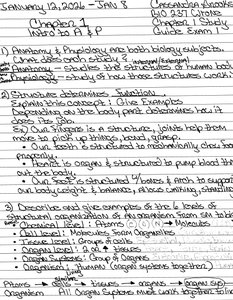
Anatomy and physiology are foundational biological sciences that study the structure and function of living organisms. Anatomy focuses on the structure of body parts, while physiology examines how those structures function.
Anatomy: Study of body structure (e.g., bones, organs).
Physiology: Study of how body structures work (e.g., how blood flows, how muscles contract).
Example: Anatomy studies the heart's chambers; physiology studies how the heart pumps blood.
Structural Organization of the Human Body
The human body is organized into hierarchical levels, each with increasing complexity.
Cellular Level: Cells are the basic units of life.
Tissue Level: Groups of similar cells working together (e.g., muscle tissue).
Organ Level: Structures composed of multiple tissue types (e.g., heart, lungs).
Organ System Level: Groups of organs working together (e.g., digestive system).
Organism Level: All organ systems functioning together to sustain life.
Difference Between Tissue and Organ
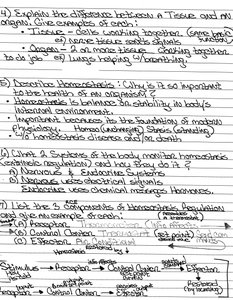
Tissues are groups of similar cells performing a specific function, while organs are structures composed of multiple tissue types working together for a common purpose.
Tissue: Example: Muscle tissue (cells working together to contract).
Organ: Example: Lungs (multiple tissues working together for gas exchange).
Homeostasis
Homeostasis is the process by which the body maintains a stable internal environment despite external changes. It is essential for survival and proper functioning.
Importance: Maintains stability of body functions (e.g., temperature, pH).
Mechanisms: Homeostatic systems use feedback loops to regulate variables.
Example: Regulation of blood glucose levels.
Negative Feedback Mechanisms
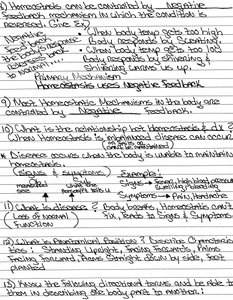
Most homeostatic mechanisms operate via negative feedback, where a change in a variable triggers a response that counteracts the initial change.
Example: Body temperature rises, sweating cools the body.
Primary Mechanism: Negative feedback restores balance.
Relationship Between Homeostasis, Disease, and Diagnosis
Disruption of homeostasis can lead to disease. Diagnosis involves identifying symptoms and signs to determine the underlying cause.
Symptoms: Subjective experiences (e.g., pain).
Signs: Objective measurements (e.g., fever).
Diagnosis: Process of identifying disease based on symptoms and signs.
Anatomical Terminology and Body Directions
Standard anatomical terms describe locations and directions in the body.
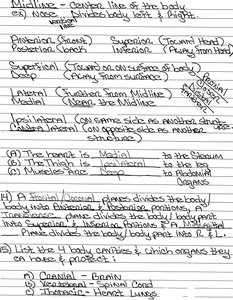
Midline: Center line of the body.
Anterior (Ventral): Toward the front.
Posterior (Dorsal): Toward the back.
Superior: Toward the head.
Inferior: Toward the feet.
Medial: Toward the midline.
Lateral: Away from the midline.
Ipsilateral: Same side as another structure.
Contralateral: Opposite side as another structure.
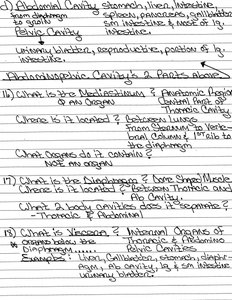
Body Cavities and Organs
The body is divided into cavities that house specific organs.
Cranial Cavity: Brain
Vertebral Cavity: Spinal cord
Thoracic Cavity: Heart, lungs
Abdominal Cavity: Stomach, liver, intestines
Pelvic Cavity: Urinary bladder, reproductive organs
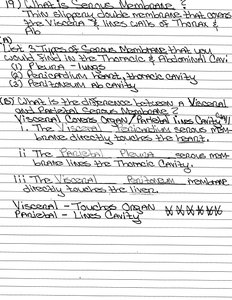
Serous Membranes
Serous membranes are thin, double-layered membranes that cover organs and line cavities.
Visceral Layer: Covers the organ.
Parietal Layer: Lines the cavity.
Example: Pericardium (heart), pleura (lungs), peritoneum (abdominal organs).
Chapter 3: Cellular Level of Organization
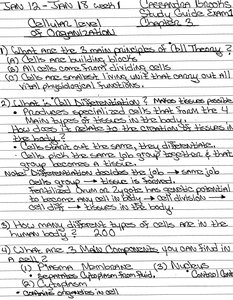
Cell Theory and Principles
Cell theory is a fundamental concept in biology, stating that all living things are composed of cells, cells are the basic units of life, and all cells arise from pre-existing cells.
Cells: Building blocks of life.
Cellular Functions: Carry out all physiological activities.
Cell Differentiation
Cell differentiation is the process by which cells become specialized to perform specific functions.
Specialized Cells: Examples include muscle cells, nerve cells.
Stem Cells: Undifferentiated cells with potential to become specialized.
Cell Structure and Components
Cells contain various structures, each with specific functions.
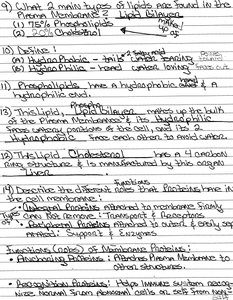
Plasma Membrane: Boundary of the cell, regulates entry and exit.
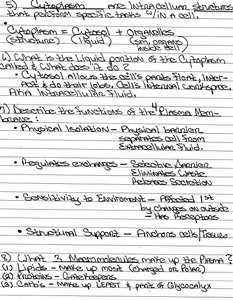
Cytoplasm: Fluid and organelles inside the cell.
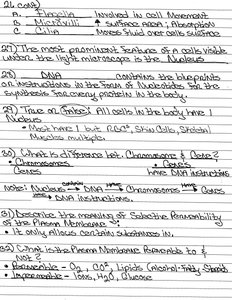
Nucleus: Contains genetic material (DNA).
Plasma Membrane Structure and Function
The plasma membrane is composed of a phospholipid bilayer with embedded proteins, carbohydrates, and cholesterol.
Phospholipids: Form the basic structure; hydrophilic heads and hydrophobic tails.
Cholesterol: Provides stability.
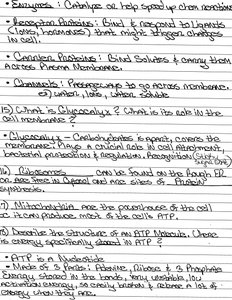
Proteins: Serve as channels, receptors, enzymes.
Carbohydrates: Involved in cell recognition.
Membrane Transport Processes
Cells use various processes to move substances across the plasma membrane.
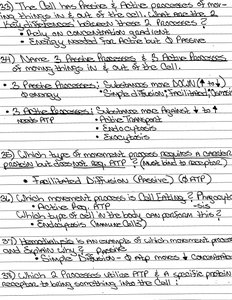
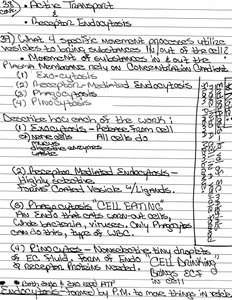
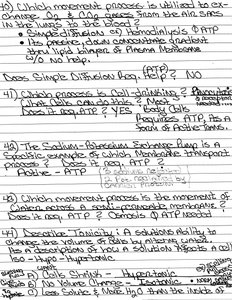
Passive Transport: Does not require energy (e.g., diffusion, osmosis).
Active Transport: Requires energy (ATP) (e.g., sodium-potassium pump).
Endocytosis: Cell takes in substances.
Exocytosis: Cell expels substances.
Cell Organelles and Their Functions
Organelles are specialized structures within cells that perform distinct functions.
Nucleus: Stores genetic information.
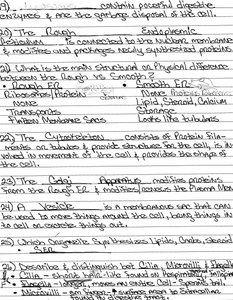
Rough Endoplasmic Reticulum (ER): Synthesizes proteins.
Smooth ER: Synthesizes lipids, detoxifies chemicals.
Golgi Apparatus: Modifies, sorts, and packages proteins.
Lysosomes: Contain digestive enzymes.
Mitochondria: Produce ATP (energy).
Cell Division and Cancer
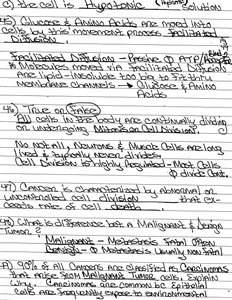
Cell division is essential for growth and repair. Abnormal cell division can lead to cancer.
Normal Cell Division: Controlled by regulatory mechanisms.
Cancer: Uncontrolled cell division; can be benign or malignant.
ATP Structure and Function
ATP (adenosine triphosphate) is the primary energy carrier in cells.
Structure: Adenine, ribose, three phosphate groups.
Function: Provides energy for cellular processes.
Equation:
Summary Table: Levels of Structural Organization
The following table summarizes the levels of structural organization in the human body:
Level | Description | Example |
|---|---|---|
Cellular | Basic unit of life | Muscle cell |
Tissue | Group of similar cells | Muscle tissue |
Organ | Structure with multiple tissue types | Heart |
Organ System | Group of organs working together | Digestive system |
Organism | All organ systems functioning together | Human body |
Relevant Images
The following images are directly relevant to the topics discussed:
Additional info: Academic context and expanded explanations were added to ensure completeness and clarity for exam preparation.
