 Back
Introduction to Anatomy & Physiology: Body Organization, Anatomical Terms, and Organ Systems
Study Guide - Smart Notes
 Tailored notes based on your materials, expanded with key definitions, examples, and context.
Introduction to Anatomy & Physiology
Overview of Anatomy and Physiology
Anatomy is the study of the structure of body parts and their relationships to one another, while physiology is the study of the function of the body’s structural machinery. Together, these disciplines provide a comprehensive understanding of the human body’s organization and function.
Body Organization and Organ Systems
Levels of Structural Organization
Chemical Level: Atoms combine to form molecules.
Cellular Level: Cells are made up of molecules.
Tissue Level: Tissues consist of similar types of cells.
Organ Level: Organs are made up of different types of tissues.
Organ System Level: Organ systems consist of different organs that work closely together.
Organismal Level: The human organism is made up of many organ systems.
Major Organ Systems: Identification, Organs, and Functions
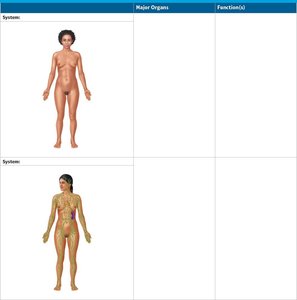
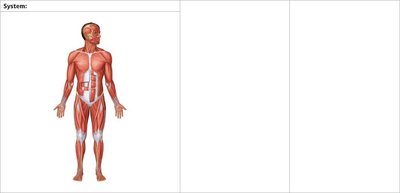
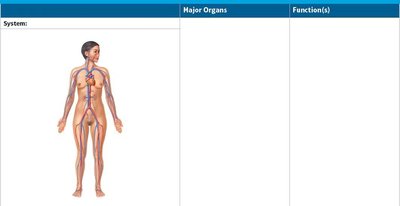
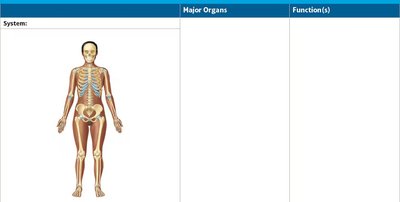
The human body is organized into several organ systems, each with specific functions and major organs. Below are some of the primary systems:
System | Major Organs | Function(s) |
|---|---|---|
Integumentary | Skin, hair, nails, sweat glands | Protection, temperature regulation, sensation |
Skeletal | Bones, cartilages, ligaments | Support, protection, movement, blood cell production |
Muscular | Skeletal muscles, tendons | Movement, posture, heat production |
Nervous | Brain, spinal cord, nerves | Control, coordination, response to stimuli |
Cardiovascular | Heart, blood vessels | Transport of nutrients, gases, wastes; immune response |
Lymphatic | Lymph nodes, lymphatic vessels, spleen, thymus | Immune defense, fluid balance |
Respiratory | Nasal cavities, pharynx, larynx, trachea, bronchi, lungs | Gas exchange (O2/CO2) |
Digestive | Mouth, esophagus, stomach, intestines, liver, pancreas | Breakdown and absorption of nutrients, waste elimination |
Urinary | Kidneys, ureters, bladder, urethra | Elimination of wastes, water and electrolyte balance |
Reproductive | Ovaries, testes, uterus, penis, etc. | Production of offspring |
Endocrine | Pituitary, thyroid, adrenal glands, pancreas, etc. | Hormone production, regulation of metabolism and growth |
Anatomical Position and Directional Terms
Anatomical Position
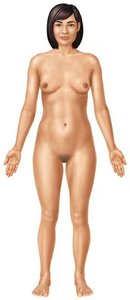
The anatomical position is a standard reference position used in anatomy to describe the location and relation of body parts. The body stands upright, facing forward, with feet parallel and arms at the sides with palms facing forward.
Directional Terms
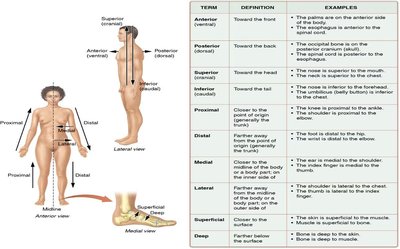
Directional terms are used to describe the locations of structures relative to other structures or locations in the body.
Superior (cranial): Toward the head or upper part of a structure
Inferior (caudal): Away from the head or toward the lower part of a structure
Anterior (ventral): Toward the front of the body
Posterior (dorsal): Toward the back of the body
Medial: Toward the midline of the body
Lateral: Away from the midline of the body
Proximal: Closer to the origin of the body part or point of attachment
Distal: Farther from the origin of a body part or point of attachment
Superficial: Toward or at the body surface
Deep: Away from the body surface; more internal
Regional Terms
Body Regions
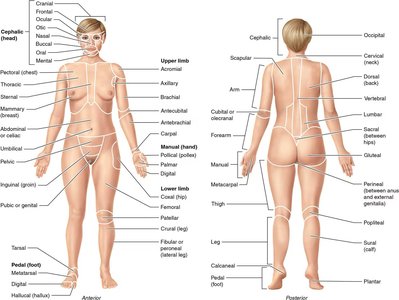
Regional terms specify distinct areas within major body divisions. These terms are used to pinpoint locations on the body more precisely.
Axial region: Head, neck, and trunk
Appendicular region: Limbs (arms and legs)
Body Planes and Sections
Major Body Planes
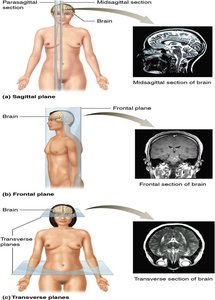
Body planes are imaginary lines used to divide the body into sections for anatomical study:
Frontal (coronal) plane: Divides the body into anterior and posterior parts
Sagittal plane: Divides the body into right and left parts (midsagittal is equal halves, parasagittal is unequal)
Transverse (horizontal) plane: Divides the body into superior and inferior parts
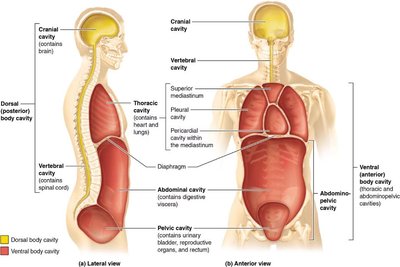
Body Cavities
Major Body Cavities
The body contains several cavities that house and protect internal organs:
Dorsal cavity: Contains the cranial cavity (brain) and vertebral cavity (spinal cord)
Ventral cavity: Contains the thoracic cavity (heart and lungs) and abdominopelvic cavity (digestive, urinary, and reproductive organs)
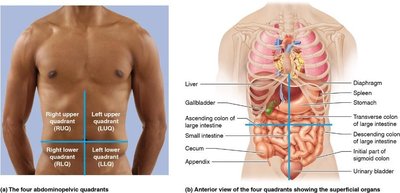
Abdominopelvic Quadrants and Regions
Quadrants
The abdominopelvic cavity is divided into four quadrants for clinical reference:
Right Upper Quadrant (RUQ)
Left Upper Quadrant (LUQ)
Right Lower Quadrant (RLQ)
Left Lower Quadrant (LLQ)
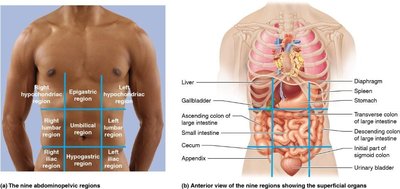
Regions
It is also divided into nine regions for more precise anatomical study:
Right/Left Hypochondriac
Epigastric
Right/Left Lumbar
Umbilical
Right/Left Iliac (Inguinal)
Hypogastric (Pubic)
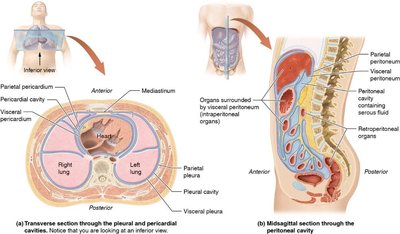
Serous Membranes
Types and Locations
Serous membranes are thin, double-layered membranes that cover organs within the ventral body cavity and reduce friction:
Pleura: Surrounds the lungs
Pericardium: Surrounds the heart
Peritoneum: Surrounds abdominal organs
Summary Table: Directional and Regional Terms
Term | Definition | Example |
|---|---|---|
Anterior (ventral) | Toward the front of the body | The palms are on the anterior side of the body |
Posterior (dorsal) | Toward the back of the body | The occipital bone is on the posterior skull |
Superior (cranial) | Toward the head | The nose is superior to the mouth |
Inferior (caudal) | Toward the tail | The navel is inferior to the chin |
Proximal | Closer to the point of attachment | The shoulder is proximal to the wrist |
Distal | Farther from the point of attachment | The foot is distal to the hip |
Medial | Closer to the midline | The heart is medial to the lungs |
Lateral | Farther from the midline | The shoulder is lateral to the chest |
Superficial | Closer to the surface | The skin is superficial to the muscle |
Deep | Farther below the surface | Bone is deep to the muscle |
Additional info: This guide covers foundational concepts from Ch. 1 (Introduction to Anatomy & Physiology), Ch. 4 (Tissue Level of Organization), and Ch. 5 (The Integumentary System) as outlined in the ANP college course syllabus.
