 Back
BackIntroduction to Anatomy and Physiology: Core Concepts, Structural Organization, and Homeostasis
Study Guide - Smart Notes
 Tailored notes based on your materials, expanded with key definitions, examples, and context.
Introduction to Anatomy and Physiology
Definition and Scope
Anatomy and physiology are foundational sciences for understanding the structure and function of the human body. Anatomy is the study of the body's structure, while physiology focuses on the functions and processes that occur within the body. The relationship between form and function is central to these disciplines.


Science: Uses observation and measurement to explain natural phenomena.
Human anatomy: Examines the structure of the human body.
Human physiology: Investigates how the body functions.
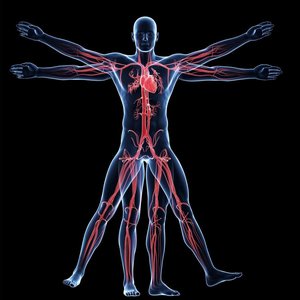
Branches of Anatomy and Physiology
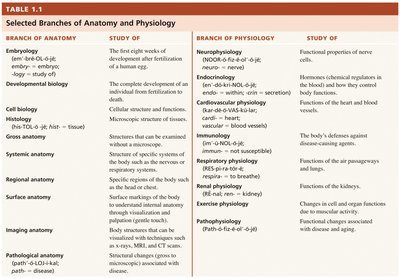
There are several specialized branches within anatomy and physiology, each focusing on different aspects of structure and function.
Branch of Anatomy | Study Of | Branch of Physiology | Study Of |
|---|---|---|---|
Embryology | First eight weeks of development after fertilization | Neurophysiology | Functional properties of nerve cells |
Cell biology | Structure and function of cells | Endocrinology | Hormones and chemical regulation |
Gross anatomy | Structures visible without a microscope | Cardiovascular physiology | Functions of the heart and blood vessels |
Imaging anatomy | Body structures visualized with imaging techniques | Immunology | Body's defense against disease |
Pathology | Structural changes associated with disease | Pathophysiology | Functional changes associated with disease and aging |
Levels of Structural Organization
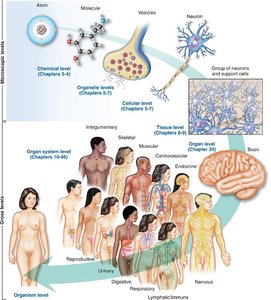
Hierarchy of Organization
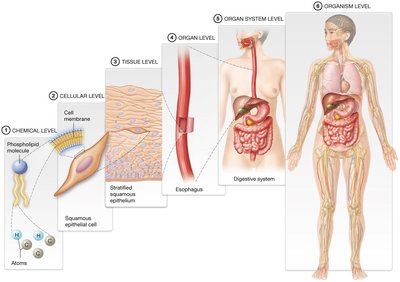
The human body is organized into six structural levels, each building upon the previous:
Chemical level: Atoms and molecules form the basis of life.
Cellular level: Cells are the basic units of life.
Tissue level: Groups of similar cells perform specific functions.
Organ level: Organs are made of different tissues working together.
Organ system level: Related organs coordinate to perform major functions.
Organism level: The complete living individual.
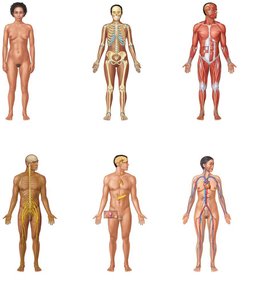
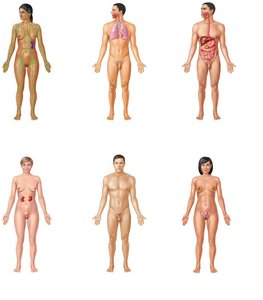
Body Systems Overview
Major Organ Systems and Their Functions
The human body consists of several organ systems, each with distinct functions:
Integumentary System: Protects the body, produces vitamin D, retains water, regulates temperature.
Skeletal System: Supports the body, protects organs, produces blood cells, stores calcium.
Muscular System: Produces movement, controls body openings, generates heat.
Nervous System: Regulates functions, provides sensation, movement, and higher mental functions.
Endocrine System: Regulates functions via hormones.
Cardiovascular System: Pumps blood, delivers oxygen, removes wastes, transports substances.
Lymphatic System: Returns excess fluid, provides immunity.
Respiratory System: Delivers oxygen, removes carbon dioxide, maintains acid-base balance.
Digestive System: Digests food, absorbs nutrients, removes waste, regulates fluid balance.
Urinary System: Removes metabolic wastes, regulates fluid and electrolyte balance.
Reproductive System: Produces and transports gametes, supports fetal development, secretes hormones.
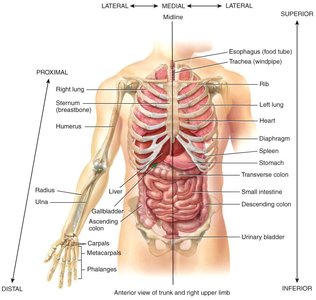
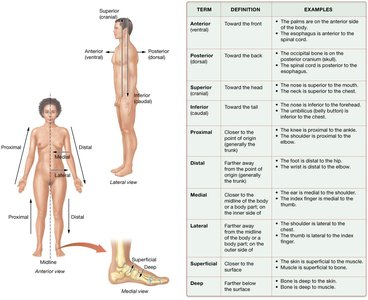
Anatomical Position and Directional Terms
Standardized Reference for Anatomy
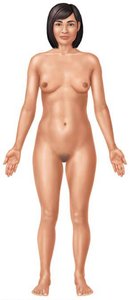
The anatomical position is a standardized method for observing or imaging the body, ensuring precise and consistent reference:
Person stands erect, facing the observer.
Arms at sides, palms forward, feet flat.
Directional terms are used to locate one part of the body relative to another. Examples include anterior/posterior, superior/inferior, proximal/distal, medial/lateral, superficial/deep.
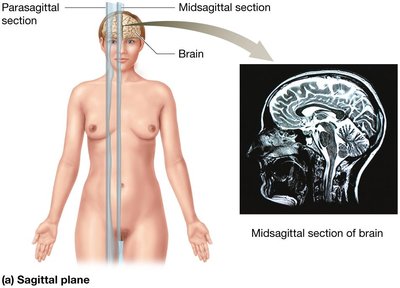
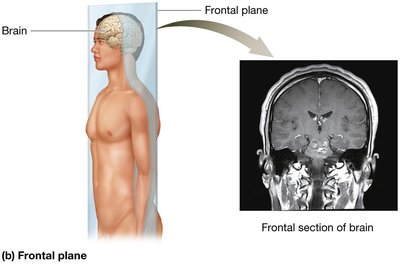
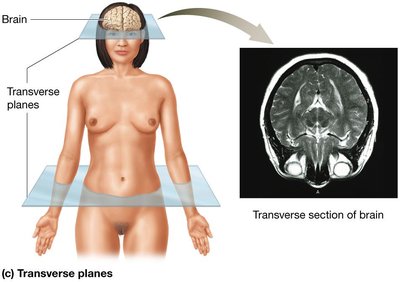
Planes of Section
Body Planes for Anatomical Study
Body planes are imaginary lines used to divide the body for anatomical study:
Sagittal plane: Divides body into left and right sections.
Frontal (coronal) plane: Divides body into anterior and posterior sections.
Transverse (horizontal) plane: Divides body into superior and inferior sections.
Oblique plane: Taken at an angle, useful for complex structures.
Body Cavities
Major Cavities and Their Subdivisions
The body contains cavities that house and protect internal organs:
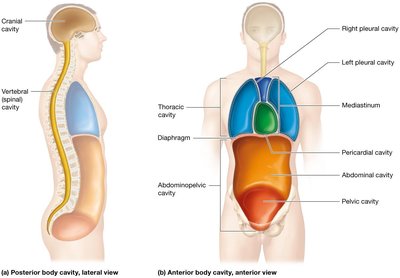
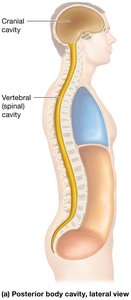
Posterior (dorsal) cavity: Includes cranial cavity (brain) and vertebral cavity (spinal cord).
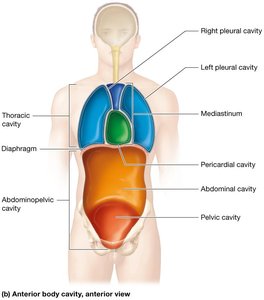
Anterior (ventral) cavity: Divided by the diaphragm into thoracic cavity (heart, lungs) and abdominopelvic cavity (digestive, urinary, reproductive organs).
Abdominopelvic Quadrants and Regions
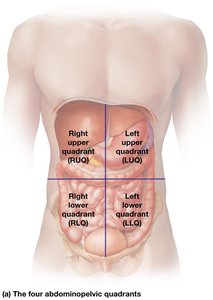
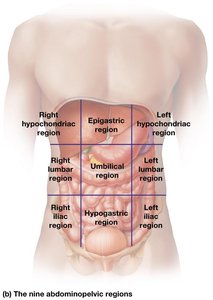
The abdominopelvic cavity is further divided for clinical reference:
Four quadrants: Right upper, left upper, right lower, left lower.
Nine regions: Right/left hypochondriac, epigastric, right/left lumbar, umbilical, right/left iliac, hypogastric.
Characteristics of Living Organisms
Properties Shared by Living Things
All living organisms share several distinct properties:
Cellular composition: Basic unit of life is the cell.
Metabolism: Chemical reactions that sustain life.
Growth: Increase in size and complexity.
Excretion: Removal of waste products.
Responsiveness: Ability to sense and react to stimuli.
Movement: Locomotion or movement of substances within the body.
Reproduction: Production of new cells or organisms.
Core Principles in Anatomy and Physiology
Homeostasis
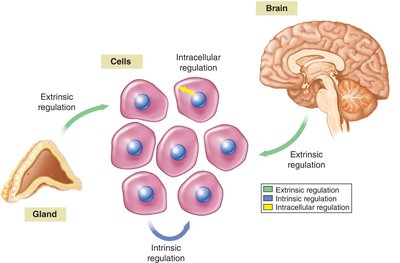
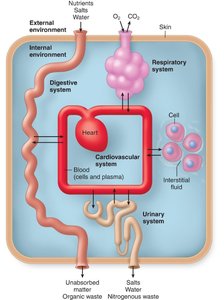
Homeostasis is the process by which the body maintains a stable internal environment. Physiological processes operate to keep variables such as temperature, pH, and fluid balance within a normal range. Disturbances in homeostasis can lead to disease or death.
Autoregulation (intrinsic): Automatic response in a cell, tissue, or organ to environmental change.
Extrinsic regulation: Responses controlled by nervous and endocrine systems.
Negative and Positive Feedback
Feedback mechanisms are essential for homeostatic regulation:
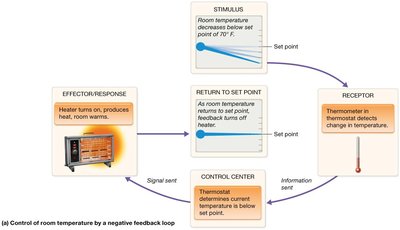
Negative feedback: The response negates the stimulus, restoring homeostasis. Example: temperature regulation.
Positive feedback: The response amplifies the stimulus, accelerating processes. Example: blood clotting, childbirth.
Homeostatic Control Systems
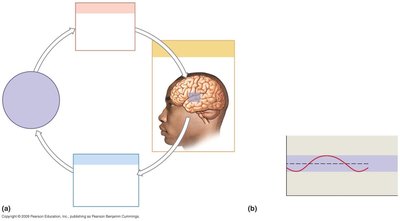
Homeostatic control systems consist of six components:
Variable: The condition being regulated.
Receptor: Detects changes in the variable.
Control center: Processes information and sends instructions.
Set point: The normal range for the variable.
Effector: Structure that carries out instructions.
Response: Action taken to restore balance.
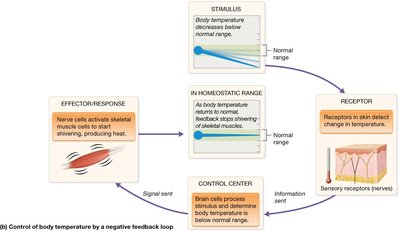
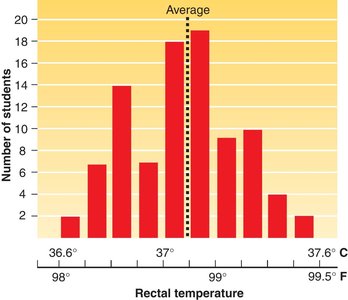
Example: Thermoregulation
Thermoregulation is a classic example of homeostatic control:
Variable: Body temperature
Receptor: Thermoreceptors in skin and hypothalamus
Control center: Thermoregulatory center in hypothalamus
Set point: 37°C (98.6°F)
Effectors: Blood vessels, sweat glands
Response: Vasodilation, increased sweating
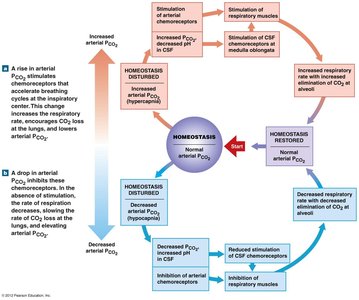
Example: Regulation of Blood CO2
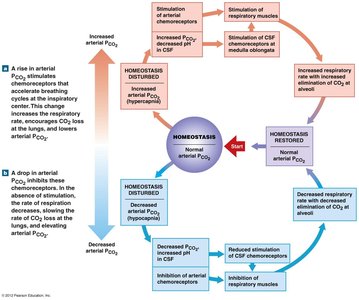
Blood CO2 levels are regulated by chemoreceptors and the respiratory center in the medulla oblongata. When CO2 increases, respiratory rate increases to exhale excess CO2.
Variable: Blood CO2
Receptor: Chemoreceptors
Control center: Respiratory control center in medulla
Set point: 35-45 mmHg
Effector: Respiratory muscles
Response: Increased respiratory rate
Systems Integration
Coordination of Organ Systems
All physiological systems work together to maintain homeostasis. Integration ensures equilibrium, and failure to restore balance results in disease or death.
Summary Table: Homeostatic Control System Components
Component | Definition | Example (Thermoregulation) |
|---|---|---|
Variable | Condition being regulated | Body temperature |
Receptor | Detects change | Thermoreceptors |
Control Center | Processes information | Hypothalamus |
Set Point | Normal range | 37°C (98.6°F) |
Effector | Acts to restore balance | Blood vessels, sweat glands |
Response | Action taken | Vasodilation, increased sweating |
Key Equations
Homeostatic Feedback Loop (Generalized)
The feedback loop can be represented as:
Additional info:
Study skills and learning modalities are important for mastering anatomy and physiology. Visual, auditory, tactile, and kinesthetic methods can enhance retention and understanding.
Clinical techniques such as palpation, auscultation, and percussion are used to assess body structure and function.
