Back
BackIntroduction to Anatomy and Physiology: Core Concepts and Systems
Study Guide - Smart Notes
 Tailored notes based on your materials, expanded with key definitions, examples, and context.
Introduction to Anatomy and Physiology
Definition and Scope
Anatomy is the scientific discipline that investigates the structure of the body, focusing on concrete and tangible aspects. Physiology is the scientific study of the processes or functions of living things, examining how anatomical structures operate to sustain life.
Anatomy: Structure, form, and organization of body parts.
Physiology: Functions and mechanisms in a living system.
Characteristics of Life
Essential Properties of Living Organisms
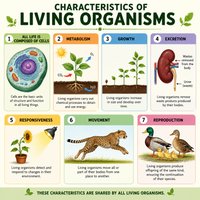
All living organisms share several fundamental characteristics that distinguish them from non-living matter.
Cellular Composition: All living things are composed of one or more cells.
Metabolism: The sum of all chemical reactions in the body, including catabolism (breaking down molecules) and anabolism (building molecules).
Growth: Increase in size and/or number of cells.
Excretion: Removal of waste products generated by metabolic processes.
Responsiveness: Ability to sense and react to changes in the environment.
Movement: Motion of the whole body, individual organs, cells, or organelles.
Reproduction: Production of new cells or organisms.
Structural Organization of the Human Body
Levels of Organization
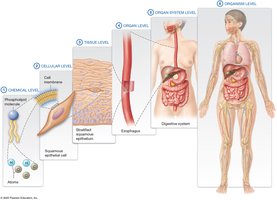
The human body is organized into a hierarchy of structural levels, each building upon the previous one.
Chemical Level: Atoms and molecules essential for life.
Cellular Level: Cells, the basic units of life.
Tissue Level: Groups of similar cells performing a common function.
Organ Level: Structures composed of two or more tissue types working together.
Organ System Level: Groups of organs that perform closely related functions.
Organism Level: The complete living being.
Organ Systems of the Human Body
Overview of Major Organ Systems
The human body consists of eleven major organ systems, each with specific functions essential for survival.
Integumentary System: Protects the body, produces vitamin D, retains water, regulates temperature.
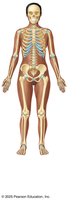
Skeletal System: Supports the body, protects organs, enables movement, produces blood cells, stores minerals.
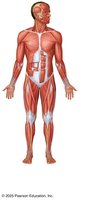
Muscular System: Produces movement, controls body openings, generates heat.
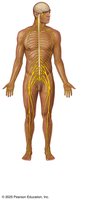
Nervous System: Regulates body functions, enables sensation, movement, and higher mental functions.
Endocrine System: Secretes hormones to regulate body functions and coordinate activities of other systems.
Cardiovascular System: Transports blood, nutrients, gases, and wastes; maintains blood pressure.
Lymphatic/Immune System: Returns tissue fluid to blood, provides immunity.
Respiratory System: Delivers oxygen, removes carbon dioxide, maintains acid-base balance.
Digestive System: Digests food, absorbs nutrients, removes waste, maintains fluid and electrolyte balance.
Urinary System: Removes metabolic wastes, regulates fluid and electrolyte balance, stimulates blood cell production.
Reproductive System: Produces gametes, enables fertilization, supports fetal development (female), secretes sex hormones.
Examples:
Integumentary: Skin, hair, nails
Skeletal: Bones, joints
Muscular: Skeletal muscles
Nervous: Brain, spinal cord, nerves
Endocrine: Glands such as pituitary, thyroid, adrenal
Cardiovascular: Heart, blood vessels
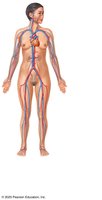
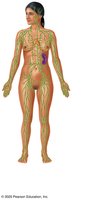
Lymphatic: Lymph nodes, spleen, thymus
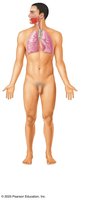
Respiratory: Lungs, trachea
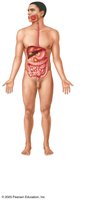
Digestive: Stomach, intestines, liver
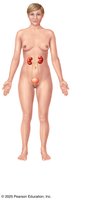
Urinary: Kidneys, bladder
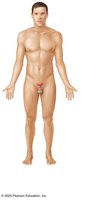
Reproductive (Male): Testes, penis
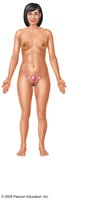
Reproductive (Female): Ovaries, uterus
Subdisciplines of Anatomy
Major Branches
Gross (Macroscopic) Anatomy: Study of structures visible to the naked eye.
Regional Anatomy: Focuses on specific regions of the body.
Systemic Anatomy: Studies body systems individually.
Surface Anatomy: Examines external features as they relate to deeper structures.
Microscopic Anatomy: Study of structures too small to be seen without a microscope.
Cytology: Study of cells.
Histology: Study of tissues.
Developmental Anatomy: Study of anatomical changes throughout life.
Embryology: Study of development before birth.
Topics of Physiology
Specialized Areas
Cell Physiology: Processes within and between cells.
Neurophysiology: Functioning of the nervous system.
Cardiovascular Physiology: Functioning of the heart and blood vessels.
Core Principles of Anatomy and Physiology
Homeostasis
Homeostasis is the ability of the body to maintain relatively stable internal conditions despite changes in the external environment. It is a dynamic process, regulated by variables that are kept within a normal range.
Regulated Variable: The aspect being controlled (e.g., temperature, pH).
Control Mechanisms: Feedback loops that adjust physiological processes.
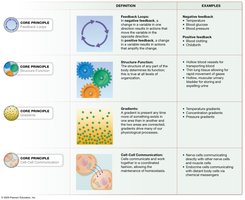
Feedback Loops
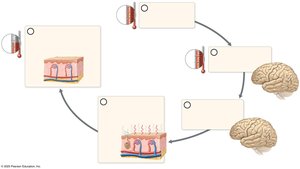
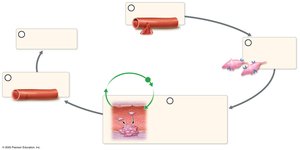
Feedback loops are essential for maintaining homeostasis. They involve a stimulus, receptor, control center, effector, and a response.
Negative Feedback: Reduces or opposes the initial stimulus (e.g., body temperature regulation).
Positive Feedback: Amplifies the initial stimulus (e.g., blood clotting).

Principle of Complementarity
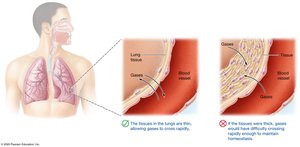
Structure and function are closely related at all levels of organization. The form of a structure enables its function, and function reflects structure.
Example: Thin walls of lung alveoli facilitate gas exchange.
Gradients in Physiology
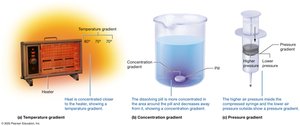
Gradients—differences in concentration, pressure, or temperature—drive many physiological processes, such as diffusion and osmosis.
Types: Temperature, concentration, and pressure gradients.
Cell-Cell Communication
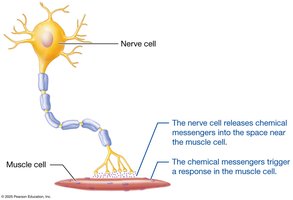
Cells communicate to coordinate body functions through electrical and chemical signals. This communication can be direct (cell-to-cell contact) or indirect (via chemical messengers).
Electrical Communication: Action potentials in neurons.
Chemical Communication: Hormones and neurotransmitters.