 Back
BackIntroduction to Anatomy and Physiology: Foundational Concepts and Organization
Study Guide - Smart Notes
 Tailored notes based on your materials, expanded with key definitions, examples, and context.
Introduction to Anatomy and Physiology
Overview of Anatomy and Physiology
Anatomy and physiology are foundational sciences in understanding the structure and function of the human body. Anatomy focuses on the form and organization of body parts, while physiology explores how these parts function and interact to sustain life.
Anatomy: The study of body structure, including the relationships among body parts.
Physiology: The study of how the body and its parts work or function.
Both disciplines are closely related, as structure often determines function.
Characteristics of Living Organisms
Defining Properties of Life
All living organisms share several key characteristics that distinguish them from non-living matter.
Cellular Composition: All living things are composed of cells, the basic units of life.
Metabolism: The sum of all chemical reactions in the body, including anabolic (building up) and catabolic (breaking down) processes.
Growth: Increase in size and/or number of cells.
Excretion: Removal of waste products generated by metabolic processes.
Responsiveness (Irritability): Ability to sense and react to environmental changes.
Movement: Includes movement of the organism, cells, or substances within the body.
Reproduction: Production of new cells or organisms, essential for growth and repair as well as species survival.
Levels of Structural Organization
Hierarchy of Complexity in the Human Body
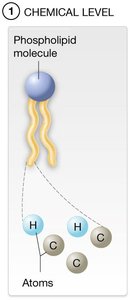
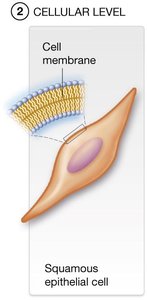
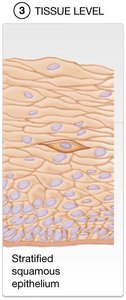
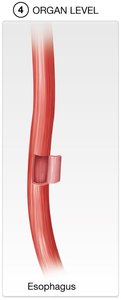
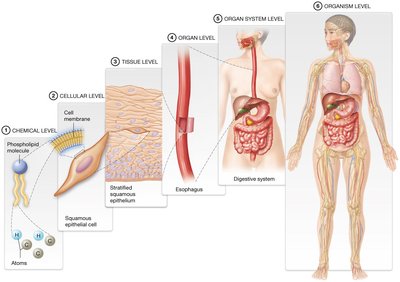
The human body is organized into a hierarchy of structural levels, each building upon the previous one.
Chemical Level: Atoms combine to form molecules, such as phospholipids.
Cellular Level: Molecules combine to form cells, the basic units of life.
Tissue Level: Groups of similar cells and their extracellular matrix perform common functions.
Organ Level: Two or more tissue types combine to form organs with specific functions.
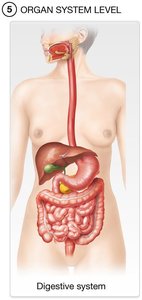
Organ System Level: Organs work together as organ systems to perform complex functions.
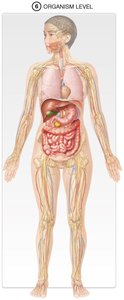
Organism Level: All organ systems function together to maintain the life of the organism.
The 11 Organ Systems of the Human Body
Major Organ Systems and Their Functions
The human body consists of 11 organ systems, each with specific functions essential for survival.
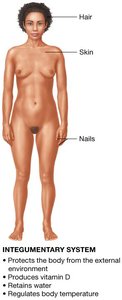
Integumentary System: Protects the body, regulates temperature, and synthesizes vitamin D.
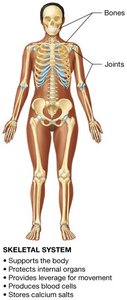
Skeletal System: Provides support, protects organs, stores minerals, and produces blood cells.
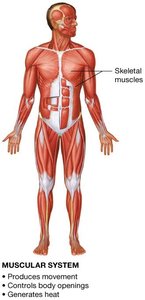
Muscular System: Produces movement, maintains posture, and generates heat.
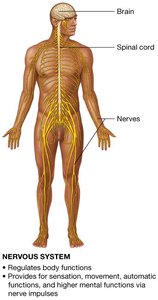
Nervous System: Controls body functions and enables sensation, movement, and cognition.
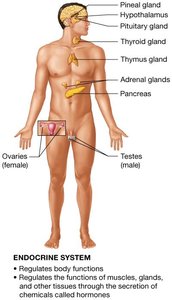
Endocrine System: Regulates body functions through hormones.
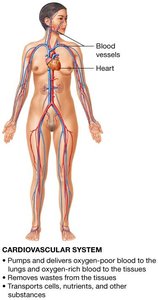
Cardiovascular System: Transports blood, nutrients, gases, and wastes.
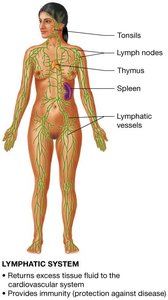
Lymphatic System: Returns tissue fluid to blood and provides immunity.
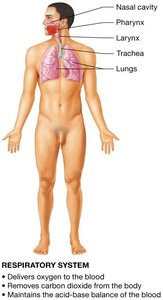
Respiratory System: Facilitates gas exchange (oxygen and carbon dioxide).
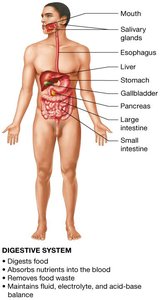
Digestive System: Breaks down food, absorbs nutrients, and eliminates waste.
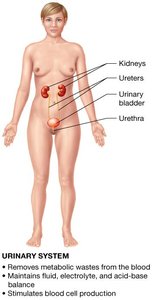
Urinary System: Removes metabolic wastes and maintains fluid, electrolyte, and acid-base balance.
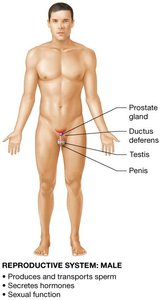
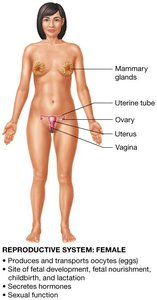
Reproductive System: Produces gametes and enables reproduction.
Types of Anatomy and Physiology
Approaches and Subfields
Anatomy and physiology can be studied from different perspectives and at various levels of detail.
Systemic Anatomy: Study by organ systems.
Regional Anatomy: Study by specific body regions.
Surface Anatomy: Study of external features.
Gross Anatomy: Study of structures visible to the naked eye.
Microscopic Anatomy: Study of structures requiring a microscope (includes histology and cytology).
Physiology Subfields: Classified by organ/system (e.g., neurophysiology, cardiovascular physiology).
The Language of Anatomy and Physiology
Terminology and Communication
Scientific terminology in anatomy and physiology is based on word roots, prefixes, and suffixes, allowing precise and standardized communication.
Terms are constructed from Latin and Greek roots.
Understanding terminology is essential for accurate description and communication in healthcare.
Anatomical Position and Directional Terms
Standard Reference and Orientation
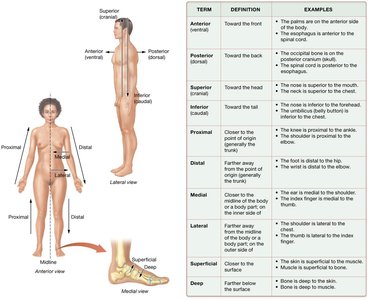
The anatomical position is the standard reference for describing body parts and regions. Directional terms specify the location of structures relative to others.
Anatomical Position: Body upright, feet shoulder-width apart, arms at sides, palms facing forward.
Directional Terms:
Anterior (ventral) / Posterior (dorsal)
Superior (cranial) / Inferior (caudal)
Proximal / Distal
Medial / Lateral
Superficial / Deep

Regional Terms
Body Regions and Subdivisions
The body is divided into axial (head, neck, trunk) and appendicular (limbs) regions, with further subdivisions for precise localization.
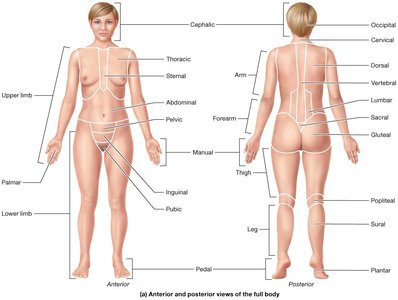
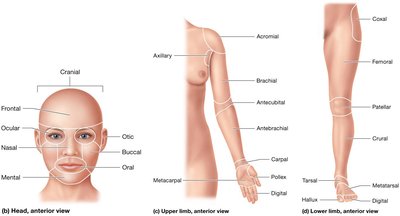
Region | Pertaining To |
|---|---|
Abdominal | The abdomen |
Cervical | The neck |
Gluteal | The buttocks |
Inguinal | The groin |
Lumbar | The lower back |
Palmar | The palm |
Pelvic | The pelvis |
Pubic | The pubis |
Sacral | The sacrum |
Sternal | The sternum |
Thoracic | The chest |
Vertebral | The spinal column |
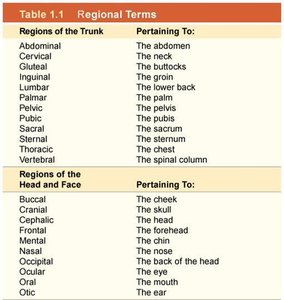
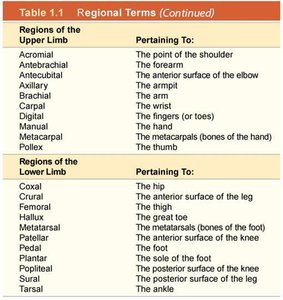
Applying Anatomical Terms
Describing Locations and Incisions
Combining regional and directional terms allows for precise descriptions of locations, injuries, or procedures.
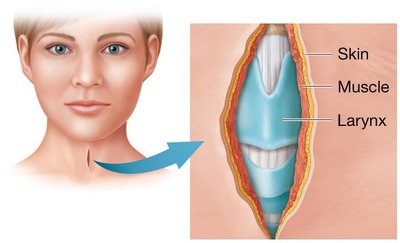
Example: An incision on the left anterior cervical region, 1 cm lateral to the midline, extending from 1 cm inferior to the mental region to 2 cm superior to the thoracic region, deep to skin and muscle but superficial to the larynx.
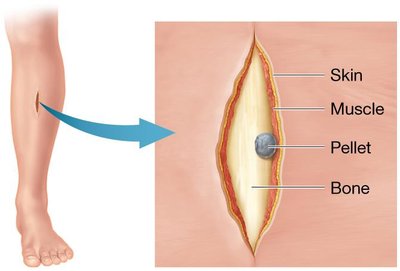
Example: A wound on the left anteromedial crural region, 6 cm proximal to the tarsal region and 10 cm distal to the patellar region, with a pellet lodged deep to skin and muscle but superficial to bone.
Planes of Section
Dividing the Body for Study
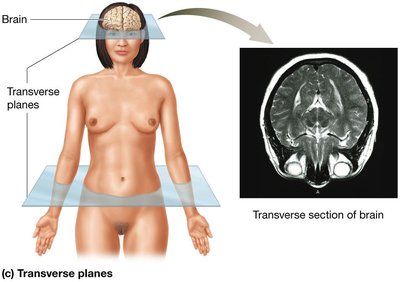
Three primary planes are used to divide the body or its parts for anatomical study and medical imaging.
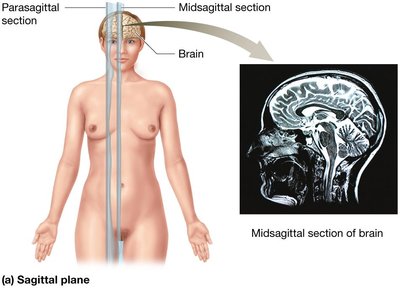
Sagittal Plane: Divides into right and left sections (midsagittal = equal halves; parasagittal = unequal).
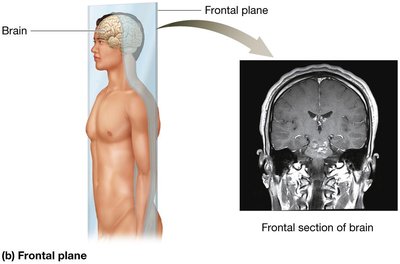
Frontal (Coronal) Plane: Divides into anterior and posterior sections.
Transverse (Horizontal) Plane: Divides into superior and inferior sections.
Oblique Plane: Divides at an angle, used for complex structures.
Body Cavities and Membranes
Major Body Cavities
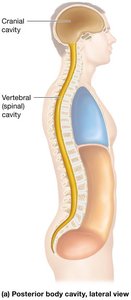
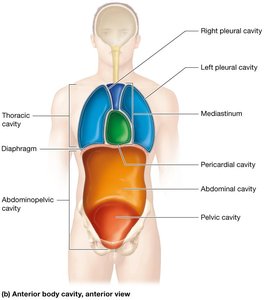
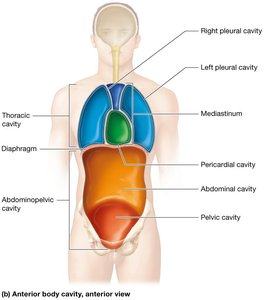
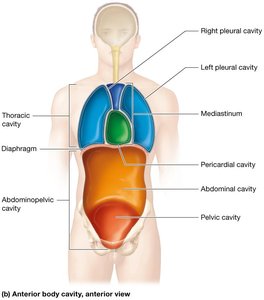
Body cavities are fluid-filled spaces that protect organs and allow for their movement and expansion.
Posterior Body Cavity:
Cranial cavity (houses the brain)
Vertebral (spinal) cavity (houses the spinal cord)
Anterior Body Cavity:
Thoracic cavity (pleural cavities, mediastinum, pericardial cavity)
Abdominopelvic cavity (abdominal and pelvic cavities, peritoneal cavity)
Abdominopelvic Quadrants and Regions
Four quadrants: RUQ, RLQ, LUQ, LLQ
Nine regions: right/left hypochondriac, epigastric, right/left lumbar, umbilical, right/left iliac (inguinal), hypogastric
Serous Membranes
Serous membranes line body cavities and cover organs, producing serous fluid to reduce friction.
Visceral Layer: In contact with the organ.
Parietal Layer: Attached to surrounding structures.
Serous Fluid: Lubricates and prevents friction.
Three main serous membranes: pleural (lungs), pericardial (heart), peritoneal (abdominal organs).
Medical Imaging
Techniques for Visualizing Internal Structures
X-Ray: Uses ionizing radiation for imaging bones and dense structures.
CT Scan: Produces 3D images using ionizing radiation; useful for soft tissues.
MRI: Uses magnetic fields and radio waves for detailed images of soft tissues.
Core Principles in Anatomy and Physiology
Homeostasis and Feedback Mechanisms
Homeostasis is the maintenance of a stable internal environment. Feedback loops regulate physiological variables.
Negative Feedback: Opposes initial change, returning variable to normal (e.g., body temperature regulation).
Positive Feedback: Amplifies initial stimulus until a specific outcome is achieved (e.g., blood clotting, childbirth).
Equations: Feedback Loop (Generalized):
Other Core Principles
Structure and Function: Form follows function at all levels of organization.
Gradients: Differences in concentration, pressure, or temperature drive physiological processes.
Cell-Cell Communication: Cells communicate via chemical messengers or electrical signals to coordinate function.
Common Misconceptions about Homeostasis
Clarifying Key Points
Negative feedback is not "bad" and positive feedback is not "good"—the terms refer to the direction of the response.
Homeostasis does not mean a static internal environment; variables fluctuate within normal ranges.
Feedback loops are not simply "on" or "off" but operate dynamically.
Only variables with specific receptors can be regulated by feedback mechanisms.
Summary Table: Directional Terms
Term | Definition | Example |
|---|---|---|
Anterior (ventral) | Toward the front | The palms are on the anterior side of the body. |
Posterior (dorsal) | Toward the back | The spinal cord is on the posterior side of the body. |
Superior (cranial) | Toward the head | The nose is superior to the mouth. |
Inferior (caudal) | Toward the tail | The nose is inferior to the forehead. |
Proximal | Closer to the point of origin | The knee is proximal to the ankle. |
Distal | Farther away from the point of origin | The foot is distal to the hip. |
Medial | Closer to the midline | The ear is medial to the shoulder. |
Lateral | Farther away from the midline | The shoulder is lateral to the chest. |
Superficial | Closer to the surface | The skin is superficial to the muscle. |
Deep | Farther from the surface | Bone is deep to muscle. |
Additional info: This guide provides foundational knowledge for further study in anatomy and physiology, including terminology, organization, and core physiological principles.
