 Back
Introduction to Anatomy & Physiology: Foundational Concepts and Organization
Study Guide - Smart Notes
 Tailored notes based on your materials, expanded with key definitions, examples, and context.
Introduction to Anatomy & Physiology
Characteristics of Life and Processes in Living Organisms
Anatomy and physiology are the sciences that study the structure and function of the human body. Living organisms share several key characteristics that distinguish them from non-living matter.
Organization: Living things exhibit a complex but ordered structure.
Metabolism: All chemical reactions occurring in the body, including anabolism (building up) and catabolism (breaking down).
Responsiveness: Ability to sense and respond to stimuli.
Growth and Development: Increase in size and specialization of cells.
Reproduction: Production of new cells or organisms.
Homeostasis: Maintenance of a stable internal environment.
Movement: Motion of the whole body, organs, cells, or organelles.
Structural Levels of Organization
The human body is organized into hierarchical levels, each building on the previous one. Understanding these levels is fundamental to the study of anatomy and physiology.
Chemical Level: Atoms and molecules essential for life (e.g., water, proteins).
Cellular Level: Cells are the basic units of life (e.g., muscle cells, nerve cells).
Tissue Level: Groups of similar cells performing a common function (e.g., epithelial tissue).
Organ Level: Structures composed of two or more tissue types (e.g., heart, liver).
Organ System Level: Groups of organs working together (e.g., digestive system).
Organismal Level: The complete living being.
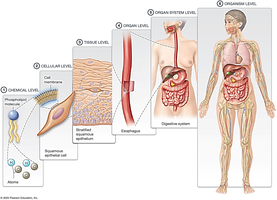
Example: The esophagus (organ) is made of epithelial and muscle tissues, which are composed of cells, which in turn are made of molecules.
Types of Anatomy and Physiology
There are several approaches to studying anatomy and physiology:
Systemic Anatomy: Study of individual organ systems (e.g., cardiovascular system).
Regional Anatomy: Study of body regions (e.g., head and neck).
Surface Anatomy: Study of surface markings and their relation to deeper structures.
Gross Anatomy: Study of structures visible to the naked eye.
Microscopic Anatomy: Study of cells (cytology) and tissues (histology) using a microscope.
Organ Systems of the Human Body
Overview of Major Organ Systems
The human body consists of eleven major organ systems, each with specific components and functions.
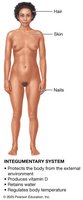
Integumentary System: Protects the body, regulates temperature, and prevents water loss.
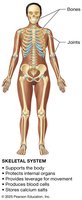
Skeletal System: Provides support, protects organs, and stores minerals.
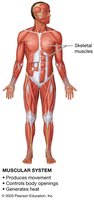
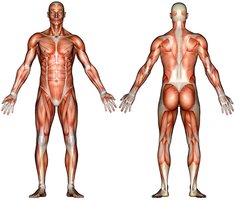
Muscular System: Produces movement and generates heat.
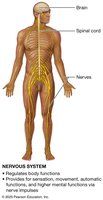
Nervous System: Regulates body functions and enables sensation and movement.
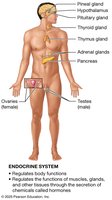
Endocrine System: Regulates body functions via hormones.
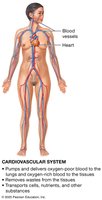
Cardiovascular System: Transports blood, nutrients, and wastes.
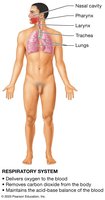
Respiratory System: Delivers oxygen and removes carbon dioxide.
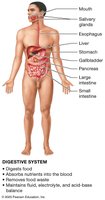
Digestive System: Breaks down food and absorbs nutrients.
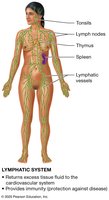
Lymphatic System: Returns tissue fluid to blood and provides immunity.
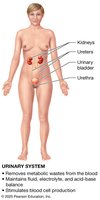
Urinary System: Removes waste and maintains fluid balance.
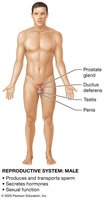
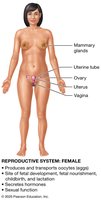
Reproductive System: Produces gametes and enables reproduction.
The Language of Anatomy & Physiology
Anatomical Position and Directional Terms
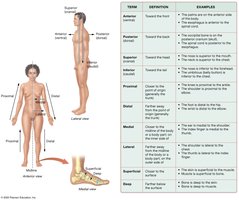
The anatomical position is the standard reference for describing body parts and regions. In this position, the body stands erect, facing forward, with feet slightly apart and palms facing forward.
Right and Left: Always refer to the subject's right and left, not the observer's.
Directional Terms: Used to describe the location of one body part relative to another (e.g., superior, inferior, anterior, posterior, medial, lateral, proximal, distal, superficial, deep).
Regional Terms
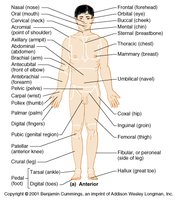
Regional terms specify areas within the major body divisions:
Axial: Head, neck, and trunk.
Appendicular: Limbs (arms and legs).
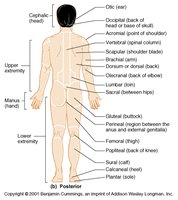
Body Planes and Sections
Body planes are imaginary lines used to divide the body for anatomical study:
Sagittal Plane: Divides the body into right and left parts.
Midsagittal (Median) Plane: Divides the body into equal right and left halves.
Parasagittal Plane: Divides the body into unequal right and left parts.
Transverse (Horizontal) Plane: Divides the body into superior and inferior parts.
Frontal (Coronal) Plane: Divides the body into anterior and posterior parts.
Oblique Section: Cuts made at an angle.
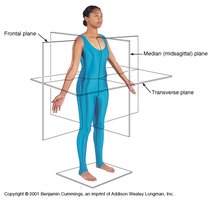
Organization of the Human Body
Body Cavities
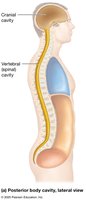
Body cavities protect internal organs and allow for changes in organ shape and size. They are divided into dorsal (posterior) and ventral (anterior) cavities.
Dorsal Cavity: Includes the cranial cavity (brain) and vertebral cavity (spinal cord).
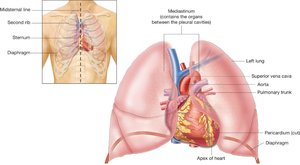
Ventral Cavity: Includes the thoracic cavity (pleural, mediastinum, pericardial) and abdominopelvic cavity (abdominal and pelvic cavities).
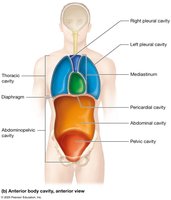
Abdominopelvic Quadrants and Regions
The abdominopelvic cavity is further divided for clinical and anatomical reference:
Four Quadrants: Right upper, left upper, right lower, left lower.
Nine Regions: Right/left hypochondriac, epigastric, right/left lumbar, umbilical, right/left iliac, hypogastric.
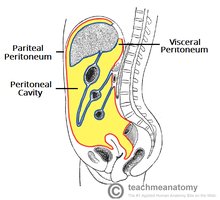
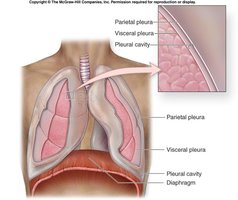
Serous Membranes
Serous membranes line body cavities and cover organs, reducing friction from organ movement. Each serous membrane has two layers:
Parietal Layer: Lines the cavity walls.
Visceral Layer: Covers the organs within the cavity.
Serous Fluid: Lubricates the surfaces between layers.
Core Principles in Anatomy and Physiology
Complementarity of Structure and Function
Structure and function are closely related at all levels of organization. The form of a structure enables its function, and vice versa.
Example: The thin walls of alveoli in the lungs facilitate gas exchange.
Necessary Life Functions
Metabolism: Includes all chemical reactions in the body.
Anabolism: Synthesis of complex molecules from simpler ones.
Catabolism: Breakdown of complex molecules into simpler ones.
Feedback Loops and Homeostasis
Homeostasis is maintained through feedback loops that regulate internal conditions.
Negative Feedback: Reduces or opposes the initial change, promoting stability.
Positive Feedback: Enhances or amplifies the initial change, often leading to a specific event (e.g., blood clotting).
Steps of a Negative Feedback Loop
Stimulus: A regulated variable moves outside its normal range.
Receptor (Sensor): Detects the change.
Control Center: Processes the information and sends instructions.
Effector: Carries out the response to restore balance.
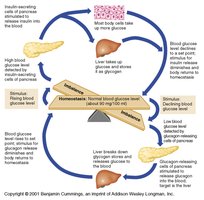
Example: Regulation of blood glucose by insulin and glucagon.
Positive Feedback Loop
In positive feedback, the response amplifies the original stimulus. This is less common but important in processes like blood clotting and childbirth.
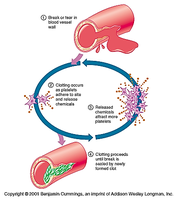
Example: Platelet accumulation and clot formation after a blood vessel injury.
Gradients and Cell-Cell Communication
Gradients: Exist when more of something is present in one area than another, driving physiological processes (e.g., concentration gradients for diffusion).
Cell-Cell Communication: Essential for coordinating body functions, often via chemical signals or electrical impulses.
