 Back
Introduction to Anatomy and Physiology: Foundational Concepts and Organization
Study Guide - Smart Notes
 Tailored notes based on your materials, expanded with key definitions, examples, and context.
Introduction to Anatomy and Physiology
Definition and Scope
Anatomy is the study of the structure of body parts and their relationships to one another, while physiology is the study of the function of the body’s structural machinery. Both disciplines are closely related and essential for understanding the human body.
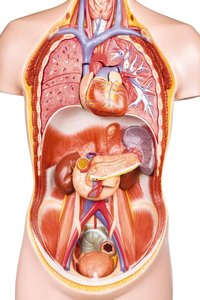
Anatomy includes the study of gross (macroscopic) structures, surface features, and developmental changes.
Physiology focuses on how body parts work and carry out life-sustaining activities, including cellular and systemic functions.
Types of Anatomy
Gross Anatomy: Study of structures visible to the naked eye.
Surface Anatomy: Study of external features and their relation to deeper structures.
Developmental Anatomy: Study of structural changes from conception to adulthood, including anatomical anomalies.
Types of Physiology
Cell Physiology: Examines processes within and between cells.
Cytology: Focuses on the structure and function of cells.
Anatomy vs. Physiology
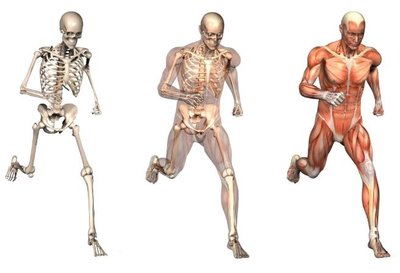
While anatomy describes the structures of the body, physiology explains how those structures function. Both are interdependent: structure determines function, and function influences structure.
Levels of Organization in the Human Body
Hierarchical Structure
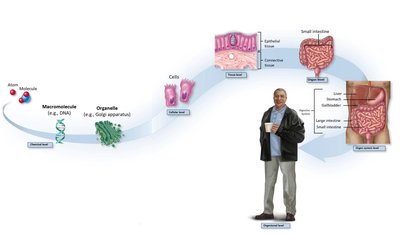
The human body is organized into a hierarchy of structural levels, each building on the previous one:
Atoms: Basic units of matter.
Molecules: Formed when two or more atoms combine.
Macromolecules: Large, complex molecules (e.g., proteins, DNA).
Organelles: Specialized structures within cells.
Cells: Basic units of life.
Tissues: Groups of similar cells performing a common function.
Organs: Structures composed of two or more tissue types.
Organ Systems: Groups of organs working together.
Organism: The complete living being.
Organ Systems Overview
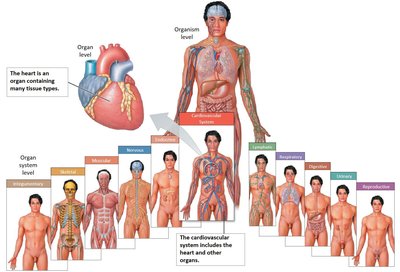
The body is divided into organ systems, each with specific functions essential for survival. Examples include the cardiovascular, respiratory, digestive, and nervous systems.
Characteristics of Life
Distinctive Properties of Living Things
Organization: Complex structure and order at all levels.
Metabolism: Chemical reactions in the body, including catabolism (breaking down molecules) and anabolism (building molecules).
Growth: Increase in size or number of cells.
Responsiveness: Ability to sense and react to stimuli.
Development: Changes over time, including differentiation and morphogenesis.
Reproduction: Formation of new cells or organisms.
Regulation: Ability to maintain internal stability.
Homeostasis
Definition and Importance
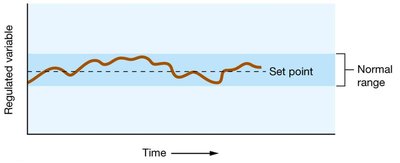
Homeostasis is the maintenance of a stable internal environment within narrow limits, despite external changes. It is essential for normal body function and survival.
Variables: Conditions such as body temperature, pH, and blood glucose that are regulated.
Feedback Loops
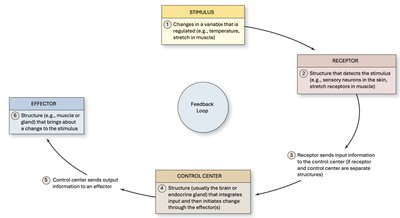
Homeostasis is maintained by feedback mechanisms that detect and respond to changes in the internal environment.
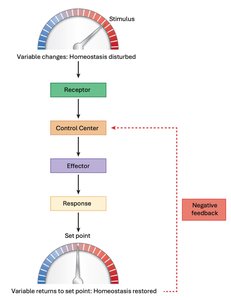
Negative Feedback: Most common; reverses a change to keep a variable within a normal range.
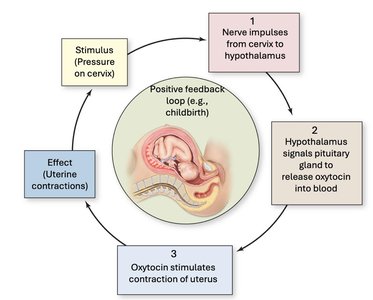
Positive Feedback: Enhances or amplifies a change; less common and usually associated with specific events (e.g., childbirth).
Components of a feedback loop:
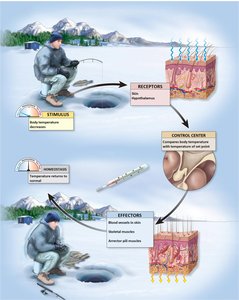
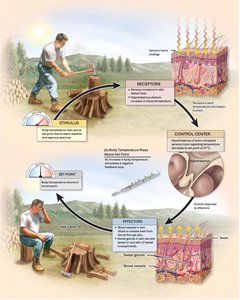
Receptor: Detects changes in a variable.
Control Center: Processes information and determines response.
Effector: Produces a response to restore balance.
Negative Feedback Example
Negative feedback mechanisms restore a variable to its set point. For example, body temperature regulation involves receptors, a control center (brain), and effectors (muscles, sweat glands).
Positive Feedback Example
Positive feedback mechanisms amplify a response. A classic example is the process of childbirth, where uterine contractions are intensified by the release of oxytocin.
Common Misconceptions about Homeostasis
Negative feedback is not "bad"; it is essential for stability.
Homeostasis does not mean the internal environment is unchanging, but that it fluctuates within a normal range.
Feedback mechanisms are not simply "on" or "off"; they are dynamic and continuous.
Not all physiological variables can be controlled by homeostasis.
Homeostatic Imbalances
Disturbances in homeostasis can lead to disease or death if not corrected.
Disorder: Any abnormality in form or function.
Signs: Objective changes that can be observed or measured.
Symptoms: Subjective changes experienced by the patient.
Disease: Specific term for an illness with recognizable signs and symptoms.
Diagnosis: Distinguishing one disease from another.
Pathology: Study of disease.
Sectional Planes of the Body
Major Anatomical Planes
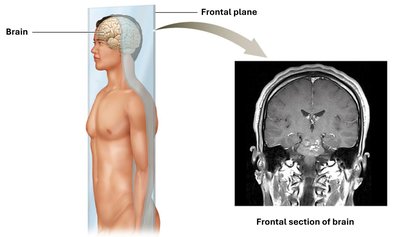
Frontal (Coronal) Plane: Divides the body into anterior and posterior sections.
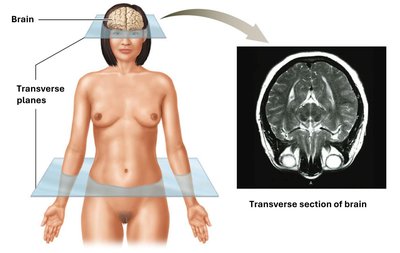
Transverse (Horizontal) Plane: Divides the body into superior and inferior sections.
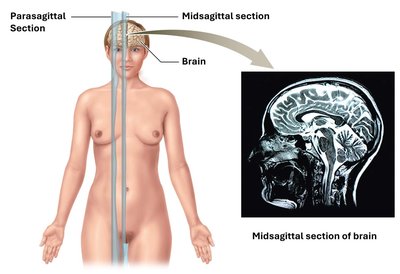
Sagittal Plane: Divides the body into left and right sections. Includes midsagittal (equal halves) and parasagittal (unequal halves) planes.
Anatomical Landmarks and Regions
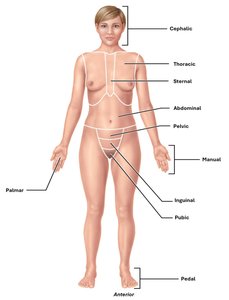
Anterior (Front) Regions
Cephalic: Head
Thoracic: Chest
Sternal: Sternum
Abdominal: Abdomen
Pelvic: Pelvis
Manual: Hand
Inguinal: Groin
Pubic: Pubis
Pedal: Foot
Palmar: Palm
Posterior (Back) Regions
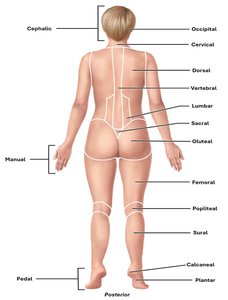
Occipital: Back of the head
Cervical: Neck
Dorsal: Upper back
Vertebral: Spinal column
Lumbar: Lower back
Sacral: Sacrum
Gluteal: Buttocks
Femoral: Thigh
Sural: Posterior calf
Popliteal: Posterior knee
Calcaneal: Heel
Plantar: Sole of the foot
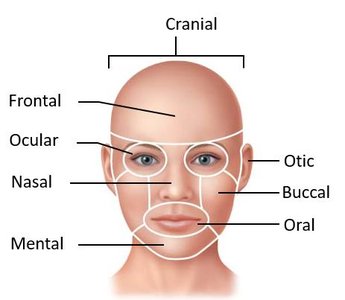
Regions of the Face and Head
Cranial: Skull
Frontal: Forehead
Ocular: Eye
Buccal: Cheek
Nasal: Nose
Oral: Mouth
Otic: Ear
Mental: Chin
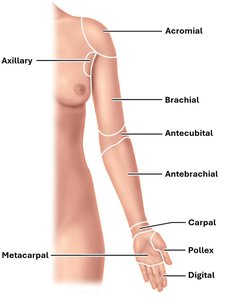
Regions of the Upper Limb
Acromial: Shoulder
Axillary: Armpit
Brachial: Arm
Antecubital: Anterior elbow
Antebrachial: Forearm
Carpal: Wrist
Pollex: Thumb
Digital: Fingers
Metacarpal: Metacarpals
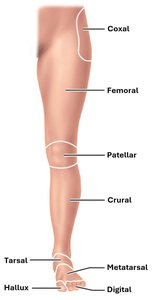
Regions of the Lower Limb
Coxal: Hip
Femoral: Thigh
Patellar: Anterior knee
Crural: Anterior calf
Metatarsal: Metatarsals
Digital: Toes
Hallux: Great toe
Tarsal: Ankle
Body Cavities
Dorsal Body Cavity
Cranial Cavity: Contains the brain.
Vertebral Cavity: Contains the spinal cord.
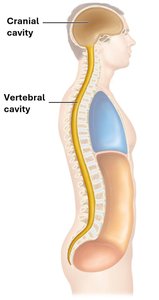
Ventral Body Cavity
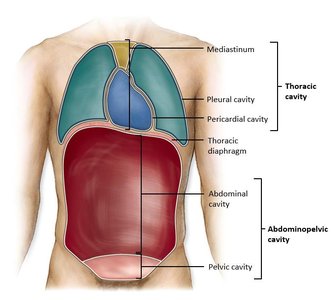
Thoracic Cavity: Contains the heart and lungs.
Pleural Cavities: Surround each lung.
Pericardial Cavity: Surrounds the heart.
Abdominopelvic Cavity: Subdivided into the abdominal cavity (digestive organs) and pelvic cavity (urinary bladder, reproductive organs).
Body Cavity | Main Contents |
|---|---|
Cranial | Brain |
Vertebral | Spinal cord |
Thoracic | Heart, lungs |
Pleural | Lungs |
Pericardial | Heart |
Abdominal | Digestive organs |
Pelvic | Urinary bladder, reproductive organs |
Additional info: Understanding the organization of the human body and its regulatory mechanisms is foundational for all further study in anatomy and physiology. Mastery of these concepts is essential for clinical practice and biomedical sciences.
