 Back
Introduction to Anatomy and Physiology: Foundational Concepts and Study Skills
Study Guide - Smart Notes
 Tailored notes based on your materials, expanded with key definitions, examples, and context.
Module 1.1: How to Succeed in Your Anatomy and Physiology Course
Introduction to Anatomy and Physiology
Anatomy and Physiology (A&P) is the scientific study of the structure and function of the human body. Understanding A&P requires observation, experimentation, and the integration of form and function. The study of anatomy focuses on the body's structures, while physiology explores how these structures function to sustain life.
Human anatomy: Study of the structure of the human body.
Human physiology: Study of the body's functions.
Form and function: These are inextricably linked in biological systems.
Developing Effective Study Skills
Success in A&P depends on using effective study strategies tailored to your learning style. Learning modalities refer to the senses engaged during the learning process:
Visual: Reading, diagrams, illustrations, and animations.
Auditory: Listening to lectures, discussions, and mnemonics.
Tactile: Manipulating models, conducting experiments.
Kinesthetic: Movement-based activities, such as drawing or acting out processes.
Engaging multiple modalities enhances retention and understanding. Experiment with different techniques to find the best combination for each course.
Textbook Reading and Study Techniques
Active reading strategies, such as the SQ3R method, help build a strong foundation:
Survey: Skim the chapter for major topics.
Question: Formulate questions about the content.
Read: Read actively, taking notes or sketching diagrams.
Recite: Recite material aloud to reinforce memory.
Review: Summarize and answer end-of-chapter questions.
Time management is crucial. Develop a weekly schedule for independent study, group work, and utilizing available resources.

Using Textbook Features and Resources
Modern A&P textbooks are designed with features to support learning:
Modules: Chapters are divided into manageable sections, each with clear learning outcomes.
Concept Boosts and Study Boosts: Highlight challenging concepts.
Self-assessment questions: Flashback, Quick Check, Apply What You Learned, and Assess What You Learned questions reinforce understanding.
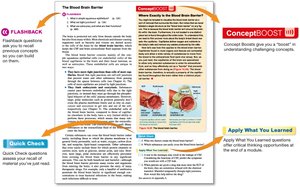
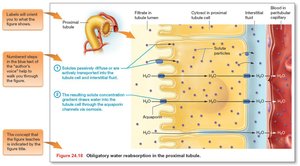
Figures and diagrams are essential for visualizing complex concepts. Examine figures carefully, break them into parts, and integrate their information for a comprehensive understanding.
Module 1.2: Overview of Anatomy and Physiology
Characteristics of Living Organisms
All living organisms share several defining properties:
Cellular composition: Composed of one or more cells, the basic units of life.
Metabolism: Chemical reactions that build up (anabolism) or break down (catabolism) substances.
Growth: Increase in cell size or number.
Excretion: Removal of metabolic waste products.
Responsiveness: Ability to sense and react to environmental changes.
Movement: Movement of the organism, cells, or materials within the body.
Reproduction: Cellular or organismal reproduction to maintain species continuity.
Levels of Structural Organization
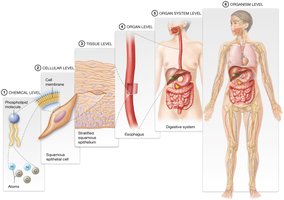
The human body is organized into a hierarchy of structural levels, each building on the previous:
Chemical level: Atoms and molecules form the foundation of all matter.
Cellular level: Molecules combine to form cells, the basic units of life.
Tissue level: Groups of similar cells and extracellular matrix perform common functions.
Organ level: Two or more tissue types form organs with specialized functions.
Organ system level: Groups of organs work together to perform broad functions.
Organism level: All organ systems function together to sustain the living human body.
The 11 Organ Systems of the Human Body
The human body contains 11 organ systems, each with specific functions essential for survival:
System | Main Functions |
|---|---|
Integumentary | Protection, vitamin D production, water retention, temperature regulation |
Skeletal | Support, protection, movement, blood cell production, calcium storage |
Muscular | Movement, heat generation, control of body openings |
Nervous | Regulation, sensation, movement, higher mental functions |
Endocrine | Regulation via hormones |
Cardiovascular | Transport of blood, nutrients, wastes |
Lymphatic | Fluid return, immunity |
Respiratory | Gas exchange, acid-base balance |
Digestive | Food breakdown, nutrient absorption, waste elimination |
Urinary | Waste removal, fluid/electrolyte/acid-base balance |
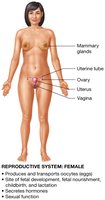
Reproductive | Production of gametes, hormone secretion, offspring development |
Types of Anatomy and Physiology
There are several approaches to studying the human body:
Systemic anatomy: Study by organ systems.
Regional anatomy: Study by body regions.
Surface anatomy: Study of surface markings.
Gross anatomy: Study of structures visible to the naked eye.
Microscopic anatomy: Study of structures requiring a microscope (histology and cytology).
Physiology subfields: Classified by organ/system (e.g., neurophysiology, cardiovascular physiology).
Module 1.3: The Language of Anatomy and Physiology
Scientific Terminology
Anatomical and physiological terms are constructed from word roots, prefixes, and suffixes. Mastery of this language is essential for clear communication in science and healthcare.
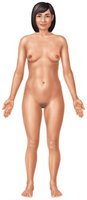
Anatomical Position
The anatomical position is the standard reference for describing body parts and regions:
Body standing upright, feet shoulder-width apart
Arms at sides, palms facing forward
"Right" and "left" refer to the subject's sides, not the observer's
Directional Terms
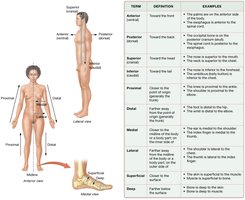
Directional terms describe the locations of structures relative to one another. Common pairs include:
Term | Definition | Example |
|---|---|---|
Anterior (ventral) | Toward the front | The sternum is anterior to the heart. |
Posterior (dorsal) | Toward the back | The heart is posterior to the sternum. |
Superior (cranial) | Toward the head | The head is superior to the neck. |
Inferior (caudal) | Toward the tail | The neck is inferior to the head. |
Proximal | Closer to point of origin | The shoulder is proximal to the elbow. |
Distal | Farther from point of origin | The wrist is distal to the elbow. |
Medial | Closer to midline | The nose is medial to the eyes. |
Lateral | Farther from midline | The ears are lateral to the nose. |
Superficial | Closer to surface | The skin is superficial to muscles. |
Deep | Farther from surface | The bones are deep to the skin. |
Regional Terms
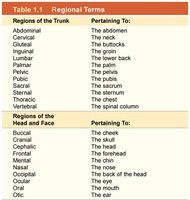
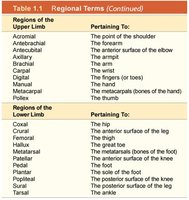
The body is divided into axial (head, neck, trunk) and appendicular (limbs) regions. Each region has specific terms for precise identification.
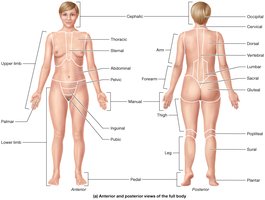
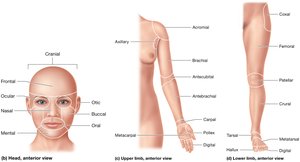
Region | Pertaining To |
|---|---|
Abdominal | The abdomen |
Cervical | The neck |
Gluteal | The buttocks |
Femoral | The thigh |
Brachial | The arm |
Carpal | The wrist |
Plantar | The sole of the foot |
And more... | See full table in workbook |
Applying Anatomical Terms
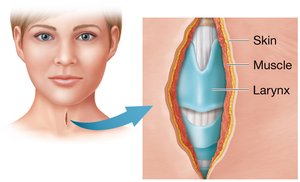
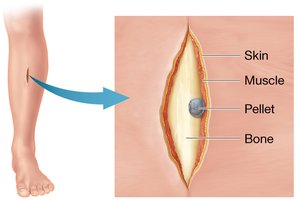
Describing locations and procedures in anatomy requires combining regional, directional, and depth terms for precision.
Planes of Section
Three primary planes are used to divide the body for anatomical study:
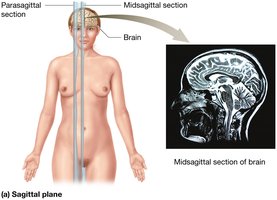
Sagittal plane: Divides into right and left (midsagittal = equal, parasagittal = unequal).
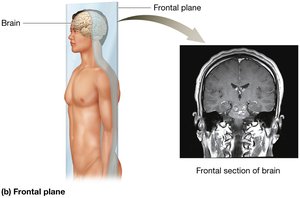
Frontal (coronal) plane: Divides into anterior and posterior sections.
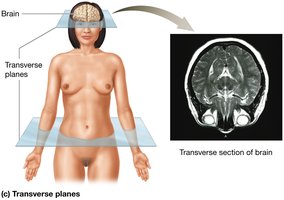
Transverse (horizontal) plane: Divides into superior and inferior sections.
Oblique plane: Divides at an angle; less common.
Module 1.4: The Organization of the Human Body
Body Cavities
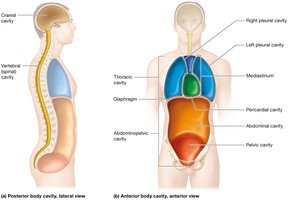
Body cavities are fluid-filled spaces that protect organs and allow for movement and expansion. The two main cavities are:
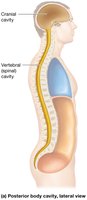
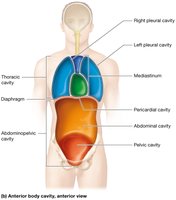
Posterior (dorsal) cavity: Cranial cavity (brain) and vertebral cavity (spinal cord), filled with cerebrospinal fluid.
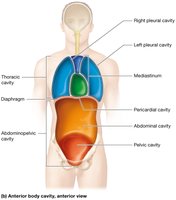
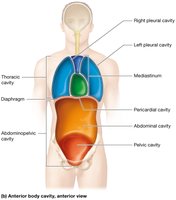
Anterior (ventral) cavity: Divided by the diaphragm into thoracic and abdominopelvic cavities.
Thoracic and Abdominopelvic Subdivisions
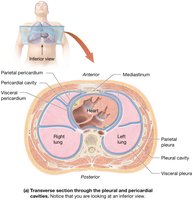
Thoracic cavity: Contains pleural cavities (lungs), mediastinum (heart, trachea, esophagus), and pericardial cavity (heart).
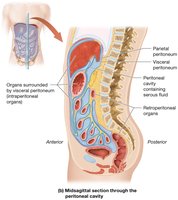
Abdominopelvic cavity: Subdivided into abdominal (digestive organs) and pelvic (reproductive, urinary organs) cavities. The peritoneal cavity surrounds some abdominal organs.
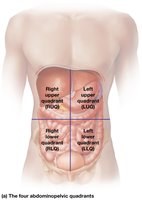
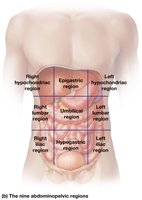
Abdominopelvic Quadrants and Regions
The abdominopelvic cavity can be divided for clinical reference:
Quadrants: RUQ, RLQ, LUQ, LLQ (crossed at the umbilicus).
Regions: Nine regions (e.g., hypochondriac, lumbar, iliac, epigastric, umbilical, hypogastric).
Serous Membranes and Cavities
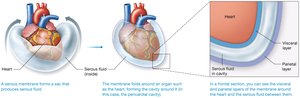
Serous membranes line body cavities and cover organs, producing serous fluid to reduce friction:
Visceral layer: In contact with the organ.
Parietal layer: Attached to surrounding structures.
Serous fluid: Lubricates and prevents friction.
Module 1.5: Core Principles in Anatomy and Physiology
Homeostasis
Homeostasis is the maintenance of a stable internal environment. Physiological processes operate to keep variables (e.g., temperature, pH, fluid balance) within a narrow range. Imbalances can lead to disease or death.
Core Principles
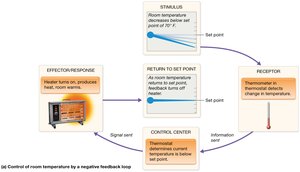
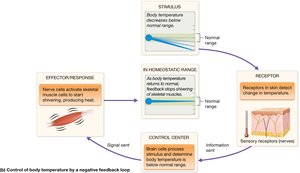
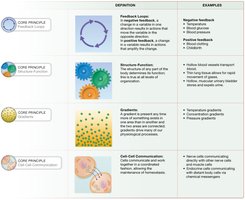
Feedback loops: Mechanisms that maintain homeostasis.
Structure and function: Form follows function at all levels of organization.
Gradients: Differences in concentration, pressure, or temperature drive physiological processes.
Cell-to-cell communication: Coordination via chemical messengers or electrical signals.
Feedback Loops
Negative feedback: Opposes initial change, returning variable to normal (e.g., body temperature regulation).
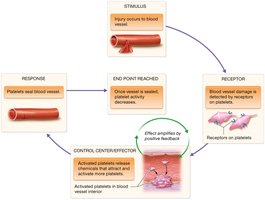
Positive feedback: Amplifies initial stimulus until a specific endpoint is reached (e.g., blood clotting, childbirth).
Structure and Function
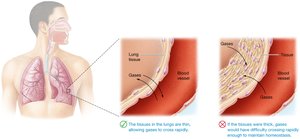
The shape and composition of a structure are directly related to its function. For example, the thin walls of lung tissue facilitate rapid gas exchange.
Gradients
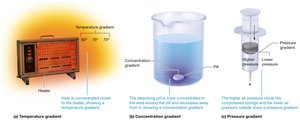
Gradients are essential for processes such as diffusion and osmosis. Types include:
Temperature gradient: Difference in temperature between two regions.
Concentration gradient: Difference in solute concentration.
Pressure gradient: Difference in pressure across a space.
Cell-Cell Communication
Cells communicate to coordinate body functions, using electrical signals (e.g., nerve impulses) or chemical messengers (e.g., hormones).
Additional info: Mastery of these foundational concepts is essential for success in all subsequent chapters of Anatomy and Physiology.
