 Back
BackIntroduction to Anatomy & Physiology: Foundational Concepts and Terminology
Study Guide - Smart Notes
 Tailored notes based on your materials, expanded with key definitions, examples, and context.
What is Anatomy and Physiology?
Definitions and Scope
Anatomy is the study of the structure of body parts and their relationships to one another, while physiology is the study of the function of the body and how its parts work together to sustain life. These two disciplines are closely related and often studied together because structure determines function.
Anatomy: Focuses on the physical structures (e.g., bones, muscles, organs).
Physiology: Explores how those structures function (e.g., muscle contraction, nerve signaling).
Principle of Complementarity: The function of a body part is dependent on its structure, and changes in structure can affect function.
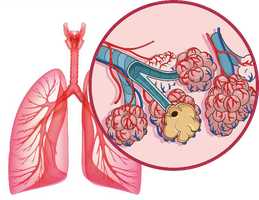
Example: The thin walls of alveoli in the lungs (structure) allow for efficient gas exchange (function).
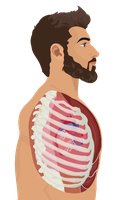
Levels of Organization in the Human Body
Hierarchy from Smallest to Largest
The human body is organized into a hierarchy of structural levels, each building on the previous one:
Atomic and Molecular Level: Atoms and molecules form the chemical basis of life.
Macromolecule Level: Large molecules such as proteins, lipids, and nucleic acids.
Cellular Level: Cells are the basic units of life.
Tissue Level: Groups of similar cells performing a common function.
Organ Level: Structures composed of two or more tissue types that perform specific functions.
Organ System Level: Groups of organs that work together to accomplish a common purpose.
Organism Level: The complete living being.
Example: Statins work at the molecular level to inhibit cholesterol synthesis, but their effects are seen at the organ (liver), organ system (cardiovascular), and organism levels.
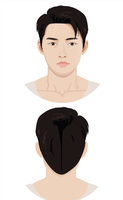
Homeostasis and Feedback Loops
Maintaining Internal Stability
Homeostasis is the maintenance of a stable internal environment within narrow limits, despite changes in the external environment. Most physiological processes are regulated by homeostatic mechanisms.
Negative Feedback Loops: The most common type; they counteract changes, returning the system to a set point. Example: Regulation of body temperature.
Positive Feedback Loops: Less common; they amplify changes and move the system away from a set point. Example: Blood clotting and labor contractions.
Components of a Negative Feedback Loop:
Receptor: Detects changes in the environment.
Control Center: Processes information and determines the response.
Effector: Carries out the response to restore balance.
Anatomical Position and Directional Terms
Standard Reference for Describing the Body
The anatomical position is a universally accepted reference posture used to describe locations and directions on the human body. The body stands upright, facing forward, with feet shoulder-width apart and palms facing forward.
Superior (Cranial): Toward the head or upper part of a structure.
Inferior (Caudal): Away from the head or toward the lower part of a structure.
Anterior (Ventral): Toward the front of the body.
Posterior (Dorsal): Toward the back of the body.
Medial: Toward the midline of the body.
Lateral: Away from the midline.
Proximal: Closer to the point of attachment (used for limbs).
Distal: Farther from the point of attachment (used for limbs).
Superficial: Closer to the surface of the body.
Deep: Further from the surface of the body.
Anatomical Planes and Sections
Dividing the Body for Study
Anatomical planes are imaginary lines used to divide the body into sections for anatomical study and medical imaging:
Frontal (Coronal) Plane: Divides the body into anterior and posterior parts.
Sagittal Plane: Divides the body into right and left parts. The midsagittal plane runs directly down the midline; parasagittal planes are offset from the midline.
Transverse (Horizontal) Plane: Divides the body into superior and inferior parts.
Oblique Plane: Cuts made at an angle between the horizontal and vertical planes.
Body Cavities and Serous Membranes
Organization of Internal Spaces
The body contains several major cavities that house and protect organs:
Anterior (Ventral) Cavity: Includes the thoracic cavity (heart and lungs) and abdominopelvic cavity (digestive, urinary, and reproductive organs).
Posterior (Dorsal) Cavity: Contains the cranial cavity (brain) and vertebral cavity (spinal cord).
Serous membranes line body cavities and cover organs, providing lubrication to reduce friction:
Pleura: Surrounds the lungs.
Pericardium: Surrounds the heart.
Peritoneum: Surrounds most abdominal organs.
Abdominopelvic Quadrants and Regions
Dividing the Abdomen for Clinical Reference
The abdominopelvic area is divided for diagnostic and descriptive purposes:
Quadrants: Right Upper (RUQ), Left Upper (LUQ), Right Lower (RLQ), Left Lower (LLQ).
Regions: Nine regions including the epigastric, umbilical, hypogastric, hypochondriac, lumbar, and inguinal regions.
Summary Table: Directional Terms
Term | Definition | Example |
|---|---|---|
Superior | Above or toward the head | The heart is superior to the stomach. |
Inferior | Below or toward the feet | The stomach is inferior to the heart. |
Anterior (Ventral) | Toward the front | The sternum is anterior to the spine. |
Posterior (Dorsal) | Toward the back | The spine is posterior to the sternum. |
Medial | Toward the midline | The nose is medial to the eyes. |
Lateral | Away from the midline | The ears are lateral to the nose. |
Proximal | Closer to the point of attachment | The elbow is proximal to the wrist. |
Distal | Farther from the point of attachment | The fingers are distal to the elbow. |
Superficial | Closer to the surface | The skin is superficial to the muscles. |
Deep | Further from the surface | The bones are deep to the skin. |
Key Takeaways
Anatomy and physiology are interdependent sciences essential for understanding the human body.
Homeostasis is maintained through feedback loops, primarily negative feedback.
Standardized anatomical position and directional terms ensure clear communication.
Body cavities and serous membranes organize and protect internal organs.
Abdominopelvic quadrants and regions are used for clinical assessment and diagnosis.
