 Back
Introduction to Anatomy & Physiology: Foundations and Homeostasis
Study Guide - Smart Notes
 Tailored notes based on your materials, expanded with key definitions, examples, and context.
Chapter 1: Introduction to Anatomy & Physiology
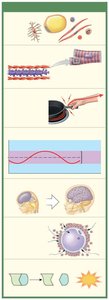
Common Characteristics and Processes of Life
All living organisms share several fundamental characteristics and processes that distinguish them from non-living matter. In humans and other animals, these processes are essential for survival, growth, and reproduction.
Organization: Living things exhibit a complex but ordered structure, from the molecular to the organismal level.
Responsiveness: The ability to sense and respond to changes in the environment.
Regulation: Mechanisms that adjust internal bodily functions to maintain homeostasis.
Growth & Development: Increase in size and complexity over time.
Reproduction: Production of new organisms or cells.
Metabolism: All chemical reactions that occur within the body, including:
Respiration: Exchange of gases (O2 and CO2).
Digestion: Breakdown of food into absorbable units.
Circulation: Movement of substances throughout the body.
Excretion: Removal of metabolic wastes.
Anatomy vs. Physiology
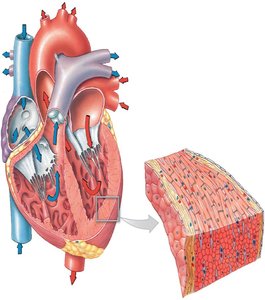
Anatomy is the study of the structure of body parts, while physiology is the study of how those parts function. Understanding both is essential for comprehending how the human body operates.
Macroscopic (Gross) Anatomy: Study of structures visible to the naked eye (e.g., organs, organ systems).
Microscopic Anatomy: Study of structures too small to be seen without magnification (e.g., cells, tissues).
Structure Determines Function: The form of a body part is closely related to its function. For example, the heart's chambers and valves enable it to pump blood efficiently.
Levels of Organization in the Human Body
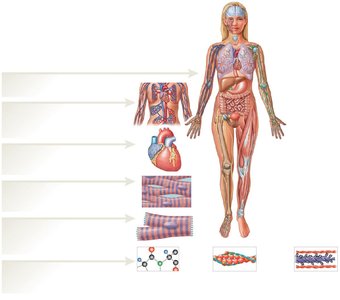
The human body is organized into a hierarchy of structural levels, each building upon the previous one. This organization is fundamental to understanding anatomy and physiology.
Chemical Level: Atoms and molecules essential for life.
Organelle Level: Specialized structures within cells.
Cellular Level: Cells are the basic units of life.
Tissue Level: Groups of similar cells performing a common function.
Organ Level: Structures composed of two or more tissue types.
Organ System Level: Groups of organs working together for a common purpose.
Organism Level: The complete living being.
Major Organ Systems and Their Functions
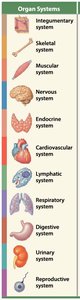
The human body consists of eleven major organ systems, each with specific functions vital to survival and homeostasis.
Organ System | Main Function |
|---|---|
Integumentary | Protection against environmental hazards |
Skeletal | Support and mineral storage |
Muscular | Movement and heat production |
Nervous | Fast communication and coordination |
Endocrine | Long-term, slow communication |
Cardiovascular | Transport of blood |
Lymphatic | Protection against infectious disease |
Respiratory | Exchange of gases |
Digestive | Breakdown of nutrients |
Urinary | Elimination of wastes |
Reproductive | Production of sex cells |
Homeostasis and Feedback Mechanisms
Homeostasis is the maintenance of a stable internal environment despite changes in external conditions. It is essential for the survival of cells and, by extension, the organism.
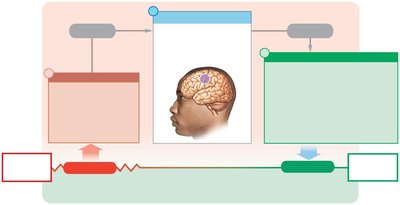
Components of Homeostatic Regulation:
Receptor: Detects changes in the environment (stimuli).
Control Center: Processes information and determines the response (often the brain or endocrine glands).
Effector: Carries out the response to restore balance.
Negative Feedback
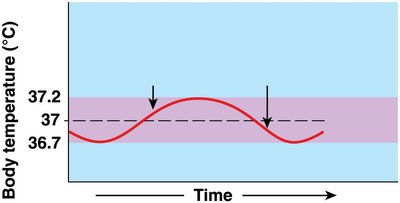
Negative feedback is the primary mechanism for maintaining homeostasis. It works by reversing a change to keep a variable within a normal range.
Example: Body temperature regulation. If body temperature rises, mechanisms such as sweating are activated to cool the body; if it falls, shivering generates heat.
Blood Glucose Regulation (Negative Feedback Example)
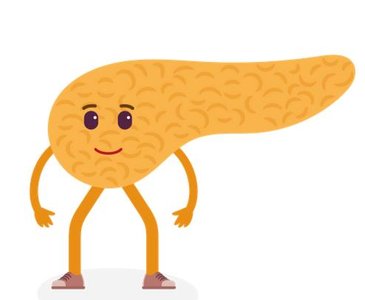
Blood glucose levels are tightly regulated by the hormones insulin and glucagon, both produced by the pancreas.
If blood glucose rises above normal, the pancreas releases insulin, causing cells to absorb glucose and lower blood sugar.
If blood glucose falls below normal, the pancreas releases glucagon, causing the liver to release glucose into the blood.
Positive Feedback
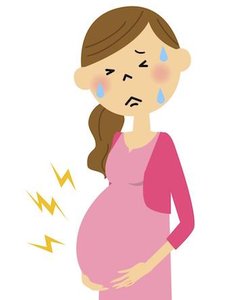
Positive feedback amplifies a change instead of reversing it. This mechanism is less common but is important in processes that need a definitive endpoint.
Example: Labor contractions during childbirth. Stretching of the cervix triggers the release of oxytocin, which increases uterine contractions, leading to more stretching and more oxytocin release until delivery occurs.
Application of Anatomical and Directional Terms
Correct use of anatomical and directional terms is essential for accurately describing the locations and relationships of body parts. These terms include:
Superficial vs. Deep: Closer to or farther from the body surface.
Medial vs. Lateral: Toward or away from the midline of the body.
Proximal vs. Distal: Closer to or farther from the point of attachment (usually used for limbs).
Anterior (Ventral) vs. Posterior (Dorsal): Toward the front or back of the body.
Example: The heart is medial to the lungs and superior to the diaphragm.
