 Back
Introduction to Anatomy & Physiology: Foundations, Organization, and Homeostasis
Study Guide - Smart Notes
 Tailored notes based on your materials, expanded with key definitions, examples, and context.
Introduction to Anatomy & Physiology
Overview of Anatomy and Physiology
Anatomy and physiology are foundational sciences in understanding the structure and function of the human body. Anatomy focuses on the physical structures, while physiology explores how these structures function to sustain life.
Anatomy: The study of body structures and their physical relationships.
Physiology: The study of how body parts function and carry out life-sustaining activities.
Macroscopic (Gross) Anatomy: Structures visible to the naked eye (e.g., organs, bones).
Microscopic Anatomy: Structures requiring magnification (e.g., cells, tissues).
Structure-Function Relationship: The form of a structure is closely related to its function in the body.
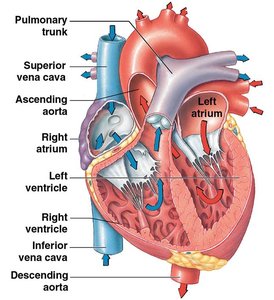
Example: The structure of the heart's chambers and valves enables it to pump blood efficiently throughout the body.
Characteristics of Life
Common Features of Living Organisms
All living things share several essential characteristics that distinguish them from non-living matter. These characteristics are fundamental to the study of anatomy and physiology.
Cellular Composition: All living things are composed of one or more cells.
Organization: Living organisms exhibit complex structural organization, from molecules to organ systems.
Responsiveness: Ability to detect and respond to stimuli in the environment.
Regulation (Homeostasis): Maintenance of a stable internal environment.
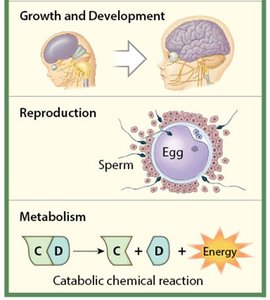
Growth and Development: Increase in size and progression through life stages.
Reproduction: Production of offspring to ensure species continuity.
Metabolism: All chemical reactions in the body, including anabolic (building up) and catabolic (breaking down) processes.
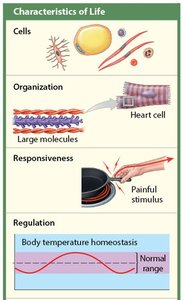
Example: Humans respond to a hot surface by withdrawing their hand (responsiveness), and maintain body temperature through sweating (regulation).
Levels of Organization in the Human Body
Hierarchical Structure
The human body is organized into a hierarchy of increasing complexity, from the smallest chemical level to the entire organism.
Chemical Level: Atoms combine to form molecules and macromolecules.
Cellular Level: Cells are the basic units of life, each with specialized functions.
Tissue Level: Groups of similar cells performing a common function.
Organ Level: Structures composed of two or more tissue types working together.
Organ System Level: Groups of organs that perform related functions.
Organism Level: The complete living being.
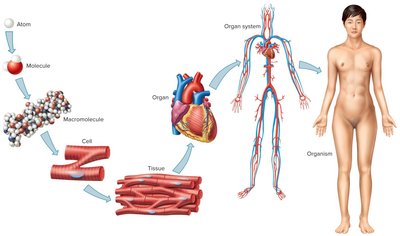
Example: Muscle cells (cellular level) form muscle tissue, which makes up the heart (organ), part of the cardiovascular system (organ system).
Major Organ Systems of the Human Body
Overview and Functions
The human body consists of eleven major organ systems, each with specific structures and functions essential for survival.
Integumentary System: Protects against environmental hazards and regulates body temperature.
Skeletal System: Provides support, protects tissues, stores minerals, and forms blood cells.
Muscular System: Produces movement, provides support, and generates heat.
Nervous System: Directs immediate responses to stimuli and coordinates activities of other systems.
Endocrine System: Directs long-term changes with hormones.
Cardiovascular System: Transports cells and dissolved materials.
Lymphatic System: Defends against infection and returns tissue fluid to the bloodstream.
Respiratory System: Delivers air for gas exchange and produces sound.
Digestive System: Processes food and absorbs nutrients.
Urinary System: Eliminates excess water, salts, and wastes.
Reproductive System: Produces sex cells and hormones; supports embryonic development (female).
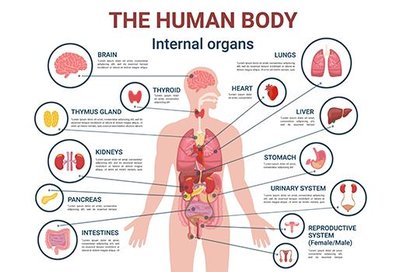
Organ System | Major Organs | Major Functions |
|---|---|---|
Integumentary | Skin, hair, nails, sweat glands | Protects tissues, regulates temperature, supports sensory receptors |
Skeletal | Bones, ligaments, cartilages | Framework, protects tissues, muscle attachment, blood cell production |
Muscular | Muscles | Movement, posture, heat production |
Nervous | Brain, spinal cord, nerves | Detects changes, interprets sensory info, stimulates muscles/glands |
Endocrine | Glands (pituitary, thyroid, etc.) | Controls metabolic activities |
Cardiovascular | Heart, blood vessels | Moves blood, transports substances |
Lymphatic | Lymph nodes, spleen, thymus | Returns tissue fluid, defends against infection |
Digestive | Mouth, stomach, intestines, etc. | Receives, breaks down, absorbs food |
Respiratory | Nasal cavity, lungs, etc. | Gas exchange |
Urinary | Kidneys, bladder, etc. | Removes wastes, maintains water/electrolyte balance |
Reproductive | Testes, ovaries, etc. | Produces sex cells, supports development |
Homeostasis
Maintaining Internal Stability
Homeostasis is the process by which the body maintains a stable internal environment despite changes in external conditions. It is essential for the survival of cells and, by extension, the organism.
Homeostatic Regulation: Involves physiological adjustments to preserve homeostasis.
Components of Homeostatic Mechanisms:
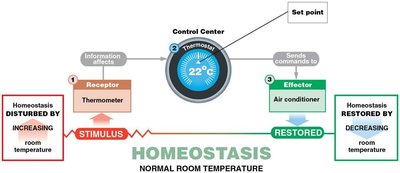
Receptor (Sensor): Detects changes in the environment.
Control Center: Processes information and determines the response.
Effector: Carries out the response to restore balance.
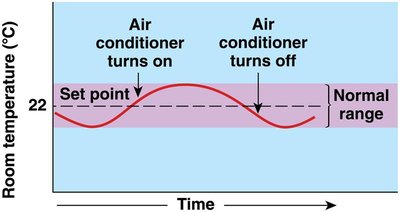
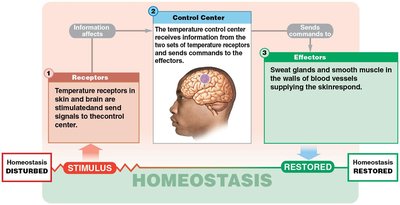
Example: Body temperature regulation involves temperature receptors (receptors), the hypothalamus (control center), and sweat glands or muscles (effectors).
Negative and Positive Feedback
Feedback mechanisms are essential for homeostatic regulation:
Negative Feedback: The most common mechanism; reverses a change to keep a variable within a normal range.
Positive Feedback: Less common; amplifies a change, moving the variable further from the set point (e.g., blood clotting, labor contractions).
Example: Negative feedback: Regulation of blood glucose levels. Positive feedback: Oxytocin release during childbirth intensifies uterine contractions.
Anatomical Terminology and Body Organization
Standard Anatomical Position and Terms
To describe body parts and positions accurately, anatomy uses standardized terminology, often derived from Latin or Greek.
Anatomical Position: Standing upright, facing forward, arms at sides, palms forward, feet together.
Directional Terms: Used to describe locations (e.g., anterior/ventral, posterior/dorsal, superior/inferior, medial/lateral, proximal/distal, superficial/deep).
Sectional Planes: Frontal (coronal), sagittal (midsagittal), and transverse (horizontal) planes divide the body for study.
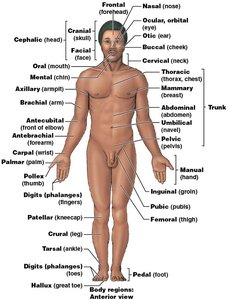
Example: The heart is medial to the lungs and superior to the diaphragm.
Body Cavities and Membranes
The body contains major cavities that house and protect organs. These cavities are lined by serous membranes that secrete fluid to reduce friction.
Major Cavities: Thoracic cavity (chest), abdominopelvic cavity (abdomen and pelvis).
Serous Membranes: Double-layered membranes (visceral and parietal layers) lining cavities and covering organs (pleura, pericardium, peritoneum).
Example: The lungs are located in the pleural cavities within the thoracic cavity, lined by pleural membranes.
Additional info: Understanding anatomical terminology and body organization is essential for effective communication in health sciences and for accurately describing locations, relationships, and functions of body parts.
