 Back
Introduction to Anatomy & Physiology: Foundations, Organization, and Terminology
Study Guide - Smart Notes
 Tailored notes based on your materials, expanded with key definitions, examples, and context.
Introduction to Anatomy & Physiology
What is Science?
Science is a systematic approach to understanding the natural world through observation, questioning, testing, and discovery. It involves collecting facts, forming hypotheses, and developing theories to explain phenomena. The field of biology, which includes anatomy and physiology, is a branch of science focused on living organisms.
Science (from Latin "to know"): A method for acquiring knowledge about the natural world.
Involves questioning, observation, experimentation, and discovery.
Results in a body of knowledge including facts, ideas, hypotheses, and theories.
Biology as a Field of Science
Biology is the study of life and living organisms. It distinguishes living things from non-living things by a set of defining characteristics.
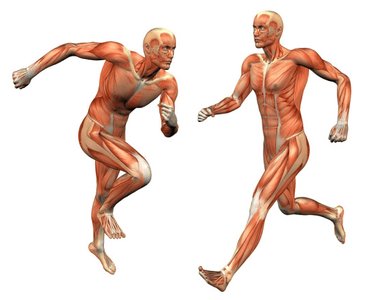
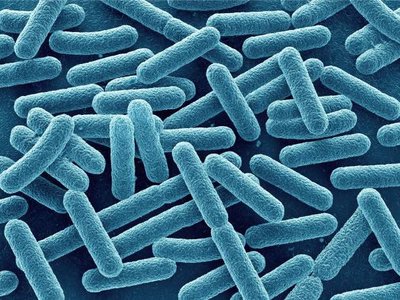
Living things exhibit unique features such as growth, development, movement, metabolism, responsiveness, reproduction, and organization.
Characteristics of Life
Defining Features of Living Organisms
Growth: Increase in size due to cell enlargement, increased cell number, or accumulation of extracellular material.
Development: Process by which cells become specialized and organisms become more complex.
Movement: Includes movement of the whole body, organs, cells, or substances within cells.
Metabolism: The sum of all chemical reactions in the body, including both synthesis (anabolism) and breakdown (catabolism) of molecules.
Responsiveness (Homeostasis): The ability to detect and respond to changes in the environment to maintain stable internal conditions.
Reproduction: Formation of new cells for growth, repair, or replacement, or the production of a new individual.
Organization: Living things have a defined structure, often with boundaries such as cell membranes, and increasing complexity from simple to complex forms.

Hierarchy of Life
Life is organized in a hierarchical manner, from the simplest chemical level to the complex organismal level.
Chemical Level: Atoms and molecules
Cellular Level: Cells and their organelles
Tissue Level: Groups of similar cells performing a common function
Organ Level: Structures composed of two or more tissue types
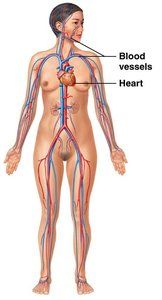
Organ System Level: Groups of organs working together
Organismal Level: The complete living being
How We Study Humans
Anatomy
Anatomy is the study of the structure of body parts and their relationships to one another. It can be divided into:
Microscopic Anatomy: Study of structures too small to be seen with the naked eye (e.g., cells and tissues—histology).
Macroscopic (Gross) Anatomy: Study of large body structures visible to the naked eye, organized by regions or systems.
Physiology
Physiology is the study of the function of body parts and how they work to sustain life. It often involves understanding chemical processes and how structure enables function.
Utilizes the scientific method and experimentation.
Focuses on how structures carry out life-sustaining activities.
Structure and Function are Complementary
Structure determines function, and function always reflects structure. Understanding anatomy and physiology together is essential for comprehending how the body works.
Requirements for Human Life
Essential Factors
Food/Nutrients: Provide energy and building blocks for growth and repair.
Oxygen: Required for cellular respiration and energy production.
Water: Medium for chemical reactions and transport of substances.
Normal Body Temperature: Necessary for proper metabolic reactions.
Pressure: Atmospheric and hydrostatic pressures are needed for breathing and fluid movement.
How Cells Get What They Need
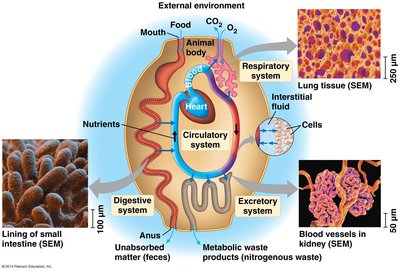
Each organ system plays a specific role in providing cells with nutrients, oxygen, and waste removal to maintain life.
Overview of Human Organ Systems
The human body is organized into organ systems, each with specific anatomical components and functions.
System | Anatomical Components | Function |
|---|---|---|
Integumentary | Skin, hair, nails, sweat & oil glands | Protects the body; regulates temperature; detects sensations |
Skeletal | Bones, joints, cartilage, ligaments | Supports and protects; assists movement; stores minerals |
Muscular | Skeletal muscle tissue & tendons | Movement; regulates body temperature |
Nervous | Brain, spinal cord, nerves, sensory organs | Main communication system |
Endocrine | Hormone-producing glands and tissues | Secondary communication system |
Lymphatic | Lymphatic vessels, fluid, spleen, thymus, lymph nodes | Regulates fluid balance; protects against disease |
Cardiovascular | Blood, heart, blood vessels | Transports nutrients, gases, waste |
Respiratory | Nasal cavity, pharynx, trachea, bronchial tree, lungs | Gas exchange |
Digestive | Mouth, pharynx, esophagus, stomach, intestines, rectum | Breaks down and absorbs nutrients |
Urinary | Kidneys, ureters, bladder, urethra | Removes waste |
Reproductive | Gonads and associated organs | Produces gametes and offspring |
Anatomical Terminology
Standard Anatomical Position
The standard anatomical position is used as a reference for describing body parts and positions. The patient stands facing forward, feet shoulder-width apart, arms at the sides with palms facing forward. Right and left refer to the patient's right and left, not the observer's.
Body Regions and Divisions
The body is divided into regions for easier reference, similar to how a state is divided into counties and cities. The two major divisions are:
Axial: Head, neck, trunk (cranial, cervical, thoracic, abdominal, pelvic)
Appendicular: Limbs (upper and lower)
Regional Terms
Anterior/Ventral: Front of the body
Posterior/Dorsal: Back of the body
Specific regions are named for clarity (e.g., brachial for arm, femoral for thigh).
Directional Terms
Directional terms describe the location of one body part relative to another. Most are paired with opposites (e.g., superior/inferior, medial/lateral, proximal/distal).
Superior (Cranial): Toward the head
Inferior (Caudal): Toward the feet
Anterior (Ventral): Toward the front
Posterior (Dorsal): Toward the back
Medial: Toward the midline
Lateral: Away from the midline
Proximal: Closer to the point of attachment
Distal: Farther from the point of attachment
Organization of the Human Body
Body Cavities
The body contains internal spaces called cavities that protect, separate, and support internal organs.
Dorsal (Posterior) Cavity: Contains the cranial cavity (brain) and vertebral cavity (spinal cord).
Ventral (Anterior) Cavity: Divided by the diaphragm into the thoracic cavity (lungs, heart, mediastinum) and abdominopelvic cavity (digestive, urinary, and reproductive organs).
Body Planes and Sections
Imaginary planes are used to visualize and describe internal structures:
Sagittal Plane: Divides the body into right and left parts.
Frontal (Coronal) Plane: Divides the body into anterior and posterior parts.
Transverse Plane: Divides the body into superior and inferior parts (cross-section).
Oblique Plane: Passes through the body at an angle.
Check Your Understanding
Compare anatomy and physiology; explain how structure relates to function.
Describe anatomical and physiological studies for a selected organ system.
Apply the characteristics of life to determine if something is alive.
List and describe the hierarchical order of life.
Identify requirements for sustaining human life in new environments.
Demonstrate and describe the standard anatomical position.
Define and use directional and regional terms appropriately.
Identify body cavities, planes, and sections from images.
