 Back
Introduction to Anatomy & Physiology: The Human Body – An Orientation
Study Guide - Smart Notes
 Tailored notes based on your materials, expanded with key definitions, examples, and context.
The Human Body: An Orientation
Introduction to Anatomy and Physiology
Anatomy and physiology are foundational sciences in understanding the structure and function of the human body. Anatomy focuses on the physical structures, while physiology explores how these structures operate and interact.
Anatomy: The study of the structure and shape of the body and its parts.
Physiology: The study of how the body and its parts work or function.
Levels of Structural Organization
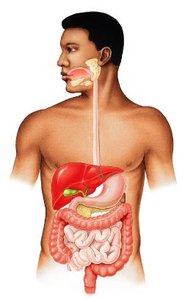
The human body is organized into a hierarchy of structural levels, each building upon the previous one. Understanding these levels is essential for grasping how the body functions as a whole.
Chemical Level: Atoms combine to form molecules.
Cellular Level: Cells are made up of molecules.
Tissue Level: Tissues consist of similar types of cells.
Organ Level: Organs are made up of different types of tissues.
Organ System Level: Organ systems consist of different organs that work together closely.
Organismal Level: The human organism is made up of many organ systems.
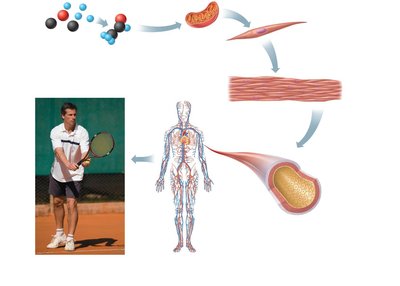
Branches of Anatomy
Anatomy can be studied at different scales and through various approaches:
Gross Anatomy: Study of large structures visible to the naked eye.
Regional Anatomy: Examines all structures in a particular area of the body.
System Anatomy: Focuses on one system (e.g., cardiovascular, nervous, muscular).
Surface Anatomy: Studies internal structures as they relate to the overlying skin.
Microscopic Anatomy: Study of structures too small to be seen with the naked eye, such as cells (cytology) and tissues (histology).
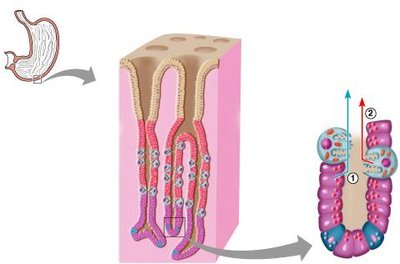
Necessary Life Functions and Survival Needs
Necessary Life Functions
To sustain life, the human body must perform certain essential functions. These processes are critical for maintaining health and homeostasis.
Maintaining Boundaries: Separation between internal and external environments (e.g., plasma membranes, skin).
Movement: Locomotion and movement of substances within the body.
Responsiveness: Ability to sense and respond to stimuli.
Digestion: Breakdown and delivery of nutrients.
Metabolism: All chemical reactions that occur in body cells.
Excretion: Removal of wastes from metabolism and digestion.
Reproduction: Cell division and production of offspring.
Growth: Increase in size of a body part or of the organism.
Survival Needs
In addition to performing life functions, the body requires certain environmental factors to survive:
Nutrients: Chemicals for energy and cell building (carbohydrates, fats, proteins, minerals, vitamins).
Oxygen: Essential for energy release (ATP production).
Water: Most abundant chemical in the body; site of chemical reactions.
Normal Body Temperature: Affects the rate of chemical reactions.
Appropriate Atmospheric Pressure: Necessary for adequate breathing and gas exchange in the lungs.
Homeostasis
Definition and Importance
Homeostasis is the maintenance of a relatively stable internal environment despite continuous external changes. It is a central concept in physiology and is vital for the proper functioning of the body.
Homeostasis involves dynamic equilibrium, where internal conditions vary within narrow limits.
Disruption of homeostasis can lead to disease or dysfunction.
Components of a Control Mechanism
Homeostatic control mechanisms involve three main components that work together to maintain stability:
Receptor (Sensor): Monitors the environment and responds to stimuli (changes in controlled variables).
Control Center: Determines the set point at which the variable is maintained, receives input from the receptor, and determines the appropriate response.
Effector: Receives output from the control center and provides the means to respond, either reducing or enhancing the stimulus (feedback).
Homeostatic Control Pathways
The process of maintaining homeostasis typically follows a pathway:
Stimulus produces change in variable.
Receptor detects change.
Input: Information sent along afferent pathway to control center.
Output: Information sent along efferent pathway to effector.
Response of effector feeds back to reduce the effect of stimulus and returns variable to homeostatic level.
Feedback Mechanisms
Negative Feedback Mechanisms
Negative feedback mechanisms are the most common homeostatic control mechanisms. They work to shut off the original stimulus or reduce its intensity, returning the variable to normal.
Performs the opposite of the stimulus.
Examples: Regulation of body temperature, blood glucose levels.
Positive Feedback Mechanisms
Positive feedback mechanisms enhance or amplify the original stimulus, causing the variable to continue in the same direction. These are less common and usually control infrequent events.
Examples: Blood clotting, labor contractions during childbirth.
Positive feedback does not last indefinitely and is typically stopped by an outside event.
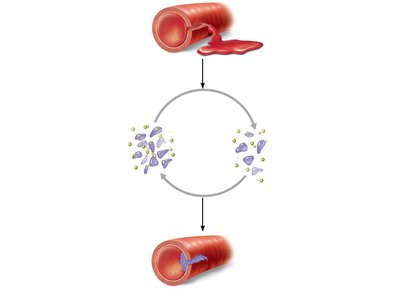
Comparison of Negative and Positive Feedback
Feature | Negative Feedback | Positive Feedback |
|---|---|---|
Direction of Response | Opposes stimulus | Enhances stimulus |
Frequency | Most common | Rare |
Examples | Body temperature, blood glucose | Blood clotting, labor contractions |
Additional info: Homeostatic imbalance is often the cause of most diseases, as the body loses its ability to maintain stable internal conditions.
