 Back
BackModule 1: Introduction to Anatomy, Physiology, and Homeostasis
Study Guide - Smart Notes
 Tailored notes based on your materials, expanded with key definitions, examples, and context.
Overview of Anatomy and Physiology
Anatomy: Study of Structure
Anatomy is the scientific study of the structure of living organisms. It is divided into several subdivisions based on the scale and method of study:
Gross or Macroscopic Anatomy: Examines structures visible to the naked eye, such as organs and organ systems. Includes regional, systemic, and surface anatomy.
Microscopic Anatomy: Focuses on structures that require magnification, such as cells (cytology) and tissues (histology).
Developmental Anatomy: Studies structural changes throughout the life span, including embryology.
Methods for Studying Anatomy
Mastery of Anatomical Terminology: Essential for clear communication.
Observation: Visual examination of structures.
Manipulation: Moving parts to understand their relationships.
Palpation: Feeling structures with hands.
Auscultation: Listening to sounds produced by organs.
Physiology: Study of Function
Physiology is the study of how the body and its parts function. It is often divided by organ systems, such as renal physiology (kidneys) or cardiovascular physiology (heart and blood vessels). Physiology frequently focuses on cellular and molecular levels, emphasizing the chemical reactions that drive bodily functions.
Systemic to Molecular Focus: Understanding function from the whole system down to individual cells.
Physical Principles: Includes electrical currents, pressure, and movement.
Chemical Principles: Involves reactions and interactions among molecules.
Principle of Complementarity
Relationship Between Structure and Function
Anatomy and physiology are inseparable. The function of a body part always reflects its structure, and what a structure can do depends on its specific form. For example, the shape of bones allows them to support weight, and the thin walls of capillaries facilitate gas exchange.
Levels of Structural Organization
Hierarchy of Complexity in the Human Body
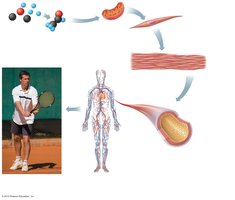
The human body is organized into several levels, each building upon the previous:
Chemical Level: Atoms combine to form molecules, which make up organelles.
Cellular Level: Cells are the basic units of life, composed of molecules.
Tissue Level: Groups of similar cells form tissues.
Organ Level: Organs consist of two or more types of tissues working together.
Organ System Level: Organ systems are groups of organs that work closely together.
Organismal Level: The human organism is the sum of all organ systems.
Example: The cardiovascular system includes the heart and blood vessels, which are composed of various tissues and cells.
Homeostasis
Maintaining Internal Stability
Homeostasis is the process by which the body maintains stable internal conditions despite external changes. It is a dynamic state of equilibrium, achieved through the coordinated actions of all organ systems.
Dynamic Equilibrium: Internal conditions fluctuate within a narrow range.
Contribution of Organ Systems: All systems work together to maintain balance.
Homeostatic Control Mechanisms
Homeostatic regulation involves continuous monitoring and adjustment of variables. Communication is essential, primarily accomplished by the nervous and endocrine systems through nerve impulses and hormones.
Nervous System: Rapid communication via electrical signals.
Endocrine System: Slower, longer-lasting regulation via hormones.
Components of a Control Mechanism
Each homeostatic control system consists of three main components:
Receptor (Sensor): Monitors the environment and detects changes (stimuli).
Control Center: Determines the set point, receives input, and decides the response.
Effector: Receives output and acts to restore balance, either reducing (negative feedback) or enhancing (positive feedback) the stimulus.
Feedback Mechanisms
Negative Feedback
Negative feedback mechanisms reduce or eliminate the original stimulus, helping to maintain homeostasis. Most body processes use negative feedback.
Example: Regulation of blood glucose by insulin. When blood glucose rises, receptors signal the pancreas (control center) to release insulin. Insulin prompts cells (effectors) to absorb glucose, lowering blood glucose levels.
Positive Feedback
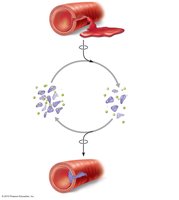
Positive feedback mechanisms enhance or amplify the original stimulus. These are less common and typically control infrequent events that require rapid completion.
Example: Platelet plug formation and blood clotting. When a blood vessel is damaged, platelets adhere to the site and release chemicals that attract more platelets, forming a plug.
Example: Enhancement of labor contractions by oxytocin.
Homeostatic Imbalance
Consequences of Disrupted Homeostasis
Disturbances in homeostasis increase the risk of disease and contribute to aging. If negative feedback mechanisms are overwhelmed, destructive positive feedback may occur, such as in heart failure.
Risk of Disease: Imbalance can lead to pathological conditions.
Aging: Control systems become less efficient over time.
Destructive Feedback: Unchecked positive feedback can worsen conditions.
