 Back
Introduction to Animal Evolution: Structure, Development, and Major Lineages
Study Guide - Smart Notes
 Tailored notes based on your materials, expanded with key definitions, examples, and context.
Introduction to Animal Evolution
Overview of Animal Characteristics
Animals are a diverse group of multicellular, heterotrophic organisms that exhibit a range of structural and developmental features. Understanding these characteristics is fundamental to the study of animal evolution and classification.
Multicellularity: All animals are multicellular, distinguishing them from many protists and some fungi.
Heterotrophy: Animals obtain energy by consuming other organisms; digestion is internal.
Cell Structure: Animal cells lack cell walls, which are present in plants and fungi.
Movement: Most animals exhibit directed movement at some stage of their life cycle.
Reproduction: Sexual reproduction is common, though some groups have lost this ability secondarily.
Nervous and Muscular Systems: Most animals possess specialized tissues for movement and response to stimuli.
Major Features of Animal Body Plans
Symmetry and Tissue Organization
Animal body plans are classified based on symmetry, tissue layers, and the presence of body cavities. These features are crucial for understanding evolutionary relationships among animal phyla.
Symmetry: Animals may exhibit asymmetry, radial symmetry, or bilateral symmetry.
Tissue Layers: Most animals are either diploblastic (two tissue layers: ectoderm and endoderm) or triploblastic (three tissue layers: ectoderm, mesoderm, endoderm).
Body Cavities: The presence and type of body cavity (coelom) is a key trait in animal classification.
Developmental Stages
Animal development involves a series of stages, including cleavage, blastula formation, and gastrulation, which establish the basic body plan.
Cleavage: Rapid cell division following fertilization.
Blastula: A hollow ball of cells formed after cleavage.
Gastrulation: The process that forms the digestive tract and establishes tissue layers.
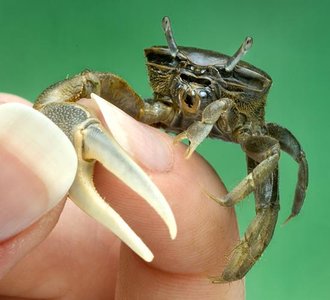
Fate of the Blastopore
The fate of the blastopore (the first opening formed during gastrulation) distinguishes two major groups of animals:
Protostomes: Mouth develops from the blastopore.
Deuterostomes: Anus develops from the blastopore.
Body Cavities
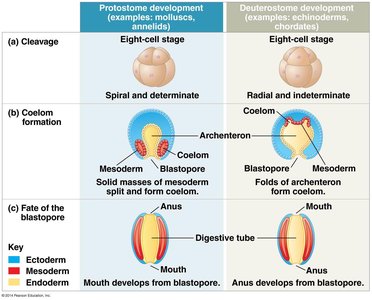
Triploblastic animals may have different types of body cavities:
Acoelomate: No body cavity between the digestive tract and outer body wall.
Pseudocoelomate: Body cavity not completely lined by mesoderm.
Coelomate: Body cavity completely lined by mesoderm-derived tissue.
Segmentation
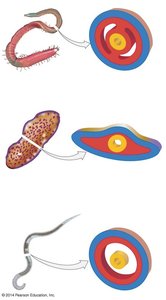
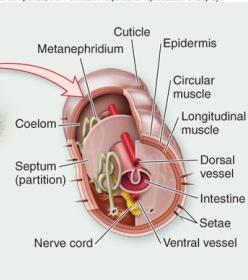
Segmentation refers to the subdivision of the body into repeated units, a feature seen in several animal phyla (e.g., annelids, arthropods, chordates).
Major Animal Lineages
Porifera (Sponges)
Sponges are simple, primarily aquatic animals that lack true tissues and organs. They are considered the most basal animal lineage.
Species Diversity: Approximately 5,500 species.
Habitat: Aquatic, both marine and freshwater.
Structure: Sessile adults, mobile larvae; lack true tissues and organs.
Development: No gastrulation during development.
Specialized Cells: Choanocytes (collar cells) for feeding; intracellular digestion.
Choanoflagellates and Animal Origins
Choanoflagellates are a group of protists considered the closest living relatives to animals. Morphological and molecular evidence suggests that the common ancestor of animals may have resembled modern choanoflagellates.
Feeding: Suspension feeders, similar to sponge choanocytes.
Cnidaria
Cnidarians are aquatic animals known for their stinging cells (cnidocytes) and simple body plans. They include jellyfish, corals, and hydras.
Species Diversity: About 10,000 species.
Body Plan: Diploblastic (two tissue layers), radial symmetry.
Special Features: Cnidocytes for prey capture and defense.
Life Cycle: Many alternate between polyp and medusa forms.
Platyhelminthes (Flatworms)
Flatworms are a diverse group of mostly parasitic animals with simple, flattened bodies. They are among the simplest bilaterians.
Species Diversity: Approximately 20,000 species.
Body Plan: Triploblastic, acoelomate, bilateral symmetry.
Parasitism: Many species are parasitic, often with complex life cycles involving multiple hosts.
Digestive System: Some parasitic forms have reduced or absent digestive systems.
Summary Table: Major Animal Lineages and Key Features
Lineage | Symmetry | Tissue Layers | Coelom | Segmentation | Gut Openings |
|---|---|---|---|---|---|
Porifera | Asymmetrical | None | None | No | None |
Cnidaria | Radial | 2 (Diploblastic) | None | No | 1 |
Platyhelminthes | Bilateral | 3 (Triploblastic) | Acoelomate | No | 1 |
Key Terms and Concepts
Multicellular: Composed of multiple cells.
Heterotroph: Organism that obtains food by consuming other organisms.
Diploblastic: Having two primary germ layers (ectoderm and endoderm).
Triploblastic: Having three primary germ layers (ectoderm, mesoderm, endoderm).
Coelom: A fluid-filled body cavity lined by mesoderm.
Blastopore: The first opening formed during gastrulation.
Segmentation: Division of the body into repeated segments.
Example: Life Cycle of a Parasitic Flatworm
Many flatworms, such as flukes and tapeworms, have complex life cycles involving multiple hosts. High reproductive output and reduced digestive systems are common adaptations to parasitism.
Additional info: This summary provides foundational knowledge for further study of animal diversity, structure, and development, as covered in introductory anatomy and physiology courses.
