 Back
BackIntroduction to Biology: Evolution, Themes, and Scientific Inquiry
Study Guide - Smart Notes
 Tailored notes based on your materials, expanded with key definitions, examples, and context.
Introduction to Biology
What is Biology?
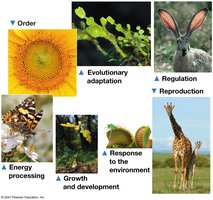
Biology is the scientific study of life, encompassing a vast range of topics from the molecular mechanisms within cells to the interactions of organisms within ecosystems. Life is recognized by a set of characteristics that distinguish living things from nonliving matter.
Order: Living organisms exhibit complex but ordered organization.
Evolutionary adaptation: Populations evolve over generations to adapt to their environments.
Regulation: Organisms regulate their internal environment to maintain a stable, constant condition (homeostasis).
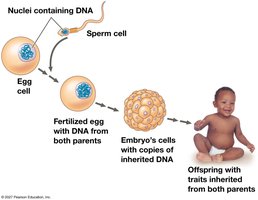
Reproduction: Living things reproduce, passing genetic information to their offspring.
Energy processing: Organisms obtain and use energy to power their activities.
Growth and development: Organisms grow and develop according to specific instructions coded in their DNA.
Response to the environment: Living things respond to environmental stimuli.
Unifying Themes in Biology
Levels of Biological Organization
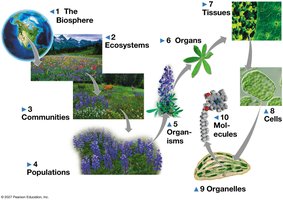
Life can be studied at different levels, from molecules to the entire biosphere. Each level exhibits emergent properties that arise from the interactions and arrangements of its parts.
Biosphere → Ecosystems → Communities → Populations → Organisms → Organs → Tissues → Cells → Organelles → Molecules
Emergent properties: New properties arise at each level that are not present at the preceding level.
Reductionism: The approach of reducing complex systems to simpler components for study.
Systems biology: The study of interactions among the parts of a biological system.
Structure and Function
At every level of the biological hierarchy, there is a correlation between structure and function. Understanding the structure of a biological component provides insight into its function, and vice versa.
The Cell: The Basic Unit of Life
Cell Theory and Types of Cells
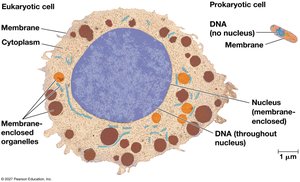
The cell is the smallest unit of organization that can perform all activities required for life. According to cell theory, all living organisms are composed of cells. Cells are classified as either prokaryotic or eukaryotic:
Prokaryotic cells: Simpler, smaller, lack a nucleus and membrane-bound organelles (e.g., bacteria and archaea).
Eukaryotic cells: Larger, contain a nucleus and membrane-bound organelles (e.g., plants, animals, fungi, protists).
Genetic Information and Its Expression
DNA: The Genetic Material
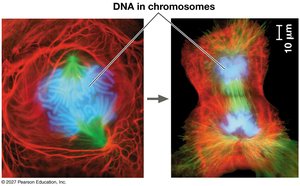
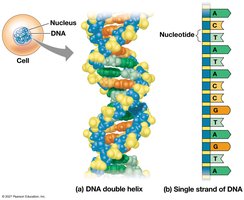
Within cells, chromosomes contain DNA (deoxyribonucleic acid), the hereditary material that encodes genes. Genes are units of inheritance that direct the synthesis of proteins and, ultimately, the development and functioning of organisms.
DNA structure: Double helix composed of four nucleotides (A, T, C, G).
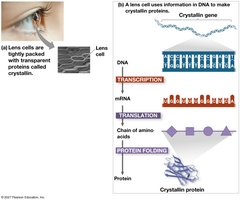
Gene expression: The process by which information from a gene is used to synthesize a functional product, typically a protein.
Central Dogma: DNA is transcribed into RNA, which is then translated into protein.
Genomics and Proteomics
Genomics is the study of whole sets of genes and their interactions, while proteomics is the study of the entire set of proteins produced by an organism. These fields rely on high-throughput technology and bioinformatics for data analysis.
Energy and Matter in Biological Systems
Energy Flow and Chemical Cycling
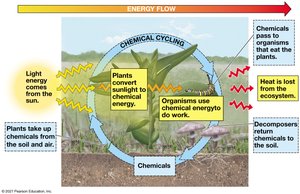
Life requires the transfer and transformation of energy and matter. Energy flows through ecosystems, usually entering as sunlight and exiting as heat, while chemicals cycle within ecosystems.
Producers: Organisms (e.g., plants) that convert sunlight into chemical energy.
Consumers: Organisms that obtain energy by eating other organisms.
Decomposers: Organisms that break down dead material, returning nutrients to the ecosystem.
Biological Regulation and Feedback
Feedback Mechanisms
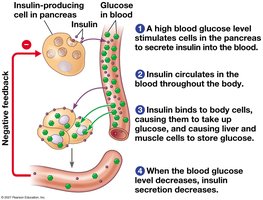
Biological processes are often regulated by feedback mechanisms. Negative feedback reduces the initial stimulus, maintaining homeostasis, while positive feedback amplifies the stimulus.
Example of negative feedback: Regulation of blood glucose by insulin.
Evolution: The Core Theme of Biology
Unity and Diversity of Life
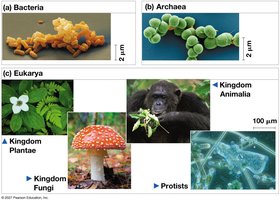
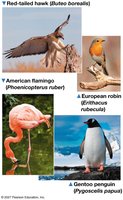
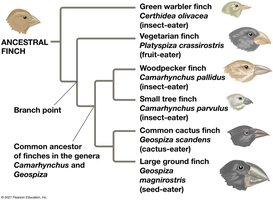
Evolution explains both the unity and diversity of life. All organisms share a common ancestry, but have diversified over time through the process of evolution by natural selection.
Species: Each species is given a two-part scientific name (genus and species).
Domains of life: Bacteria, Archaea, and Eukarya.
Charles Darwin and Natural Selection
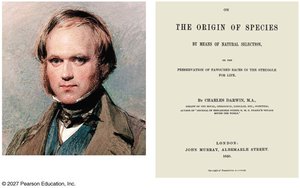
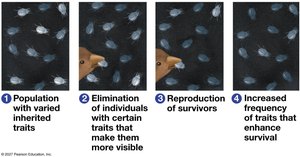
Charles Darwin proposed that species evolve through natural selection, where individuals with advantageous traits are more likely to survive and reproduce. Over generations, these traits become more common in the population.
Descent with modification: Species are modified descendants of common ancestors.
Natural selection: The process by which beneficial traits increase in frequency within a population.
Scientific Inquiry
The Process of Science
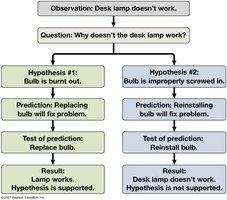
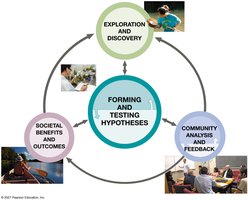
Science is a way of knowing, based on inquiry and evidence. The scientific method involves making observations, forming hypotheses, and testing them through experiments.
Hypothesis: A testable explanation for an observation.
Experiment: A controlled test to evaluate a hypothesis.
Variables: Independent (manipulated) and dependent (measured) variables.
Theory: A broad explanation supported by a large body of evidence.
Science, Technology, and Society
Interdependence and Ethics
Science and technology are interdependent, with advances in one often driving progress in the other. Ethical, political, and cultural considerations play a significant role in the application of scientific knowledge.
Summary Tables and Figures
Summary of Key Concepts
Concept | Description |
|---|---|
Levels of Organization | Biosphere, ecosystems, communities, populations, organisms, organs, tissues, cells, organelles, molecules |
Cell Types | Prokaryotic (no nucleus), Eukaryotic (nucleus and organelles) |
Genetic Material | DNA, genes, gene expression |
Energy Flow | Sunlight → producers → consumers → decomposers |
Feedback Regulation | Negative and positive feedback mechanisms |
Evolution | Descent with modification, natural selection |
Domains of Life | Bacteria, Archaea, Eukarya |
Additional info: These notes provide foundational concepts that are essential for further study in Anatomy & Physiology, especially regarding cell structure, genetic information, energy processing, and the scientific method.
