 Back
Introduction to Human Anatomy & Physiology: Anatomical Terms, Body Planes, and Organ Systems
Study Guide - Smart Notes
 Tailored notes based on your materials, expanded with key definitions, examples, and context.
The Human Body: An Orientation
Introduction to Human Anatomy & Physiology
Human anatomy and physiology is the study of the structure and function of the human body. Understanding anatomical terminology, body planes, and the organization of organ systems is foundational for further study in health and biological sciences.

Lab Safety in Anatomy & Physiology
Lab safety is essential for preventing accidents and ensuring a safe learning environment.
Students must read, sign, and submit the lab safety contract and complete the safety quiz as required by the course.
Compliance with safety protocols is mandatory before participating in laboratory activities.
Anatomical Positions and Terms
Standard Anatomical Position
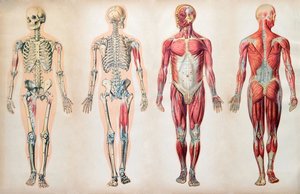
The standard anatomical position is used as a reference in describing the location and relation of body parts. The body stands erect, facing forward, with arms at the sides and palms facing forward.
Regional Terms
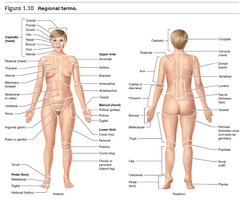
Regional terms specify distinct areas of the body, aiding in precise communication in anatomy.
Body Planes and Sections
Commonly Used Body Planes
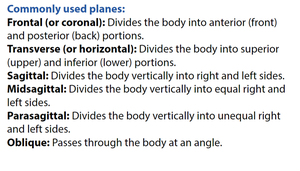
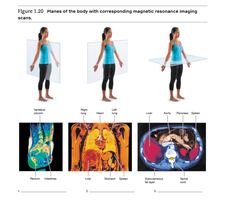
Body planes are imaginary lines used to divide the body into sections for anatomical study and medical imaging.
Frontal (coronal) plane: Divides the body into anterior (front) and posterior (back) portions.
Transverse (horizontal) plane: Divides the body into superior (upper) and inferior (lower) portions.
Sagittal plane: Divides the body vertically into right and left sides.
Midsagittal plane: Divides the body vertically into equal right and left sides.
Parasagittal plane: Divides the body vertically into unequal right and left sides.
Oblique plane: Passes through the body at an angle.
Body Cavities and Subdivisions
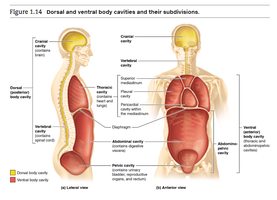
Dorsal and Ventral Body Cavities
The human body contains major cavities that house and protect vital organs.
Dorsal body cavity: Includes the cranial cavity (brain) and vertebral cavity (spinal cord).
Ventral body cavity: Includes the thoracic cavity (heart and lungs) and abdominopelvic cavity (digestive, urinary, and reproductive organs).
Major Organs and Their Locations
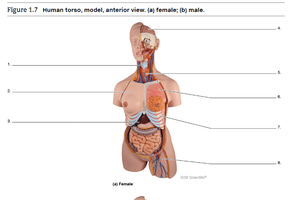
Anterior View of Human Torso
Understanding the location of major organs is essential for clinical practice and anatomical study.
Thyroid Gland Anatomy
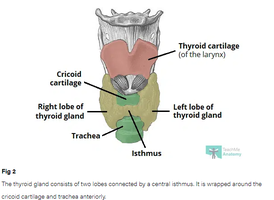
The thyroid gland is an endocrine organ located in the neck, anterior to the trachea. It consists of two lobes connected by an isthmus and is closely associated with the thyroid cartilage of the larynx.
Function: Regulates metabolism through hormone secretion.
Clinical relevance: Hypothyroidism can affect the skin, cardiovascular, and digestive systems.
Abdominopelvic Quadrants and Regions
Body Quadrants and Regions
The abdominopelvic cavity is divided into quadrants and regions to localize organs and describe pain or pathology.
Right Upper Quadrant (RUQ): Contains most of the liver, gallbladder, and part of the colon.
Epigastric region: Superior central region, contains part of the liver and stomach.
Right hypochondriac region: Right lateral region just below the ribs, contains part of the liver.

Clinical Applications and Case Studies
Case Study: Hepatitis and the Liver
Hepatitis is a viral disease affecting the liver, which is primarily located in the right upper quadrant (RUQ) and spans the epigastric and right hypochondriac regions. The liver is part of the digestive system and plays a key role in metabolism and detoxification.
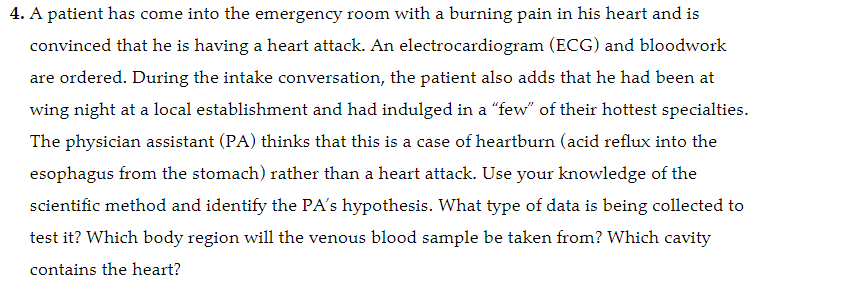
Case Study: Heart Attack vs. Heartburn
Symptoms of a heart attack include radiating chest pain, shortness of breath, and chest pressure. The heart is located in the thoracic cavity, specifically the mediastinum. Diagnostic data such as ECG and bloodwork are collected to differentiate between cardiac and gastrointestinal causes of chest pain.
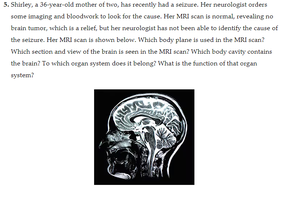
Case Study: Brain MRI and the Nervous System
MRI scans are used to visualize brain anatomy. The midsagittal plane provides a medial view of the brain, which is housed in the cranial cavity. The brain is part of the nervous system, responsible for responding to internal and external stimuli by activating appropriate muscles and glands.
Summary Table: Body Planes and Their Descriptions
Plane | Description |
|---|---|
Frontal (Coronal) | Divides body into anterior and posterior portions |
Transverse (Horizontal) | Divides body into superior and inferior portions |
Sagittal | Divides body into right and left sides |
Midsagittal | Divides body into equal right and left sides |
Parasagittal | Divides body into unequal right and left sides |
Oblique | Passes through the body at an angle |
Additional info:
Students are expected to review figures and complete assigned activities as part of their homework to reinforce anatomical concepts.
Understanding anatomical terminology and body organization is foundational for all subsequent topics in human anatomy and physiology.
