 Back
Introduction to Human Anatomy and Physiology: Organization and Organ Systems
Study Guide - Smart Notes
 Tailored notes based on your materials, expanded with key definitions, examples, and context.
Introduction to Anatomy and Physiology
Definitions and Relationship
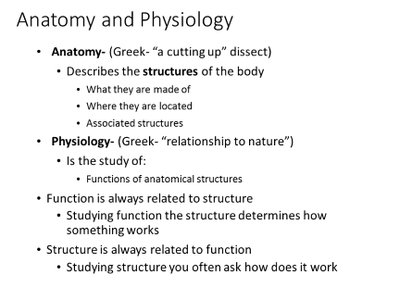
Anatomy is the study of the structures of the body, including what they are made of, where they are located, and their associated structures. The term comes from the Greek word meaning "a cutting up" or dissection. Physiology is the study of the functions of anatomical structures and how they work together to sustain life. The term is derived from the Greek for "relationship to nature." Function and structure are closely related: understanding one often requires knowledge of the other.
Function is always related to structure: Studying how something works often requires understanding its structure.
Structure is always related to function: Studying the structure often leads to questions about how it works.
Divisions of Anatomy
Major Subfields
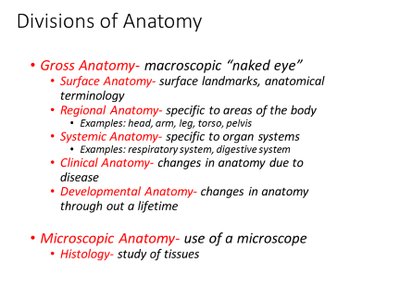
Anatomy is divided into several subfields based on the scale of observation and the focus of study:
Gross Anatomy: Study of structures visible to the naked eye.
Surface Anatomy: Study of surface landmarks and anatomical terminology.
Regional Anatomy: Study of specific areas of the body (e.g., head, arm, leg, torso, pelvis).
Systemic Anatomy: Study of organ systems (e.g., respiratory, digestive systems).
Clinical Anatomy: Study of anatomical changes due to disease.
Developmental Anatomy: Study of anatomical changes throughout a lifetime.
Microscopic Anatomy: Study of structures requiring a microscope.
Histology: Study of tissues.
Levels of Organization in the Human Body
Chemical and Cellular Levels
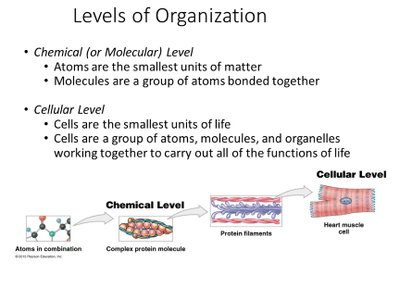
The human body is organized in a hierarchy from the smallest chemical units to the complete organism. Understanding these levels is essential for grasping how the body functions as a whole.
Chemical (Molecular) Level:
Atoms are the smallest units of matter.
Molecules are groups of atoms bonded together.
Cellular Level:
Cells are the smallest units of life.
Cells are composed of atoms, molecules, and organelles working together to perform all functions of life.
Tissue, Organ, Organ System, and Organism Levels
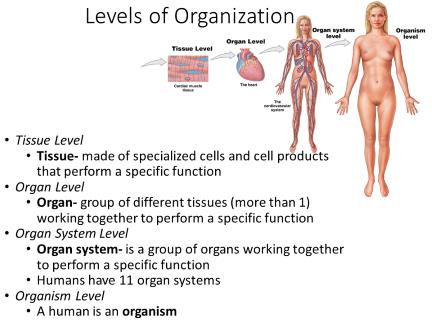
Tissue Level: Tissues are made of specialized cells and cell products that perform a specific function.
Organ Level: Organs are groups of different tissues working together to perform specific functions. Most organs contain more than one type of tissue.
Organ System Level: Organ systems are groups of organs working together to perform a specific function. Humans have 11 organ systems.
Organism Level: A human is an organism, the highest level of organization.
The 11 Organ Systems of the Human Body
Overview
Each organ system has specific major organs and functions. Understanding these systems is fundamental to the study of anatomy and physiology.
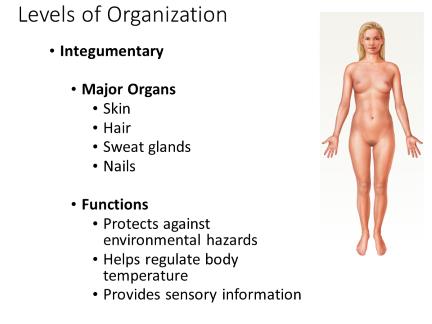
Integumentary System
Major Organs: Skin, hair, sweat glands, nails
Functions:
Protects against environmental hazards
Helps regulate body temperature
Provides sensory information
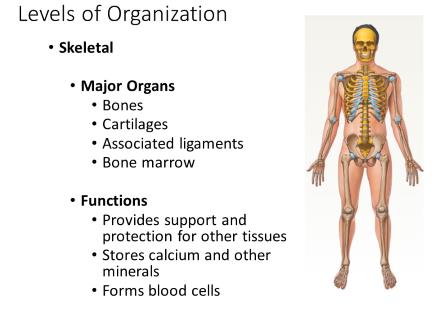
Skeletal System
Major Organs: Bones, cartilages, associated ligaments, bone marrow
Functions:
Provides support and protection for other tissues
Stores calcium and other minerals
Forms blood cells
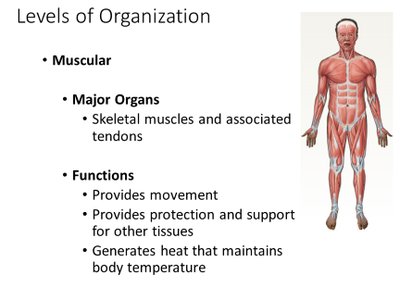
Muscular System
Major Organs: Skeletal muscles and associated tendons
Functions:
Provides movement
Provides protection and support for other tissues
Generates heat that maintains body temperature
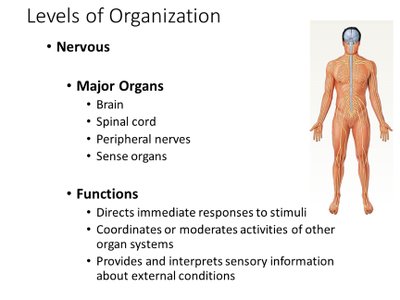
Nervous System
Major Organs: Brain, spinal cord, peripheral nerves, sense organs
Functions:
Directs immediate responses to stimuli
Coordinates or moderates activities of other organ systems
Provides and interprets sensory information about external conditions
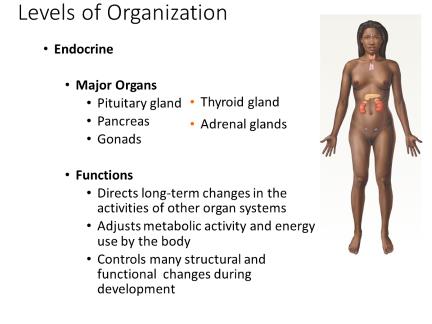
Endocrine System
Major Organs: Pituitary gland, thyroid gland, pancreas, adrenal glands, gonads
Functions:
Directs long-term changes in the activities of other organ systems
Adjusts metabolic activity and energy use by the body
Controls many structural and functional changes during development
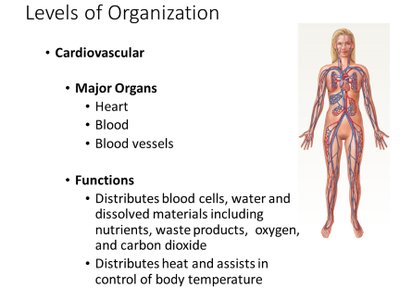
Cardiovascular System
Major Organs: Heart, blood, blood vessels
Functions:
Distributes blood cells, water, and dissolved materials including nutrients, waste products, oxygen, and carbon dioxide
Distributes heat and assists in control of body temperature
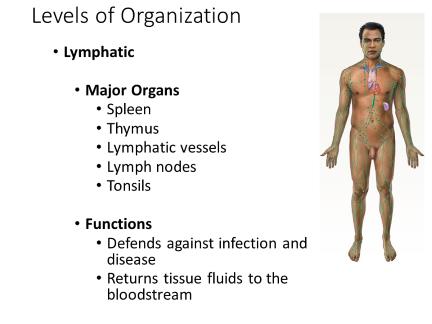
Lymphatic System
Major Organs: Spleen, thymus, lymphatic vessels, lymph nodes, tonsils
Functions:
Defends against infection and disease
Returns tissue fluids to the bloodstream
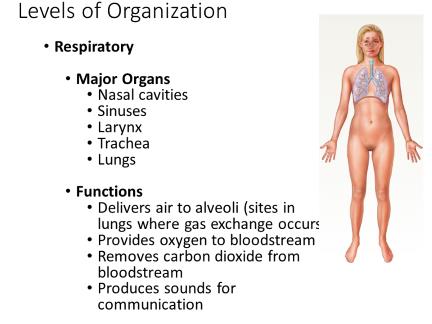
Respiratory System
Major Organs: Nasal cavities, sinuses, larynx, trachea, lungs
Functions:
Delivers air to alveoli (sites in lungs where gas exchange occurs)
Provides oxygen to bloodstream
Removes carbon dioxide from bloodstream
Produces sounds for communication
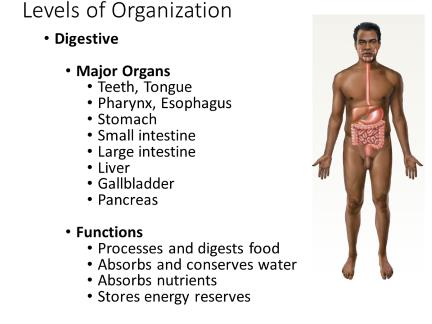
Digestive System
Major Organs: Teeth, tongue, pharynx, esophagus, stomach, small intestine, large intestine, liver, gallbladder, pancreas
Functions:
Processes and digests food
Absorbs and conserves water
Absorbs nutrients
Stores energy reserves
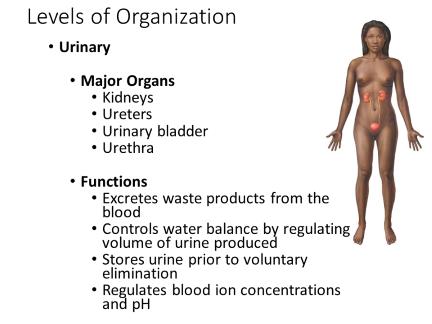
Urinary System
Major Organs: Kidneys, ureters, urinary bladder, urethra
Functions:
Excretes waste products from the blood
Controls water balance by regulating volume of urine produced
Stores urine prior to voluntary elimination
Regulates blood ion concentrations and pH
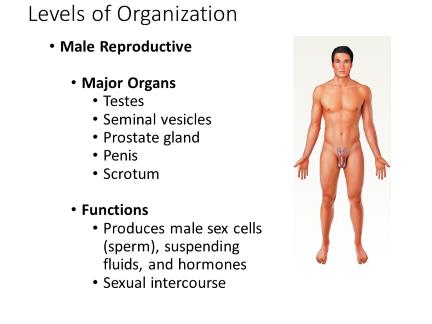
Male Reproductive System
Major Organs: Testes, seminal vesicles, prostate gland, penis, scrotum
Functions:
Produces male sex cells (sperm), suspending fluids, and hormones
Sexual intercourse
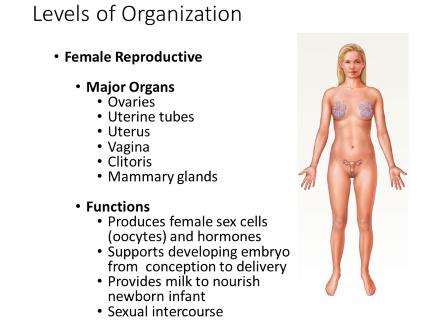
Female Reproductive System
Major Organs: Ovaries, uterine tubes, uterus, vagina, clitoris, mammary glands
Functions:
Produces female sex cells (oocytes) and hormones
Supports developing embryo from conception to delivery
Provides milk to nourish newborn infant
Sexual intercourse
Review Questions
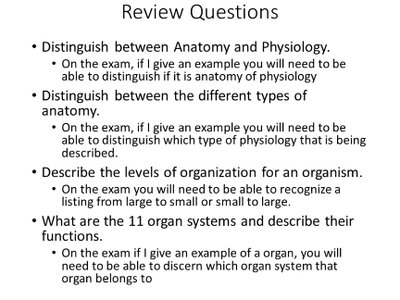
Distinguish between anatomy and physiology.
Distinguish between the different types of anatomy.
Describe the levels of organization for an organism.
What are the 11 organ systems and describe their functions?
Additional info: Understanding these foundational concepts is essential for success in anatomy and physiology courses and for interpreting clinical and developmental changes in the human body.
