 Back
Introduction to Medical Terminology: Foundations for Anatomy and Physiology
Study Guide - Smart Notes
 Tailored notes based on your materials, expanded with key definitions, examples, and context.
The Language of Medicine
Historical Foundations of Medical Terminology
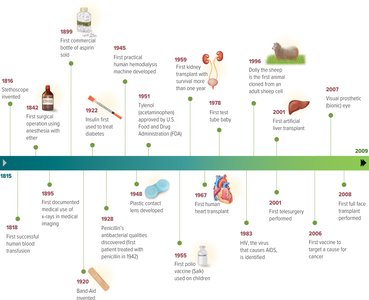
Medical terminology has its roots in ancient Greek and Latin, reflecting the early history of medicine. Many terms used today are derived from these languages, providing a standardized vocabulary for healthcare professionals. The process of naming diseases, body parts, and treatments began with early civilizations and was formalized by figures such as Hippocrates, known as the 'father of medicine.'
Key Point: The Greek word karkinos means both 'crab' and 'cancer,' illustrating how descriptive imagery influenced medical language.
Key Point: The Hippocratic Oath, attributed to Hippocrates, set ethical standards for medical practice.
Example: The term 'phlebotomy' comes from Greek roots meaning 'cutting a vein.'

Derivation and Structure of Medical Terms
Word Roots, Prefixes, Suffixes, and Combining Forms
Medical terms are constructed from word parts that convey specific meanings. Understanding these components allows for the interpretation and construction of complex terms.
Word Root: The core part of the word that contains its basic meaning, often indicating a body part or system (e.g., cardi = heart).
Prefix: Added to the beginning of a word root to modify its meaning, often indicating location, direction, or quality (e.g., peri- = around).
Suffix: Added to the end of a word root to modify its meaning, often indicating a procedure, condition, or disease (e.g., -itis = inflammation).
Combining Form: A word root plus a combining vowel (usually 'o') to aid pronunciation when joining word parts (e.g., cardi/o).


Modern-Day Compound Words and Medical Terminology
Compound Words in English and Medicine
Just as compound words in English combine two words to create a new meaning, medical terminology combines word parts to form terms that describe complex concepts efficiently.
Key Point: Learning the meaning of word parts enables the construction and understanding of new medical terms.
Example: Gynecology = gynec/o (women) + -logy (study of) = study of women.

Spelling and Pronunciation of Medical Terms
Importance of Accuracy
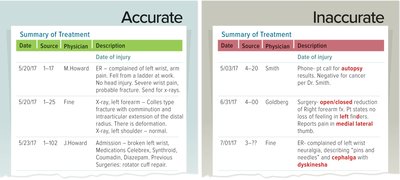
Correct spelling and pronunciation are critical in medical settings to avoid errors that could impact patient care. Medical terms often use diacritical marks to indicate pronunciation, and syllable emphasis is shown by capitalizing the stressed syllable.
Key Point: Misspellings or mispronunciations can lead to serious, even life-threatening, mistakes.
Key Point: Eponyms are terms derived from people's names (e.g., Parkinson disease).
Word Roots and Combining Forms
Building and Deconstructing Medical Terms
Understanding the structure of medical terms is essential for interpreting unfamiliar words. The suffix is often identified first, followed by the word root and any prefixes. Combining vowels (usually 'o') are used to link word parts for easier pronunciation.
Key Point: The same suffix or prefix can be used with different word roots to create new terms (e.g., -ist in cardiologist and neurologist).
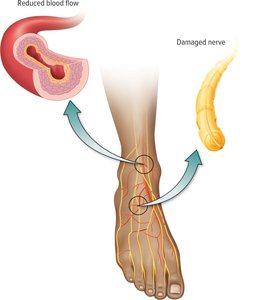
Example: Neuropathy = neur/o (nerve) + -pathy (disease).
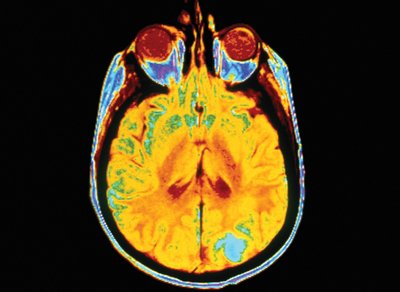
Example: Encephalitis = en- (inside) + cephal (head) + -itis (inflammation).
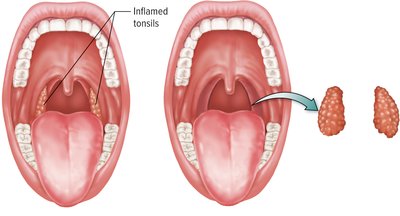
Example: Tonsillectomy = tonsil (throat tissue) + -ectomy (removal).
Common Combining Forms
Body Parts, Sensations, Qualities, and Conditions
Combining forms are used to describe body parts, sensations, qualities, and conditions. Mastery of these forms is foundational for understanding medical language.
Body Parts: cyt/o (cell), oste/o (bone), cardi/o (heart)
Sensations: algesi/o (pain), esthesi/o (sensation), therm/o (heat)
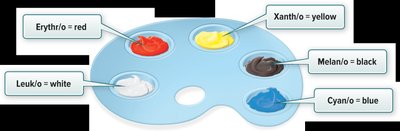
Qualities: leuk/o (white), erythr/o (red), melan/o (black), cyan/o (blue), xanth/o (yellow)
Conditions: carcin/o (cancer), path/o (disease), pyr/o (fever)
Medical Records and Abbreviations
Documentation and Standardization
Medical records are essential for documenting patient care, ensuring legal and ethical standards, and facilitating communication among healthcare providers. Abbreviations are commonly used but can lead to errors if not standardized.
Key Point: The electronic medical record (EMR) is becoming the standard for documentation.
Key Point: Common abbreviations include CBC (complete blood count), Dx (diagnosis), and Rx (prescription).
Example: SNOMED CT and ICD-10-CM are coding systems used for diagnosis and treatment documentation.


Summary Table: Common Combining Forms and Their Meanings
Combining Form | Meaning | Example |
|---|---|---|
cardi/o | heart | Cardiology |
oste/o | bone | Osteoarthritis |
neur/o | nerve | Neuropathy |
cyt/o | cell | Cytology |
leuk/o | white | Leukocyte |
erythr/o | red | Erythrocyte |
melan/o | black | Melanoma |
pyr/o | fever, fire | Pyrogenic |
path/o | disease | Pathology |
Conclusion
Understanding the structure and derivation of medical terms is essential for students of anatomy and physiology. Mastery of word roots, prefixes, suffixes, and combining forms provides a foundation for learning the language of medicine and facilitates accurate communication in healthcare settings.
