 Back
BackIntroduction to Microbiology: Bacteria, Viruses, Parasites, and Immunity
Study Guide - Smart Notes
 Tailored notes based on your materials, expanded with key definitions, examples, and context.
Bacteriology, Virology, and Parasitology
Overview
This section introduces the fundamental concepts of microbiology, focusing on bacteria, viruses, and parasites, as well as the body's defense mechanisms against these pathogens. Understanding these microorganisms and the immune response is essential for students of anatomy and physiology, as they play a critical role in health and disease.
Bacteria
Definition and Characteristics
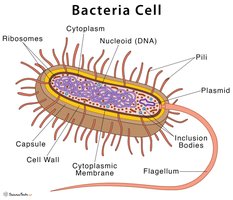
Bacteria are prokaryotic organisms, meaning they lack a membrane-bound nucleus and other organelles.
They are among the smallest, simplest, and most ancient forms of life.
Bacteria are single-celled and contain structures such as ribosomes, cytoplasm, and a nucleoid region where their genetic material is located.
They can be found in a variety of environments, including the human body, where they often outnumber human cells by 10 to 1.
Types of Bacteria
Bacteria are classified as Gram-positive or Gram-negative based on their cell wall structure.
Gram-negative bacteria have an extra outer membrane, which affects their staining properties and antibiotic susceptibility.
Bacterial Shapes
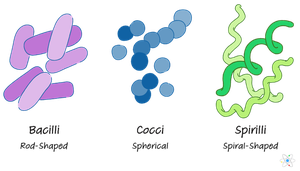
Bacteria exhibit various shapes, including:
Bacilli (rod-shaped)
Cocci (spherical)
Spirilli (spiral-shaped)
Reproduction and Communication
Bacteria replicate primarily by binary fission (a form of asexual reproduction).
They can communicate through chemical signaling molecules, a process known as quorum sensing, allowing coordinated behavior within bacterial populations.
Pathogenicity and Spread
Only about 1% of known bacteria are pathogenic to humans.
Pathogens are microorganisms that can cause disease, including bacteria, fungi, viruses, helminths, and protozoa.
Bacteria can spread through various means, including direct contact, contaminated food or water, and vectors.
Viruses
Definition and Structure
Viruses are assemblies of genetic material (DNA or RNA) surrounded by a protein coat (capsid), and sometimes an additional lipid envelope.
They are not considered living organisms because they cannot reproduce independently; they require a host cell to replicate.
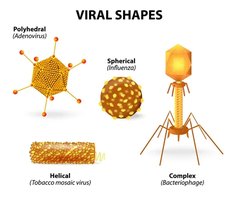
Viruses vary in shape and size, including polyhedral, spherical, helical, and complex forms.
Viral Infections
Viruses cause a wide range of diseases, such as influenza, herpes simplex, Ebola, Zika, and the common cold.
They are often host-specific, infecting only certain species or cell types.
Some viruses can evolve to infect new hosts, including humans (e.g., zoonotic transmission).
Importance of Differentiating Viral and Bacterial Infections
Accurate diagnosis is crucial for effective treatment and to avoid unnecessary use of antibiotics, which can lead to antibiotic resistance.
Modern molecular tools are improving the speed and accuracy of distinguishing between viral and bacterial infections.
Secondary bacterial infections can complicate viral diseases, as seen in severe cases of viral pneumonia and COVID-19.
Parasites
Definition and Types
A parasite is an organism that lives on or in a host, obtaining nutrients at the host's expense.
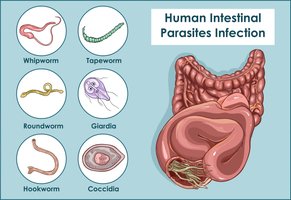
Three main classes of human parasites:
Protozoa (single-celled eukaryotes)
Helminths (worms, such as roundworms and tapeworms)
Ectoparasites (organisms like lice and ticks that live on the body surface)
Defense and Immunity
Overview of the Immune System
The immune system protects the body from a wide range of threats, including bacteria, viruses, parasites, chemicals, and abnormal cells. It consists of two main types of defense mechanisms: innate (non-specific) and adaptive (specific) immunity.
Innate (Non-Specific) Immunity
Present at birth and provides the first line of defense against pathogens.
Includes physical barriers (skin, mucous membranes), chemical barriers (enzymes, pH), and cellular defenses (phagocytes, natural killer cells).
Acts rapidly but does not provide long-lasting immunity.
Adaptive (Specific) Immunity
Activated when innate defenses are breached or when specific antigens are detected.
Involves lymphocytes (T-cells and B-cells) and the production of antibodies.
Has the ability to "learn" and remember specific pathogens, providing long-term immunity (immunological memory).
Any substance that triggers an immune response is called an antigen.
Physical and Chemical Barriers
Skin: Acts as a physical barrier to prevent pathogen entry.
Mucous membranes: Trap and help remove microbes.
Enzymes: Break down pathogens (e.g., lysozyme in saliva and tears).
pH: Acidic environments (e.g., stomach acid) inhibit microbial growth.
Hair and cilia: Trap and move particles out of the respiratory tract.
Key Immune Cells
T-lymphocytes (T-cells): Involved in cell-mediated immunity, targeting infected or abnormal cells.
B-lymphocytes (B-cells): Produce antibodies that neutralize pathogens.
Clinical Relevance
Understanding the immune response is essential for diagnosing and treating infectious diseases.
Immunological memory is the basis for vaccination and long-term protection against diseases.
Summary Table: Comparison of Bacteria, Viruses, and Parasites
Feature | Bacteria | Viruses | Parasites |
|---|---|---|---|
Cell Type | Prokaryotic | Non-cellular | Eukaryotic (protozoa, helminths); varies |
Reproduction | Binary fission | Requires host cell | Sexual/asexual (varies) |
Diseases | Tuberculosis, strep throat | Flu, HIV, COVID-19 | Malaria, tapeworm infection |
Treatment | Antibiotics | Antivirals, vaccines | Antiparasitics |
Additional info: The immune system's effectiveness can decline with age, and disorders of immune function include allergies, autoimmune diseases, and immunodeficiencies.
