 Back
BackIntroduction to Microbiology: Foundations, History, and Classification
Study Guide - Smart Notes
 Tailored notes based on your materials, expanded with key definitions, examples, and context.
Introduction to Microbiology
Overview of Microbiology
Microbiology is the study of microscopic organisms, including bacteria, archaea, fungi, protists, helminths, viruses, and prions. It encompasses both living and nonliving entities, some of which are pathogenic while others are beneficial or neutral to humans and the environment. Microbiology plays a crucial role in healthcare, industry, agriculture, and environmental sciences.
Microbe: A microscopic organism, which may be unicellular, multicellular, or acellular.
Pathogen: A microbe that causes disease.
Normal microbiota: Microbes that reside in and on the human body, often providing beneficial functions.
The Early Years of Microbiology
Discovery of Microbial Life
The first observations of microorganisms were made by Antoni van Leeuwenhoek, who developed simple microscopes and described 'animalcules' in water samples. His work laid the foundation for the field of microbiology.

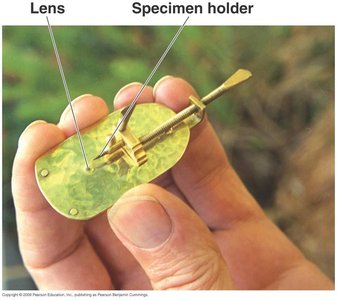
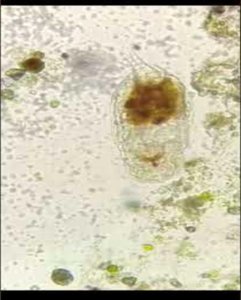
Leeuwenhoek's observations were reported to the Royal Society and led to the recognition of microorganisms, later termed microbes.
By the end of the 19th century, these organisms were classified as microorganisms or microbes.
Classification of Microbes
Carolus Linnaeus developed a taxonomic system for naming and grouping organisms. Leeuwenhoek’s microorganisms were grouped into six categories: fungi, protozoa, algae, bacteria, archaea, and small animals. Viruses were not described by Leeuwenhoek due to their small size and the limitations of light microscopy.
What Is Microbiology?
Microbiology includes the study of both cellular (living) and noncellular (nonliving) entities:
Cellular microbes: Bacteria, archaea, fungi, protists, helminths
Noncellular entities: Viruses, prions
Microbes are essential for food production, medication synthesis, and environmental processes such as bioremediation.
Table: Living and Nonliving Agents Studied in Microbiology
Microbe | Cell Type | Notes |
|---|---|---|
Bacteria | Prokaryotic | Unicellular; pathogenic and nonpathogenic |
Archaea | Prokaryotic | Unicellular; nonpathogenic; extremophiles |
Protists | Eukaryotic | Unicellular/multicellular; pathogenic and nonpathogenic |
Fungi | Eukaryotic | Unicellular/multicellular; pathogenic and nonpathogenic |
Helminths | Eukaryotic | Multicellular; parasitic worms |
Viruses | Not cells; nonliving | Infect animal, plant, or bacterial cells; DNA or RNA genome |
Prions | Not cells; nonliving | Infectious proteins; discovered in 1980s |
Cellular Organization and Evolution
Prokaryotic vs. Eukaryotic Cells
Prokaryotic cells (bacteria and archaea) evolved about 3.5 billion years ago and are the earliest life forms. Eukaryotic cells include all multicellular organisms and some unicellular microorganisms. The endosymbiotic theory explains the origin of mitochondria and chloroplasts as formerly free-living bacteria engulfed by ancestral eukaryotic cells.
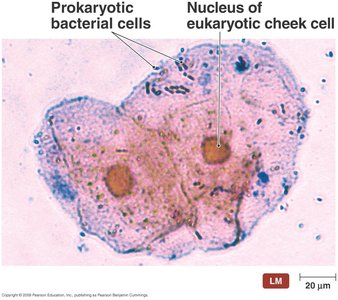
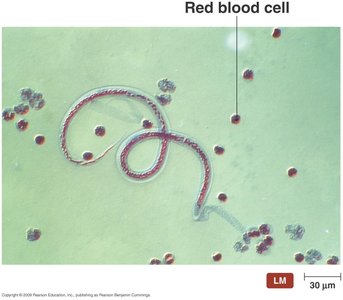
Evidence for endosymbiotic theory: Double membranes, own DNA and ribosomes, binary fission reproduction.
Major Microbial Categories
Fungi
Fungi are eukaryotic organisms that obtain food from other organisms and possess cell walls. They are classified as molds (multicellular, with hyphae and spores) or yeasts (unicellular, reproduce by budding).
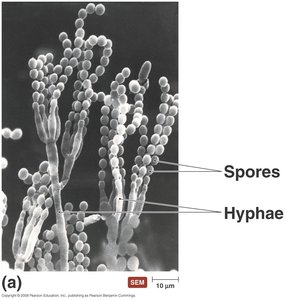
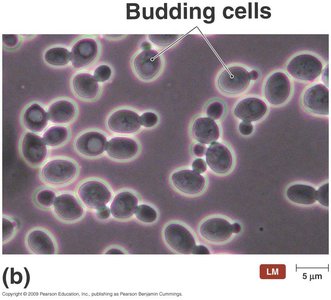
Example: Saccharomyces cerevisiae (yeast), Penicillium chrysogenum (mold, source of penicillin)
Protozoa
Protozoa are single-celled eukaryotes, often motile, and may be free-living or parasitic. They reproduce mainly asexually, with some capable of sexual reproduction. Locomotion is achieved via pseudopodia, cilia, or flagella.
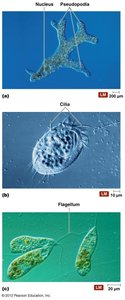
Example: Plasmodium (causes malaria)
Algae
Algae are unicellular or multicellular photosynthetic organisms that produce oxygen and serve as food sources in aquatic environments. They are categorized by pigmentation, storage products, and cell wall composition.
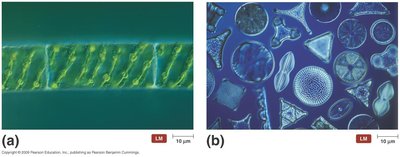
Example: Seaweeds, kelps, diatoms
Viruses and Prions
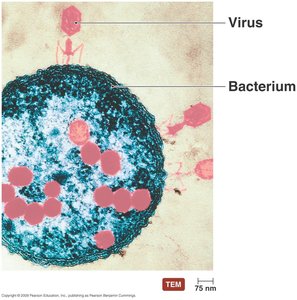
Viruses are acellular, nonliving entities that require host cells for replication. Prions are infectious proteins that cause neurodegenerative diseases.
The Golden Age of Microbiology
Major Questions and Experiments
The "Golden Age" (mid-1800s to early 1900s) addressed key questions: Is spontaneous generation possible? What causes fermentation? What causes disease? How can we prevent infection and disease?
Spontaneous Generation Debate
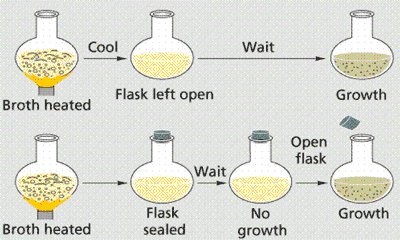
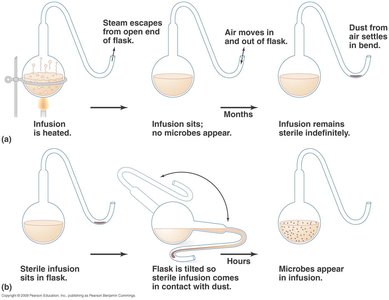
The theory of spontaneous generation (abiogenesis) proposed that living things could arise from nonliving matter. This was challenged and ultimately disproven through experiments by Redi, Needham, Spallanzani, and Pasteur.

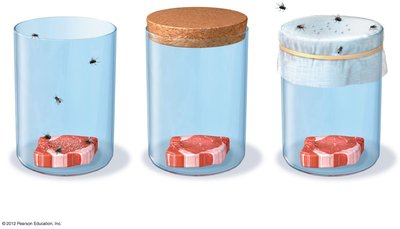
Redi: Showed that maggots on meat came from flies, not spontaneous generation.
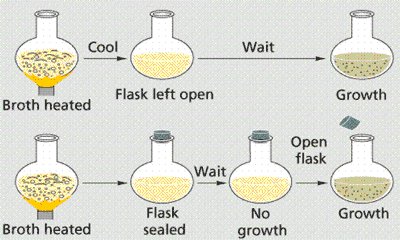
Needham: Claimed microbes arose spontaneously in broth, but his methods were flawed.
Spallanzani: Improved Needham's experiment, showing no growth when broth was properly sealed and heated.
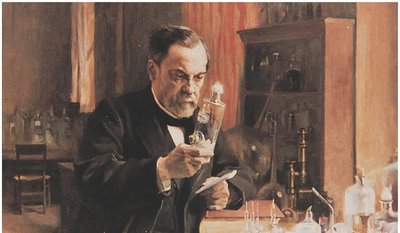
Pasteur: Used swan-necked flasks to definitively disprove spontaneous generation.
The Scientific Method
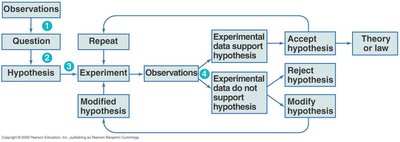
The scientific method involves observation, hypothesis formation, experimentation, and conclusion. It is the foundation of modern scientific inquiry.
Fermentation and Pasteurization
Pasteur demonstrated that fermentation is caused by living organisms (yeasts and bacteria). He developed pasteurization to prevent spoilage and established the field of industrial microbiology.
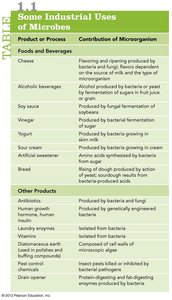
Industrial Uses of Microbes
Product or Process | Contribution of Microorganism |
|---|---|
Cheese | Flavoring and ripening by bacteria and fungi |
Alcoholic beverages | Fermentation by yeast or bacteria |
Antibiotics | Produced by bacteria and fungi |
Vitamins | Isolated from bacteria |
Enzymes | Produced by genetically engineered bacteria |
Other products | Various industrial and medical uses |
Germ Theory of Disease
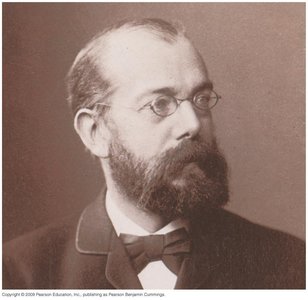
Pasteur and Koch established that specific microbes cause specific diseases. Koch developed a series of postulates to identify causative agents of disease.
Koch's Postulates:
Suspected agent must be found in every case of the disease and absent from healthy hosts.
Agent must be isolated and grown outside the host.
When introduced into a healthy host, the agent must cause the disease.
The same agent must be reisolated from the diseased experimental host.
Advances in Laboratory Techniques
Simple staining techniques
Gram staining (differentiates Gram-positive and Gram-negative bacteria)
Use of Petri dishes and aseptic techniques
Prevention of Infection and Disease
Hand Hygiene and Aseptic Techniques
Ignaz Semmelweis, Joseph Lister, Florence Nightingale, and others emphasized the importance of handwashing and antiseptic techniques to prevent healthcare-associated infections (HAIs).
Aseptic techniques: Handwashing, wearing gloves, sterilizing instruments, decontaminating surfaces
Classification of Microbes
Taxonomic Hierarchy
Taxonomy is the science of classifying organisms. The taxonomic hierarchy includes: Domain, Kingdom, Phylum, Class, Order, Family, Genus, Species. The three domains are Bacteria, Archaea, and Eukarya.
Binomial nomenclature: Two-part scientific name (Genus species), e.g., Escherichia coli
Strain: Genetic variant of a species, often indicated by numbers or letters (e.g., E. coli K-12)
Table: Six-Kingdom Classification System
Kingdom | Domain | Example |
|---|---|---|
Archaea | Archaea | Sulfolobus |
Bacteria | Bacteria | Staphylococcus aureus |
Fungi | Eukarya | Candida albicans |
Plantae | Eukarya | Flowering plants |
Animalia | Eukarya | Tree frog |
Protists | Eukarya | Paramecium |
Host–Microbe Interactions
Types of Symbiosis
Parasitism: Microbe harms the host (e.g., pathogens)
Mutualism: Both host and microbe benefit
Commensalism: Microbe benefits, host is unaffected
Normal Microbiota and the Human Microbiome
The human body is colonized by a vast array of microbes, collectively known as the human microbiome. These microbes play essential roles in health, including immune system training, vitamin production, and protection against pathogens.
Babies are colonized during delivery and early life; factors such as delivery method and feeding influence microbiota development.
Disruptions (e.g., antibiotics) can lead to opportunistic infections.
Transient Microbiota
Transient microbiota are temporary microbes acquired from the environment, often removed by hygiene practices.
Microbes and Human Evolution
Close relationships with microbes have influenced human evolution. For example, the sickle cell gene provides resistance to malaria, a disease caused by protozoa.
Conclusion
Microbiology is a foundational science for understanding life, disease, and the environment. The field continues to evolve, driven by the scientific method and ongoing discoveries about the microbial world.
