 Back
Introduction to Physiology, Cells, and Biomolecules: Foundational Concepts for ANP College Students
Study Guide - Smart Notes
 Tailored notes based on your materials, expanded with key definitions, examples, and context.
Chapter 1: Introduction to Physiology
Definitions and Scope
Physiology is the study of the functions of living organisms and their parts, while anatomy focuses on the structure of those parts. Applied physiology explores how structure and function are interrelated in the human body.
Anatomy: Study of body structures.
Physiology: Study of body functions.
Applied Physiology: Examines the relationship between structure and function.
Hierarchy of Structural Organization
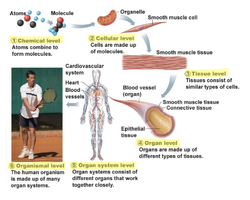
The human body is organized into a hierarchy of levels, each building upon the previous one. This organization is essential for understanding how complex functions arise from simpler components.
Chemical Level: Atoms combine to form molecules.
Cellular Level: Cells are made up of molecules and are the basic living units of the body.
Tissue Level: Tissues consist of groups of similar cells performing a common function.
Organ Level: Organs are made up of different types of tissues.
Organ System Level: Organ systems consist of different organs that work together closely.
Organismal Level: The human organism is made up of many organ systems.
Cells and Tissues
Cells are the fundamental living units of the body. Tissues are groups of similar cells working together to perform specific functions. There are four major types of tissues:
Nervous Tissue: Made of neurons and neuroglia; responsible for sensation, communication, and movement control.
Muscle Tissue: Specialized for movement, temperature regulation, extensibility, elasticity, contraction, and excitability.
Epithelial Tissue: Layers of tightly packed cells attached to a basement membrane; forms glands and lines surfaces.
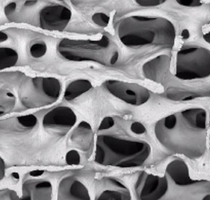
Connective Tissue: Provides support, contains fewer cells and more extracellular material (fibers and matrix); includes bone, blood, and cartilage.
Epithelial Tissue and Glands
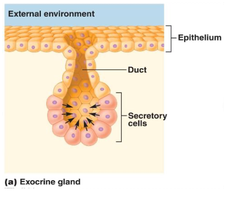
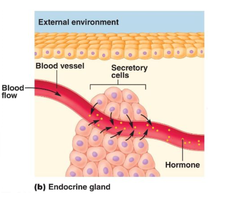
Epithelial tissue forms both exocrine and endocrine glands, which are essential for secretion and regulation in the body.
Exocrine Glands: Secrete substances into ducts that lead to the external environment (e.g., sweat glands).
Endocrine Glands: Release hormones directly into the bloodstream for internal regulation.
Connective Tissue Examples
Bone: Provides structural support and protection.
Blood: Transports nutrients, gases, and wastes.
Cartilage: Offers flexible support in joints and structures.
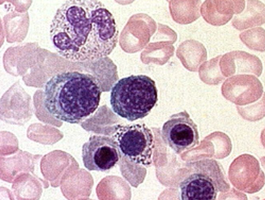
Organs and Organ Systems
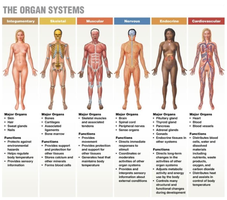
Organs are composed of multiple tissue types working together for specific functions. Organ systems are groups of organs that collaborate to perform complex physiological tasks. Many organ systems share organs and functions, leading to integration and overlap.
Epithelium and Semipermeable Membranes
A single layer of epithelial tissue separates the internal environment of the body from the external environment. Semipermeable membranes regulate the movement of substances and protect internal compartments.
Homeostasis
Homeostasis is the maintenance of stable internal conditions, particularly the composition, temperature, and volume of the extracellular fluid (ECF). Nearly all organ systems contribute to homeostasis, which is vital for survival and function.
Internal Environment: The ECF surrounding cells.
External Environment: The space outside the body or the lumen of certain organs.
Feedback Mechanisms
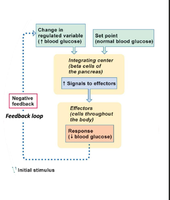
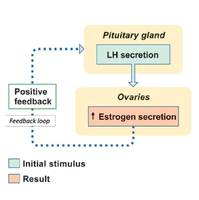
Feedback mechanisms regulate physiological processes to maintain homeostasis.
Negative Feedback: The most common mechanism; reverses a change to maintain stability (e.g., blood glucose regulation).
Positive Feedback: Amplifies a change until a process is completed (e.g., LH surge in ovulation).
Chapter 2: The Cell Structure and Function
Biomolecules and Functional Groups
Biomolecules are organic molecules essential for life, primarily composed of carbon, hydrogen, oxygen, nitrogen, phosphorus, and sulfur. Functional groups impart specific chemical properties to biomolecules.
Carbohydrates: Sugars and starches; polar and hydrophilic; main energy source.
Lipids: Fats, oils, and steroids; nonpolar and hydrophobic; energy storage and membrane structure.
Proteins: Chains of amino acids; diverse functions including enzymes, structure, and signaling.
Nucleic Acids: DNA and RNA; store and transmit genetic information.
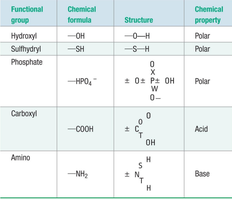
Carbohydrates
Monosaccharides: Simple sugars (e.g., glucose, fructose, galactose).
Disaccharides: Two monosaccharides bonded (e.g., sucrose, lactose).
Polysaccharides: Long chains of monosaccharides (e.g., glycogen).
Lipids
Triglycerides: Glycerol backbone with three fatty acids; main energy storage form.
Phospholipids: Amphipathic molecules forming cell membranes.
Steroids: Four-ring structure; includes cholesterol and steroid hormones.
Eicosanoids: Signaling molecules derived from fatty acids.
Proteins
Amino Acids: 20 types; each has an amino group, carboxyl group, and unique R group.
Protein Structure: Primary (sequence), secondary (folding), tertiary (3D shape), quaternary (subunit assembly).
Types: Fibrous (structural), globular (functional), mixed.
Nucleic Acids and Nucleotides
Nucleotides: Composed of a nitrogenous base, five-carbon sugar, and phosphate group.
DNA: Double helix, stores genetic information.
RNA: Single strand, involved in protein synthesis (mRNA, rRNA, tRNA).
Cell Structure
Plasma Membrane: Phospholipid bilayer with embedded proteins, carbohydrates, and cholesterol; regulates entry and exit of substances.
Nucleus: Contains genetic material; nuclear envelope, pores, and nucleolus.
Cytoplasm: Cytosol and organelles; site of metabolic activity.
Endoplasmic Reticulum (ER): Rough ER (protein synthesis), Smooth ER (lipid synthesis, detoxification).
Golgi Apparatus: Modifies, sorts, and ships proteins.
Mitochondria: Site of ATP production; contains outer and inner membranes, cristae, and matrix.
Lysosomes and Peroxisomes: Degradation and detoxification.
Ribosomes: Protein synthesis; composed of rRNA and proteins.
Cytoskeleton: Microfilaments, intermediate filaments, microtubules; structural support and movement.
Cell-to-Cell Adhesions
Tight Junctions: Prevent leakage between cells.
Desmosomes: Anchor cells together.
Gap Junctions: Allow communication between adjacent cells.
Cell Functions
Metabolism: All chemical reactions in the body; includes anabolism (building up) and catabolism (breaking down).
Membrane Transport: Diffusion, carrier proteins, channels, vesicles (exocytosis, endocytosis).
Intercellular Communication: Direct (gap junctions) and indirect (chemical messengers).
Gene Expression and Protein Synthesis
Gene: DNA segment coding for a protein.
Transcription: DNA is copied into mRNA.
Post-Transcriptional Modifications: Introns removed, exons spliced, cap and poly-A tail added.
Translation: mRNA is decoded at ribosomes to synthesize proteins using tRNA.
Chapter 3: Cell Metabolism
Metabolism and Metabolic Pathways
Metabolism encompasses all chemical reactions in cells. These reactions are organized into metabolic pathways, which can be catabolic (breaking down molecules) or anabolic (building up molecules).
Catabolism: Breakdown of larger molecules into smaller ones; releases energy.
Anabolism: Synthesis of larger molecules from smaller ones; requires energy.
Types of Metabolic Reactions
Hydrolysis: Splitting molecules with water; catabolic.
Condensation: Forming water as a product; anabolic.
Phosphorylation: Addition of a phosphate group; often condensation.
Dephosphorylation: Removal of a phosphate group; often hydrolysis.
Oxidation: Loss of electrons (often with hydrogen atoms).
Reduction: Gain of electrons.
Energy and Thermodynamics
Energy: Capacity to do work; can be kinetic (movement) or potential (stored in bonds).
ΔE (Change in Energy):
Exergonic Reactions: Release energy; spontaneous; negative.
Endergonic Reactions: Require energy input; not spontaneous; positive.
Equilibrium: Forward and reverse reactions occur at the same rate; .
Law of Mass Action and Equilibrium Constant (K)
Law of Mass Action: Increasing reactants drives reaction forward; increasing products drives reaction in reverse.
Equilibrium Constant (K):
K > 1: Exergonic; more products.
K < 1: Endergonic; more reactants.
Activation Energy and Reaction Rates
Activation Energy (Ea): Minimum energy required for a reaction to proceed.
Transition State: Highest energy state during a reaction.
Enzymes: Biological catalysts that lower activation energy and increase reaction rates; not consumed in the reaction.
Enzyme Function and Regulation
Induced Fit Model: Enzyme active site changes shape to fit the substrate.
Cofactors: Non-protein helpers (inorganic or organic).
Coenzymes: Organic cofactors, often derived from vitamins (e.g., NAD, FAD, CoA).
Saturation: Maximum rate achieved when all enzyme active sites are occupied.
Affinity: Strength of substrate binding to enzyme; higher affinity means faster reaction rate.
Enzyme Regulation: Allosteric (modulators bind non-active site) and covalent (phosphorylation/dephosphorylation).
Feedback Inhibition: End product inhibits an earlier enzyme in the pathway to regulate metabolic flow.
ATP and Energy Metabolism
ATP: Main energy currency of the cell; produced by substrate-level and oxidative phosphorylation.
Glucose Oxidation: Involves glycolysis (cytosol), Krebs cycle (mitochondrial matrix), and oxidative phosphorylation (inner mitochondrial membrane).
Electron Transport Chain (ETC): Series of protein complexes that generate ATP using energy from electrons transferred from NADH and FADH2; oxygen is the final electron acceptor.
ATP Yield: 1 glucose molecule yields up to 32 ATP (mainly from oxidative phosphorylation).
Alternative Fuels and Storage
Fats: Broken down via lipolysis for ATP production when glucose is low.
Proteins: Broken down via proteolysis for ATP production in extreme cases.
Excess Glucose: Converted to fat (lipogenesis) or stored as glycogen.
Lactic Acid Production
In anaerobic conditions, pyruvate is converted to lactate to regenerate NAD+ for glycolysis. Excess lactic acid can cause muscle fatigue and cramps.
Role of the Liver in Metabolism
Hexokinase: Converts glucose to glucose-6-phosphate in most cells (traps glucose in cell).
Glucose-6-phosphatase (liver): Converts glucose-6-phosphate back to glucose for release into blood.
Glycogen Storage: Liver and muscle cells store glucose as glycogen.
Additional info: For more details on metabolic pathways, refer to textbook pages as indicated in the original notes.
