 Back
BackIntroduction to Physiology: Core Principles and Mechanisms
Study Guide - Smart Notes
 Tailored notes based on your materials, expanded with key definitions, examples, and context.
Introduction to Physiology
Overview of Physiology
Physiology is the study of the mechanisms of function and the activities of living things. It explores how the body’s systems operate individually and together to maintain life. Understanding physiology is foundational for health sciences, as it provides insight into both normal function and the changes that occur in disease (pathophysiology).
Physiology: The science of how living organisms perform their vital functions.
Pathophysiology: The study of physiological processes associated with disease or injury.
Core Principles of Physiology
Homeostasis
Homeostasis is the maintenance of a stable internal environment despite changes in external conditions. It is essential for the survival of cells and, by extension, the organism. The body uses various mechanisms to regulate variables such as temperature, pH, and blood glucose within narrow limits.
Homeostasis: The process by which the body maintains a constant internal environment.
Example: Regulation of body temperature, blood pressure, and blood glucose levels.
Feedback Loops
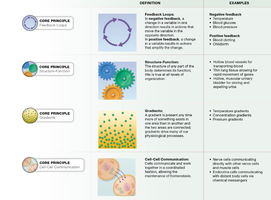
Feedback loops are mechanisms that the body uses to maintain homeostasis. There are two main types: negative and positive feedback loops.
Negative Feedback Loop: Opposes the initial change and decreases the output. This is the most common type of feedback in the body.
Positive Feedback Loop: Reinforces the initial change and increases the output. Less common, but important in certain physiological processes.
Examples:
Negative feedback: Regulation of body temperature, regulation of blood pressure.
Positive feedback: Blood clotting.
Relationship Between Structure and Function
The principle of 'form follows function' states that the structure of a body part is directly related to its function. Disruption of normal structure or function, such as by disease or injury, leads to pathophysiology.
Structure-Function Principle: The anatomy of a structure determines its function.
Example: Hollow blood vessels for transporting blood; muscle cells with contractile proteins for movement.
Gradients in Physiology
Gradients are differences in concentration, pressure, or temperature between two connected regions. They drive many physiological processes, such as the movement of substances across cell membranes.
Types of Gradients:
Temperature Gradient
Concentration Gradient
Pressure Gradient
Example: Oxygen moving from areas of high concentration in the lungs to lower concentration in the blood.
Cell to Cell Communication
Cells communicate to coordinate body functions and maintain homeostasis. Communication can occur via electrical signals or chemical messengers.
Electrical Signals: Transmitted between neighboring cells, such as in nerve and muscle tissue.
Chemical Messengers: Can act locally (paracrine), on the same cell (autocrine), or travel through the blood (endocrine).
Example: Nerve cells communicating via neurotransmitters; hormones traveling through the bloodstream to target organs.
Course Structure and Expectations
Hybrid Course Format
The course includes both in-person lectures and online lab components. Students are expected to come prepared, complete readings, and engage in interactive modules and quizzes.
Lecture/Classroom: Scheduled sessions with required preparation.
Lab/Online: Online labs and quizzes to reinforce learning.
Classroom Expectations
Communicate clearly
Prepare and overprepare
Ask questions
Utilize available resources
Summary Table: Core Principles of Physiology
The following table summarizes the core principles discussed above, including their definitions and examples.
Additional Resources
Crash Course Biology #25: Why Do Cells Need to Communicate? (YouTube)
Additional info: The above notes provide foundational concepts for further study in anatomy and physiology, including the mechanisms that maintain homeostasis and the importance of cell communication in health and disease.
