 Back
BackIntroduction to the Endocrine System: Structure, Function, and Hormone Pathways
Study Guide - Smart Notes
 Tailored notes based on your materials, expanded with key definitions, examples, and context.
Introduction to the Endocrine System
Overview of Endocrine System Function
The endocrine system is a network of glands that secrete hormones to regulate various physiological processes throughout the body. Hormones are chemical messengers that travel through the bloodstream to distant target tissues, influencing metabolism, growth, development, water balance, reproduction, and temperature regulation.
Hormones: Long-distance cell-to-cell communication molecules secreted by specialized epithelial cells.
Target Tissue Receptors: Only cells with specific receptors respond to a given hormone.
Physiological Response: Activation of metabolism, growth, and other vital functions.
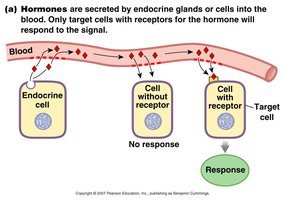
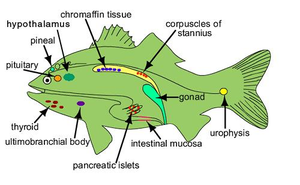
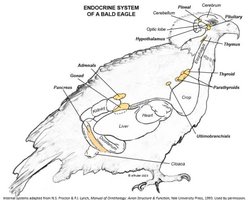
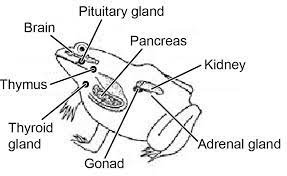
Endocrine Gland Locations Across Species
The location and function of endocrine glands can vary between species, but many hormones are conserved. Environmental influences and species-specific hormones contribute to differences in endocrine regulation.
Conserved Hormones: Hormones such as insulin, thyroid hormone, and growth hormone are found across vertebrates.
Species-Specific Hormones: Some hormones and gland locations are unique to certain species.
Environmental Influences: External factors can affect hormone function and regulation.
Anatomy Summary: Human Endocrine Glands
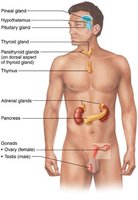
Human endocrine glands are distributed throughout the body and include the hypothalamus, pituitary, thyroid, parathyroid, adrenal glands, pancreas, gonads, and pineal gland. 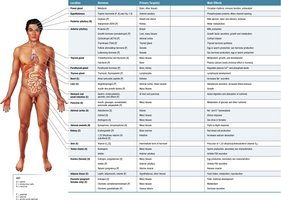
Hormones: Chemical Regulating Systems
Definition and General Properties
Hormones are classified as long-distance cell-to-cell communication molecules. They are secreted into the blood by specialized epithelial cells and act on distant target tissues.
Low Concentration: Hormones exert effects at very low concentrations compared to cytokines or histamines.
Half-Life: The duration of hormone activity is determined by its half-life, the time required to reduce its concentration by half.
Degradation: Hormones are degraded into inactive metabolites by enzymes.
Basic Mechanisms of Hormone Action
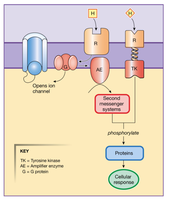
Hormones act on target cells in three primary ways:
Control rates of enzymatic reactions
Control transport of ions or molecules across cell membranes
Control gene expression and protein synthesis
Classification of Hormones
Classification Criteria
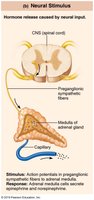
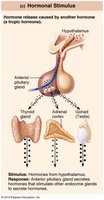
Hormones can be classified by their source, stimulus for release, whether they are released by the brain, receptor type, and chemical class.
Source: Gland or tissue of origin
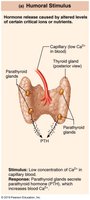
Stimulus: Humoral, neural, or hormonal
Receptor Type: GPCR, tyrosine kinase-linked, or intracellular
Chemical Class: Peptide/protein, steroid, or amine
Hormone Chemical Classes
Peptide/Protein Hormones: Most hormones; composed of amino acids; synthesized as preprohormones and processed to active forms.
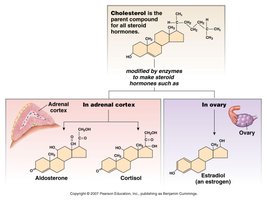
Steroid Hormones: Derived from cholesterol; lipophilic; synthesized in adrenal cortex, gonads, skin, and placenta.
Amine Hormones: Derived from tyrosine or tryptophan; include catecholamines and thyroid hormones.
Peptide Hormones
Synthesis, Packaging, and Release
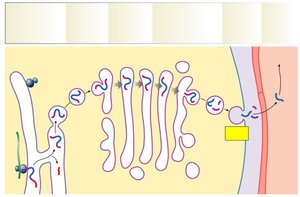
Peptide hormones are synthesized as large, inactive preprohormones, processed to prohormones, and then cleaved to active hormones in secretory vesicles.
Preprohormone: Large, inactive precursor
Prohormone: Processed in the endoplasmic reticulum and Golgi
Active Hormone: Released by exocytosis
Steroid Hormones
Features and Mechanism of Action
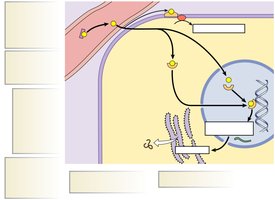
Steroid hormones are synthesized from cholesterol and are lipophilic, allowing them to diffuse across cell membranes. They bind to cytoplasmic or nuclear receptors, activating DNA for protein synthesis.
Protein Carrier Molecules: Steroids are transported in blood bound to carrier proteins.
Longer Half-Life: Steroid hormones act more slowly but persist longer.
Examples: Cortisol, estrogen, testosterone
Amine Hormones
Features and Synthesis
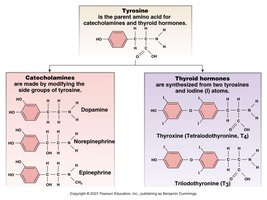
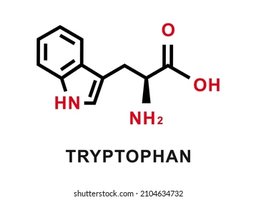
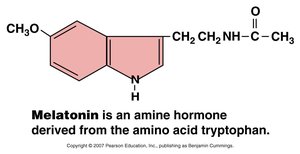
Amine hormones are derived from the amino acids tyrosine or tryptophan. Catecholamines (dopamine, norepinephrine, epinephrine) are synthesized from tyrosine, while melatonin is derived from tryptophan.
Small Molecules: Ring structure, rapid action
Examples: Thyroid hormones (T3, T4), catecholamines, melatonin
Endocrine Reflex Pathways
Pathway Components
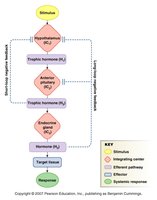
Endocrine reflexes involve a stimulus, afferent signal, integration, efferent signal (hormone), physiological action, and negative feedback.
Negative Feedback: Maintains homeostasis by inhibiting further hormone release.
Pineal Gland and Melatonin
Structure and Function
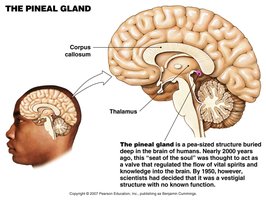
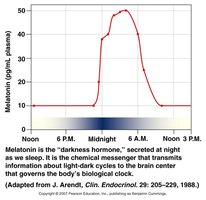
The pineal gland is a small structure in the brain that secretes melatonin, which regulates circadian rhythms and may influence puberty and antioxidant production.
Melatonin: Amine hormone derived from tryptophan; peaks at night.
Functions: Regulates sleep-wake cycles, antioxidant activity, and possibly sexual maturation.
Hypothalamus and Pituitary Gland
Anatomy and Function
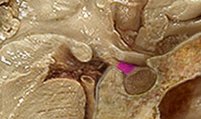
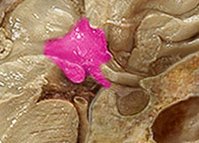
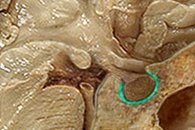
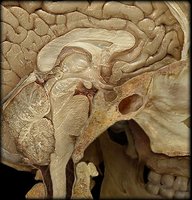
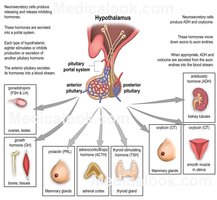
The hypothalamus and pituitary gland are central regulators of endocrine function. The hypothalamus produces releasing and inhibiting hormones that control the pituitary, which in turn regulates other endocrine glands.
Infundibulum: Stalk connecting hypothalamus to pituitary
Anterior Pituitary: True endocrine gland
Posterior Pituitary: Extension of neural tissue
Endocrine Control Levels
Endocrine control occurs at three levels: hypothalamic stimulation (from CNS), pituitary stimulation (from hypothalamic trophic hormones), and endocrine gland stimulation (from pituitary trophic hormones). 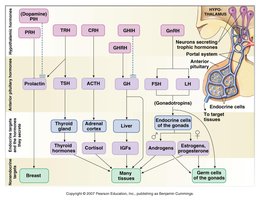
Hypothalamic-Hypophyseal Portal System
The portal system allows hypothalamic hormones to reach the anterior pituitary efficiently, regulating hormone secretion. 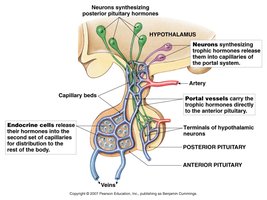
Pituitary Gland Structure
The pituitary gland consists of two fused glands: the anterior pituitary (epithelial origin) and the posterior pituitary (neural origin). 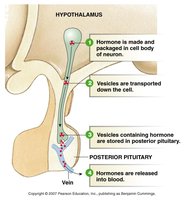
Growth Hormone Pathways
Growth Hormone Control and Effects
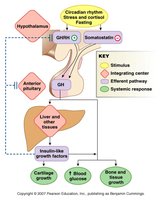
Growth hormone (GH) is secreted from the anterior pituitary and acts via the GH receptor, promoting expression of IGF-1 and stimulating growth in various tissues.
Deficiency: Leads to dwarfism
Oversecretion: Causes gigantism in children, acromegaly in adults
Thyroid Gland and Hormones
Structure and Function
The thyroid gland consists of follicles filled with colloid, which store thyroid hormones (T3 and T4). Parafollicular cells secrete calcitonin.
Thyroid Hormones: Synthesized from iodine and tyrosine; regulate metabolism, heart rate, and development.
Calcitonin: Regulates calcium balance.
Calcium Balance: Parathyroid Glands
Regulation of Calcium
Calcium balance is regulated by parathyroid hormone (PTH), calcitriol, and calcitonin. PTH mobilizes calcium from bone, enhances renal reabsorption, and increases intestinal absorption.
Phosphate Homeostasis: Linked to calcium; important for bone, energy transfer, and DNA/RNA structure.
The Thymus
Immune and Endocrine Functions
The thymus is involved in T-lymphocyte development and secretes hormones (thymosin, thymulin, thymopoietin) that aid immune response.
The Adrenal Glands
Structure and Hormones
The adrenal glands sit atop the kidneys and consist of the adrenal cortex (three layers: zona glomerulosa, zona fasciculata, zona reticularis) and adrenal medulla.
Mineralcorticoids: Aldosterone regulates sodium and potassium balance.
Glucocorticoids: Cortisol regulates stress response and metabolism.
Sex Steroids: Androgens and estrogens.
Pancreatic Islets and Insulin/Glucagon Control
Structure and Function
The pancreas contains millions of islets of Langerhans, which secrete hormones regulating blood glucose.
Alpha Cells: Secrete glucagon (raises blood sugar)
Beta Cells: Secrete insulin (lowers blood sugar)
Delta Cells: Secrete somatostatin (inhibits GH)
PP Cells: Secrete pancreatic polypeptide (inhibits digestion)
G Cells: Secrete gastrin (stimulates digestion)
Hormone Interactions
Types of Interactions
Hormones can interact in several ways:
Synergism: Multiple stimuli produce a greater effect than the sum of individual effects.
Permissiveness: One hormone enables another to exert its full effect.
Antagonism: One hormone opposes the action of another (e.g., glucagon opposes insulin).
Summary Table: Hormone Classes
Comparison of Peptide, Steroid, Amine, and Thyroid Hormones
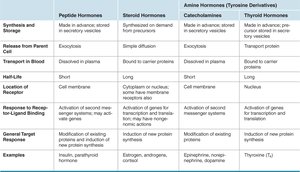
Type | Synthesis & Storage | Release | Transport | Half-Life | Receptor Location | Response | Examples |
|---|---|---|---|---|---|---|---|
Peptide | Made in advance, stored in vesicles | Exocytosis | Dissolved in plasma | Short | Cell membrane | Modification of existing proteins | Insulin, parathyroid hormone |
Steroid | Synthesized on demand | Simple diffusion | Bound to carrier proteins | Long | Cytoplasm or nucleus | Induction of new protein synthesis | Estrogen, cortisol |
Amine (Catecholamines) | Made in advance, stored in vesicles | Exocytosis | Dissolved in plasma | Short | Cell membrane | Modification of existing proteins | Epinephrine, norepinephrine |
Thyroid | Made in advance, stored in vesicles | Transport protein | Bound to carrier proteins | Long | Nucleus | Induction of new protein synthesis | Thyroxine (T4) |
