 Back
Introduction to the Human Body: Structure, Organization, and Biochemistry
Study Guide - Smart Notes
 Tailored notes based on your materials, expanded with key definitions, examples, and context.
Introduction to the Human Body
The Study of Anatomy and Physiology
Anatomy is the study of the structure and location of body parts, while physiology focuses on the functional mechanisms that allow the body to operate. Understanding both is essential for evaluating health, disease, and trauma, as well as for developing effective treatment plans.
Gross Anatomy: Examines structures visible to the naked eye, either by region or system.
Surface Anatomy: Involves palpation and auscultation to study external features.
Microscopic Anatomy: Studies structures at the cellular and tissue level.
Natural Variations vs. True Discrepancy: Recognizing normal anatomical differences is crucial for accurate diagnosis.
Levels of Structural Organization
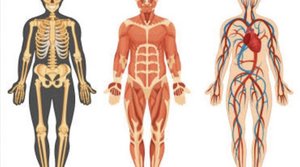
The human body is organized into hierarchical levels, each building upon the previous:
Atoms and Molecules: Basic chemical units (e.g., water, glucose, ATP).
Organelles: Specialized structures within cells (e.g., mitochondria, nucleus).
Cells: Basic living units (e.g., neurons, muscle fibers).
Tissues: Groups of similar cells performing a common function (e.g., epithelial, muscle, nerve tissue).
Organs: Structures composed of multiple tissue types (e.g., heart, kidneys).
Organ Systems: Groups of organs working together (e.g., digestive, skeletal, nervous systems).
Organism: The complete living being, resulting from the integration of all systems.
Necessary Life Functions and Body Systems
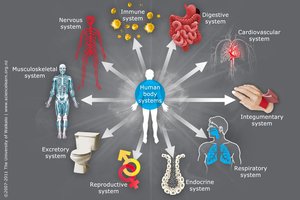
Each body system contributes to essential life functions, such as maintaining boundaries, movement, responsiveness, digestion, metabolism, excretion, reproduction, and defense.
Integumentary System: Maintains boundaries and protects the body.
Muscular and Skeletal Systems: Provide support and enable movement.
Nervous System: Enables responsiveness and communication.
Digestive System: Processes nutrients and eliminates waste.
Respiratory System: Supplies oxygen for metabolism.
Endocrine System: Regulates homeostasis via hormones.
Cardiovascular System: Circulates nutrients, gases, and hormones.
Excretory System: Removes metabolic wastes.
Reproductive System: Produces offspring.
Immune and Lymphatic Systems: Defend against pathogens.
Anatomical Terminology
Directional Terms
Directional terms describe the locations of structures relative to other structures or locations in the body. The anatomical position is the standard reference point.
Anterior (ventral): Toward the front
Posterior (dorsal): Toward the back
Superior: Toward the head
Inferior: Toward the feet
Medial: Toward the midline
Lateral: Away from the midline
Proximal: Closer to the point of attachment
Distal: Farther from the point of attachment
Superficial: Toward the surface
Deep: Away from the surface
Regional Terms
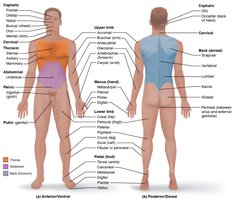
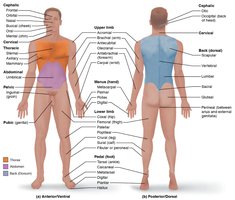
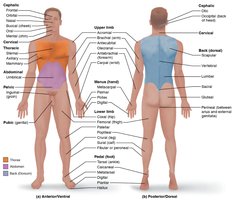
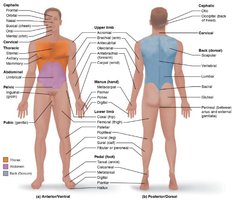
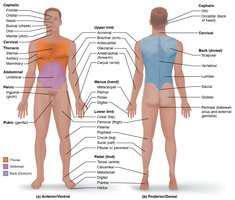
Regional terms specify distinct areas of the body, such as the head, arms, torso, and legs. These terms are essential for accurately describing locations of injuries or conditions.
Cephalic: Head
Brachial: Arm
Thoracic: Chest
Abdominal: Abdomen
Femoral: Thigh
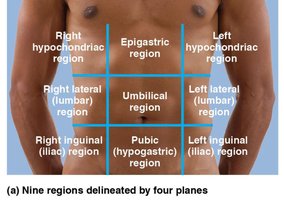
Abdominopelvic Quadrants and Regions
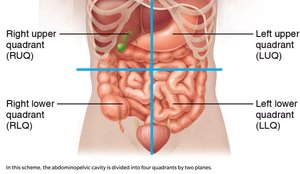
The abdominopelvic cavity is divided into quadrants and regions for clinical reference.
Quadrants: Right Upper (RUQ), Left Upper (LUQ), Right Lower (RLQ), Left Lower (LLQ)
Regions: Right/Left Hypochondriac, Epigastric, Right/Left Lumbar, Umbilical, Right/Left Inguinal (Iliac), Hypogastric (Pubic)
Body Cavities and Membranes
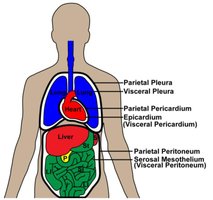
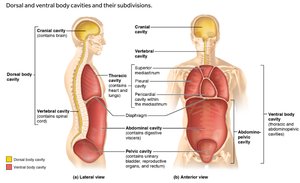
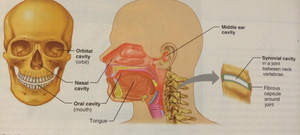
Body cavities house and protect internal organs. They are lined by serous membranes, which secrete lubricating fluid to reduce friction.
Dorsal Cavity: Contains the cranial and vertebral cavities.
Ventral Cavity: Contains the thoracic and abdominopelvic cavities.
Serous Membranes: Parietal (lines cavity wall) and visceral (covers organs) layers.
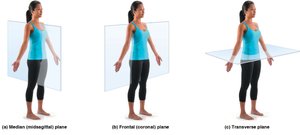
Body Planes
Body planes are imaginary lines used to divide the body for anatomical study and medical imaging.
Median (Midsagittal) Plane: Divides the body into right and left halves.
Frontal (Coronal) Plane: Divides the body into anterior and posterior parts.
Transverse Plane: Divides the body into superior and inferior parts.
Biochemistry: Atoms, Bonding, and Water
Atomic Structure and Elements
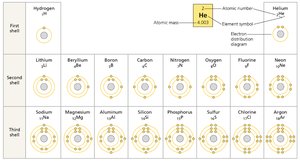
Atoms are the smallest units of matter, composed of protons, neutrons, and electrons. The atomic number equals the number of protons, while the mass number is the sum of protons and neutrons. Isotopes are atoms of the same element with different numbers of neutrons.
Electron Shells: Electrons occupy energy levels (shells) around the nucleus.
Valence Electrons: Electrons in the outermost shell determine chemical reactivity.
Chemical Bonds
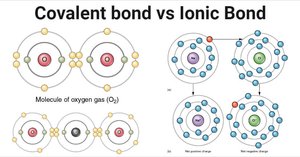
Atoms interact to form molecules through chemical bonds:
Covalent Bonds: Sharing of electron pairs between atoms (e.g., O2).
Ionic Bonds: Transfer of electrons, resulting in oppositely charged ions (e.g., NaCl).
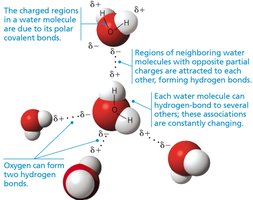
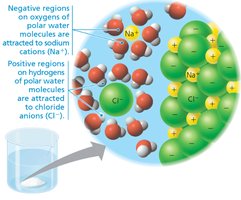
Hydrogen Bonds: Weak attractions between slightly charged regions of molecules (important in water and biological molecules).
Properties of Water
Water is essential for life due to its unique properties, which arise from its polarity and hydrogen bonding.
Polarity: Oxygen is more electronegative, creating partial charges on the molecule.
Hydrogen Bonding: Leads to cohesion (water-water attraction) and adhesion (water-other substances).
Solvent Properties: Water dissolves polar substances, forming aqueous solutions.
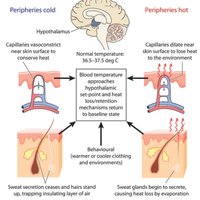
High Heat Capacity: Moderates temperature changes.
High Heat of Vaporization: Allows for evaporative cooling.
Acids, Bases, and pH
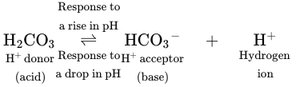
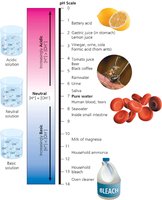
Acids increase the concentration of H+ ions in solution, while bases decrease it. Buffers help maintain stable pH by accepting or donating H+ ions. The pH scale (0-14) measures acidity or alkalinity, with each unit representing a tenfold change in H+ concentration.
Acid: Substance that donates H+
Base: Substance that accepts H+
Buffer: Substance that minimizes pH changes
Macromolecules
Carbohydrates
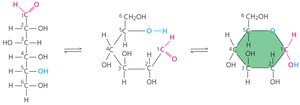
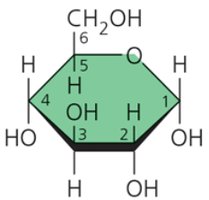
Carbohydrates are the main source of metabolic energy. They are composed of monosaccharides (simple sugars) that join to form disaccharides and polysaccharides through dehydration synthesis.
Monosaccharides: Glucose, fructose, ribose
Polysaccharides: Glycogen (energy storage in animals)
General Formula: CnH2nOn
Lipids
Lipids are hydrophobic molecules used for energy storage, insulation, and waterproof barriers. They include fats, oils, phospholipids, and steroids.
Fatty Acids and Glycerol: Form triglycerides via dehydration reactions.
Saturated Fats: No double bonds, solid at room temperature (animal fats).
Unsaturated Fats: One or more double bonds, liquid at room temperature (plant oils).
Phospholipids: Amphipathic molecules forming cell membranes.
Steroids: Cholesterol-based molecules, including hormones.
Proteins
Proteins are polymers of amino acids, joined by peptide bonds. Their structure determines their function, which includes catalysis (enzymes), transport, signaling, and structural support.
Primary Structure: Linear sequence of amino acids.
Secondary Structure: Local folding (alpha helices, beta sheets) via hydrogen bonds.
Tertiary Structure: Overall 3D shape due to interactions among R groups.
Quaternary Structure: Association of multiple polypeptides.
Denaturation: Loss of structure and function due to environmental changes.
Nucleic Acids
Nucleic acids (DNA and RNA) store and transmit genetic information. They are polymers of nucleotides, each consisting of a sugar, phosphate group, and nitrogenous base.
DNA: Double helix, stores genetic code.
RNA: Single-stranded, involved in gene expression and regulation.
ATP: Adenosine triphosphate, the main energy currency of the cell.
Conclusion
This overview introduces the foundational concepts of human anatomy, physiology, and biochemistry. Mastery of these topics is essential for further study in anatomy and physiology, as well as for understanding the structure and function of the human body in health and disease.
