 Back
BackIntroduction to the Nervous System and Cellular Neurophysiology
Study Guide - Smart Notes
 Tailored notes based on your materials, expanded with key definitions, examples, and context.
Introduction to the Nervous System
Overview of the Brain and Neurophysiology
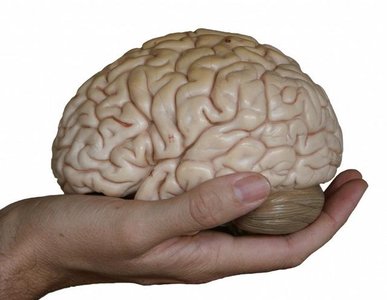
The brain is the most complex organ in the human body, weighing approximately 3 lbs and composed of fat, protein, and water. It is responsible for all aspects of human thought, behavior, and emotion. Neurophysiology is the branch of physiology that studies the function of the nervous system, focusing on electrical signaling by neurons.
Neurons communicate through electrochemical signals, forming the basis of neural coding and information processing.
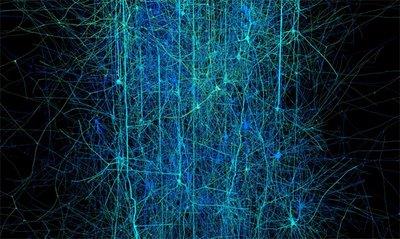
The brain contains approximately 100 billion neurons organized into complex circuits.
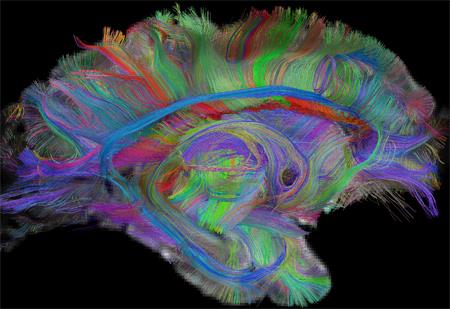
Example: The Blue Brain Project and DTI imaging illustrate the complexity and organization of neural circuits.
Cellular Components of the Nervous System
Glial Cells and Neurons
The nervous system is composed of two main cell types: glial cells and neurons.
Glial cells: Non-excitable, cannot generate action potentials, but play key roles in neural development, support, and synaptic transmission.
Neurons: Excitable cells capable of generating action potentials, specialized for long-distance electrochemical signaling.
Astrocytes and the Blood-Brain Barrier (BBB)
The blood-brain barrier (BBB) is a selectively permeable barrier that protects the brain from fluctuations in blood composition. It is formed by tight junctions between endothelial cells, supported by pericytes and astrocytes.
Astrocytes regulate and support BBB integrity through end-foot processes.
Neuronal Structure and Compartments
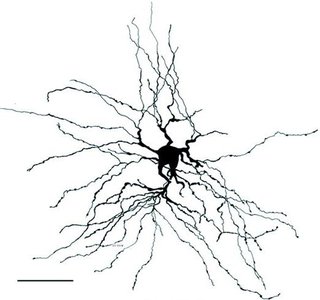
Neurons are polarized cells with distinct compartments:
Cell body (soma): Metabolic center containing the nucleus and organelles.
Dendrites: Input regions that receive and integrate synaptic inputs.
Dendritic spines: Specialized sites for excitatory synaptic input, conferring unique signaling properties.
Axon hillock and initial segment: Trigger zone for action potential initiation due to high density of voltage-gated sodium channels.
Axon terminals: Presynaptic structures that release neurotransmitters onto postsynaptic receptors.
Neural Circuits and Network Motifs
Microcircuits and Macrocircuits
Neurons are organized into functional ensembles called neural circuits:
Microcircuit: Operations performed by a small number of connected neurons.
Macrocircuit: Complex functions performed by large ensembles, often composed of many microcircuits in parallel.
Example: The myotatic (knee-jerk) reflex is mediated by a stereotyped microcircuit with specific network motifs.
Electrical Signaling in Neurons
Basic Electrical Properties
Neuronal membranes exhibit both capacitive and resistive properties, which can be modeled as a parallel circuit:
Capacitance (C): Ability to separate and store electrical charge (units: Farads).
Resistance (R): Opposition to current flow (units: Ohms).
Voltage (V): Electrical potential difference (units: Volts).
Current (I): Flow of electrical charge (units: Amperes).
Conductance (g): Ability of charge to flow, inverse of resistance (units: Siemens).
Ohm’s Law:
Conductance is given by:
Membrane Potential and Action Potentials
The membrane potential (Vm) is the voltage across the neuronal membrane, typically around -70 mV at rest. Electrical signals can be measured using microelectrodes and voltmeters.
Depolarization: Membrane potential becomes more positive.
Hyperpolarization: Membrane potential becomes more negative.
Repolarization: Return to resting potential after depolarization.
The action potential is a rapid, all-or-none depolarization followed by repolarization, triggered when the membrane potential exceeds a threshold value.
Passive vs. Active Membrane Properties
Passive properties determine how voltage changes in response to stimuli, while active properties (voltage-gated ion channels) enable action potential generation and propagation.
Without action potentials, signals decay exponentially with distance (passive conduction).
With action potentials, signals propagate without decrement, allowing rapid and reliable communication over long distances.
Key Definitions and Concepts
Neuron: Electrically excitable cell specialized for communication.
Glial cell: Non-excitable support cell in the nervous system.
Action potential: All-or-none electrical signal used for long-distance communication.
Blood-brain barrier: Selective barrier protecting the brain from blood-borne substances.
Microcircuit: Small, stereotyped network of neurons performing a specific function.
Macrocircuit: Large-scale network integrating multiple microcircuits.
Ohm’s Law: Relationship between voltage, current, and resistance in electrical circuits.
Summary Table: Key Electrical Properties in Neurophysiology
Property | Symbol | Units | Description |
|---|---|---|---|
Capacitance | C | Farads (F) | Ability to store charge |
Resistance | R | Ohms (Ω) | Opposition to current flow |
Conductance | g | Siemens (S) | Ease of current flow (inverse of resistance) |
Voltage | V | Volts (V) | Electrical potential difference |
Current | I | Amperes (A) | Flow of electrical charge |
Study Questions for Review
What are the functional differences between neurons and glial cells?
What factors influence the integration of synaptic inputs onto dendrites?
What are dendritic spines, and are they associated with excitatory or inhibitory synapses?
Where are action potentials initiated in a neuron?
What is the purpose of the blood-brain barrier?
What is the difference between a microcircuit and a macrocircuit?
Name two network motifs involved in the myotatic reflex microcircuit.
Define conductance. How would you rearrange Ohm’s Law to include conductance?
What is the function of an action potential?
Additional info: This guide covers foundational concepts in neurophysiology, including cellular components, electrical properties, and the basics of neural signaling, as relevant to introductory anatomy and physiology courses.
