 Back
Introduction to the Structure and Growth of Bones
Study Guide - Smart Notes
 Tailored notes based on your materials, expanded with key definitions, examples, and context.
Section 1: Introduction to the Structure and Growth of Bones
Module 6.1: The Skeletal System and Its Divisions
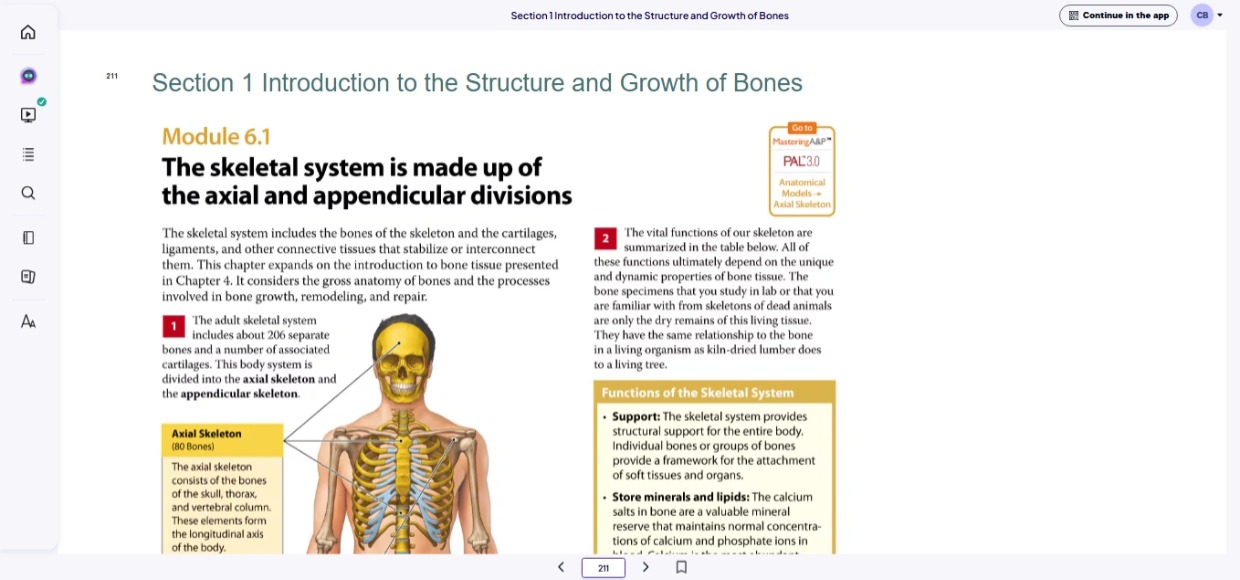
The skeletal system is a fundamental component of the human body, comprising bones, cartilages, ligaments, and other connective tissues. It is divided into two main divisions: the axial skeleton and the appendicular skeleton. This section provides an overview of the skeletal system's structure, its divisions, and the essential functions of bone tissue.
Axial Skeleton: Consists of 80 bones, including those of the skull, thorax, and vertebral column. These elements form the longitudinal axis of the body.
Appendicular Skeleton: Includes the bones of the limbs and the girdles that attach them to the axial skeleton (not detailed in the provided material, but inferred for completeness).
Vital Functions of the Skeletal System
The skeletal system performs several critical functions that are essential for maintaining the body's structure and homeostasis. These functions depend on the unique and dynamic properties of living bone tissue, which differ significantly from the dry, preserved bones seen in laboratory specimens.
Function | Description |
|---|---|
Support | The skeletal system provides structural support for the entire body. Individual bones or groups of bones serve as a framework for the attachment of soft tissues and organs. |
Store minerals and lipids | The calcium salts in bone act as a valuable mineral reserve, maintaining normal concentrations of calcium and phosphate ions in body fluids. Lipids are stored in bone marrow as energy reserves. |
Example: The vertebral column supports the body's weight and protects the spinal cord, while the bones of the skull protect the brain.
Additional info: Bone tissue is highly dynamic, constantly undergoing processes of growth, remodeling, and repair. This allows the skeleton to adapt to stresses, heal after injury, and regulate mineral balance.
