 Back
Lab 6: Culture Media & Aseptic Techniques – Study Notes
Study Guide - Smart Notes
 Tailored notes based on your materials, expanded with key definitions, examples, and context.
Culture Media & Aseptic Techniques
Introduction
Microbiology laboratories rely on specialized media and aseptic techniques to culture, isolate, and study microorganisms. Understanding the types of media, their properties, and the importance of sterile technique is essential for accurate experimental results and safety.
Types of Culture Media
Chemically Defined Media
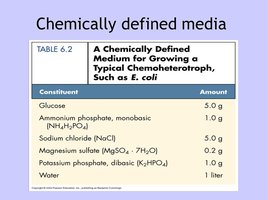
Chemically defined media are prepared from pure chemical substances, with every component and its concentration known. These media are used to culture microbes with well-characterized nutritional requirements, allowing for precise control over growth conditions.
Definition: Media with a known, exact chemical composition.
Application: Used for research on metabolic pathways and for culturing fastidious organisms.
Example: A medium for E. coli might contain glucose, ammonium phosphate, sodium chloride, magnesium sulfate, potassium phosphate, and water.
Complex Media
Complex media contain extracts and digests of natural sources such as yeast, meat, or plants. The exact chemical composition is not known, making them suitable for growing a wide variety of microorganisms, especially when their nutritional requirements are not fully understood.
Definition: Media with an unknown exact chemical composition, often containing nutrient-rich extracts.
Application: Used for routine cultivation of microbes and when precise nutritional needs are unknown.
Example: Nutrient broth, tryptic soy agar.
Forms of Culture Media
Broth Media (Liquid)
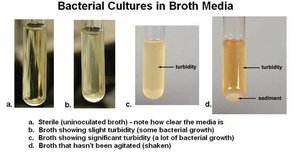
Broth media are liquid and allow for the growth of large numbers of bacteria in a small volume. Growth is indicated by turbidity (cloudiness). However, purity must be checked periodically as contamination is not always visible.
Advantages: Efficient for growing many cells; easy to transport.
Limitation: Purity must be confirmed regularly.
Growth Indication: Turbidity signals bacterial growth; sediment may form if not agitated.
Agar Media (Solid)
Agar is a polysaccharide derived from seaweed, added to media (1–2%) to solidify it. It is not digested by most bacteria, allowing for nutrient uptake and observation of colony morphology.
Properties of Agar:
Solidifies at ~40°C, liquefies at ~100°C.
Not digested by most microbes.
Supports growth at a range of temperatures.
Agar Plates
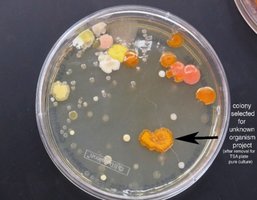
Petri dishes with a thin layer of agar provide a large surface area for the isolation of colonies, which are populations of cells derived from a single progenitor.
Advantage: Isolates colonies for pure culture.
Limitation: Not suitable for long-term maintenance.

Agar Slants
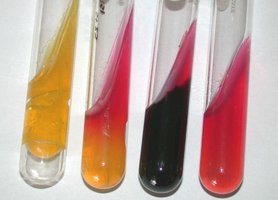
Test tubes with agar solidified at an angle provide a small surface area and a deep butt, allowing for the maintenance of cultures over extended periods and the conservation of nutrients.
Advantage: Maintains cultures for longer periods.
Structure: Angled surface (slant) and deep butt.
Semi-Solid Deeps
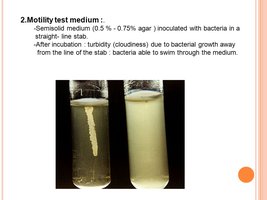
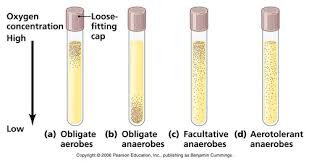
Semi-solid media contain less agar (0.05–0.5%) and are used to assess bacterial motility and oxygen requirements. Motile bacteria will spread from the line of inoculation, causing turbidity throughout the medium.
Applications: Motility assays, growth of bacteria with different oxygen requirements.
Aseptic Techniques
Definition and Importance
Aseptic techniques are procedures used to prevent contamination of cultures, media, and the laboratory environment by unwanted microorganisms. These techniques are essential for obtaining reliable results and ensuring safety.
Examples: Washing hands, wearing gloves, sterilizing equipment.


Sterilization Methods
Sterilization is the complete elimination of all living organisms from an object or environment. Common methods include:
Moist Heat: Autoclaving uses pressurized steam to sterilize media and equipment.
Dry Heat: Flaming inoculating loops and needles.


Streak Plating
Purpose and Method
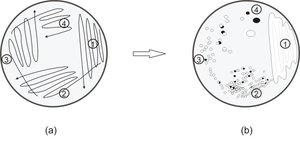
Streak plating is a technique used to isolate pure cultures from mixed populations of microorganisms. By sequentially diluting a sample across the surface of an agar plate, individual cells are separated and grow into distinct colonies.
Purpose: To obtain pure cultures for further study.
Method: Sequential dilution and streaking on agar plates.


Summary Table: Types of Culture Media
Type | Composition | Form | Application |
|---|---|---|---|
Chemically Defined | Known, pure chemicals | Broth, agar | Research, fastidious microbes |
Complex | Extracts, digests (yeast, meat) | Broth, agar | Routine cultivation |
Semi-solid | Low agar concentration | Deep | Motility, oxygen requirements |
Key Terms
Colony: A visible mass of microbial cells arising from a single cell.
Aseptic Technique: Procedures to prevent contamination by unwanted microorganisms.
Sterilization: Complete destruction of all forms of microbial life.
Streak Plating: Method to isolate pure cultures by spreading cells on agar.
