 Back
Lactation: Hormonal Regulation and Benefits of Breast Milk
Study Guide - Smart Notes
 Tailored notes based on your materials, expanded with key definitions, examples, and context.
Lactation and Its Regulation
Overview of Lactation
Lactation is the process of milk secretion by the mammary glands, primarily regulated by hormonal changes during and after pregnancy. This process ensures the nourishment and immune protection of the newborn.
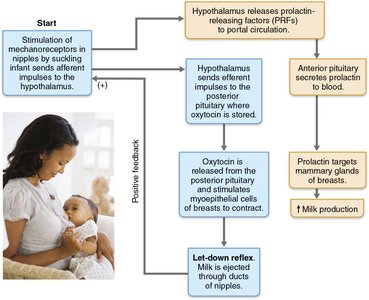
Lactation is initiated by the hormone prolactin, which is secreted by the anterior pituitary gland in response to prolactin-releasing factors (PRFs) from the hypothalamus.
During late pregnancy, rising levels of estrogens, progesterone, and human placental lactogen stimulate the hypothalamus to release PRFs.
After birth, true milk production begins after a delay of 2–3 days, following the secretion of a yellowish fluid called colostrum.
Hormonal Control of Lactation
The regulation of lactation involves a complex interplay between neural and hormonal signals, primarily involving prolactin and oxytocin.
Prolactin stimulates milk production in the mammary glands.
Oxytocin is responsible for the let-down reflex, which is the ejection of milk from the alveoli into the ducts of the nipples.
Mechanical stimulation of the nipples (e.g., suckling) sends afferent impulses to the hypothalamus, which then triggers the release of PRFs and oxytocin.
Oxytocin also stimulates uterine contractions, aiding the uterus in returning to its pre-pregnant size.
Colostrum and Breast Milk Composition
Colostrum is the first secretion from the mammary glands after giving birth, followed by true milk. Both provide essential nutrients and immune protection to the infant.
Colostrum contains less lactose and fat than true milk but is richer in protein, vitamin A, minerals, and IgA antibodies.
IgA antibodies in colostrum and milk help protect the infant’s digestive tract from infection.
Breast milk contains beneficial chemicals such as complement, lysozyme, interferon, lactoperoxidase, interleukins, and prostaglandins, which protect against infections and regulate inflammation.
Oligosaccharides in breast milk promote the growth of beneficial gut bacteria.
Breast milk has a natural laxative effect, helping to clear meconium (the infant’s first stool) and reduce the risk of physiological jaundice.
Advantages of Breast Milk for the Infant
Breast milk offers several advantages over cow’s milk and formula, supporting both nutrition and immune defense.
Fats and iron in breast milk are better absorbed, and its amino acids are more efficiently metabolized than those in cow’s milk.
Contains immune factors (e.g., IgA, lysozyme) that protect against infections.
Helps establish healthy gut flora and prevents overzealous inflammatory responses.
Facilitates the elimination of bilirubin by promoting early passage of meconium.
Regulation of Milk Production and Cessation
Milk production is maintained by continued suckling, which stimulates prolactin release. When nursing stops, milk production ceases.
Prolactin release decreases without nipple stimulation, leading to the cessation of milk production.
Extended nursing can lead to temporary loss of bone calcium, which is usually restored after weaning with a proper diet.
Lactation and Ovarian Function
High prolactin levels during lactation suppress the normal hypothalamic-pituitary-ovarian axis, reducing fertility but not providing complete contraception.
Suckling stimulates the release of beta endorphin, which inhibits the release of gonadotropin-releasing hormone (GnRH) and pituitary gonadotropins.
This suppression is sometimes called "natural birth control," but ovulation can still occur during nursing.
Summary Table: Key Hormones in Lactation
Hormone | Source | Main Function in Lactation |
|---|---|---|
Prolactin | Anterior pituitary | Stimulates milk production |
Oxytocin | Posterior pituitary | Triggers let-down reflex (milk ejection) |
Estrogens, Progesterone, hPL | Placenta | Prepare mammary glands for lactation |
Beta endorphin | Hypothalamus | Suppresses GnRH, reducing ovarian activity |
Key Equations and Mechanisms
Positive Feedback Mechanism: Suckling → Hypothalamus → PRFs & Oxytocin → Prolactin & Let-down Reflex → Continued Suckling
Additional info: The let-down reflex is a classic example of a neuroendocrine positive feedback loop, where sensory input (suckling) leads to hormonal output (oxytocin and prolactin release), which in turn reinforces the original stimulus.
