 Back
BackLearning and Memory: Neural Systems and Mechanisms
Study Guide - Smart Notes
 Tailored notes based on your materials, expanded with key definitions, examples, and context.
Learning and Memory
Introduction to Learning and Memory
Learning and memory are fundamental processes of the nervous system, enabling organisms to acquire, store, and retrieve information. Learning refers to the acquisition of new information, while memory encompasses the encoding, storage, and retrieval of learned information.
Learning: The process by which the nervous system acquires new information.
Memory: The process by which the nervous system encodes, stores, and retrieves learned information.
Historical Foundations
Early theories of human learning and memory were pioneered by psychologists such as Hermann Ebbinghaus, who studied the learning and forgetting curves using nonsense syllables to quantify memory processes.
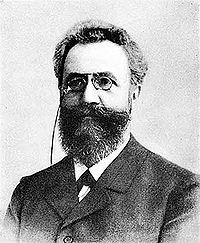
Temporal and Qualitative Categories of Memory
Temporal Categories of Memory
Memory can be classified based on the duration for which information is retained:
Immediate Memory: Lasts fractions of a second to seconds; holds sensory information briefly.
Working Memory: Lasts seconds to minutes; allows manipulation and temporary storage of information.
Long-term Memory: Lasts days to years; stores vast amounts of information for extended periods.
Forgetting: Information can be lost at any stage if not properly encoded or consolidated.
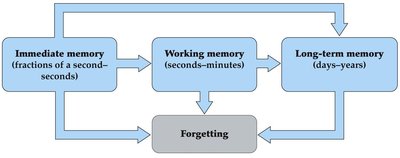
Qualitative Categories of Memory
Memory is also divided by the nature of information stored:
Declarative (Explicit) Memory: Memory for facts and events that can be consciously recalled.
Non-declarative (Implicit) Memory: Memory for skills, habits, and associations that are largely unconscious.
Declarative (Explicit) Memory
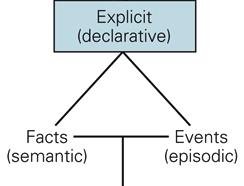
Types of Declarative Memory
Declarative memory is subdivided into:
Episodic Memory: Memory for personal experiences and specific events (e.g., what you had for breakfast).
Semantic Memory: Memory for facts and general knowledge (e.g., the capital of a country).
Processes in Declarative Memory
Declarative memory involves four main operations:
Encoding: Acquiring new information and linking it to existing knowledge. Attention and motivation are crucial.
Storage: Retaining information over time. Short-term storage is limited; long-term storage is vast.
Consolidation: Stabilizing temporarily stored information for long-term retention.
Retrieval: Accessing stored information. Retrieval depends on how information was encoded.
Non-declarative (Implicit) Memory
Types of Non-declarative Memory
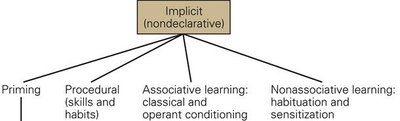
Implicit memory includes several forms of learning that do not require conscious recollection:
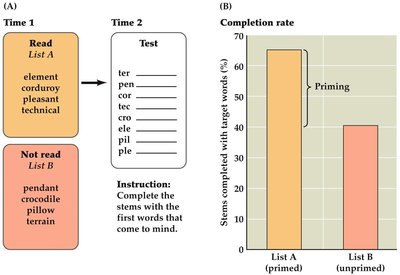
Priming: Exposure to one stimulus influences the response to another stimulus.
Procedural Memory: Skills and habits (e.g., riding a bicycle).
Associative Learning: Classical and operant conditioning (e.g., Pavlovian conditioning).
Non-associative Learning: Habituation and sensitization.
Priming in Implicit Memory
Priming is a phenomenon where prior exposure to a stimulus facilitates subsequent responses to related stimuli, even without conscious awareness.
Example: After reading a list of words, individuals are more likely to complete word stems with previously seen words.
The Fallibility of Human Memory
False Memories
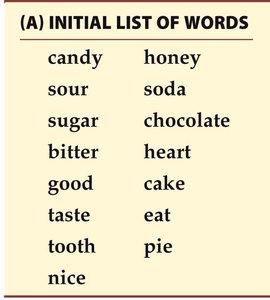
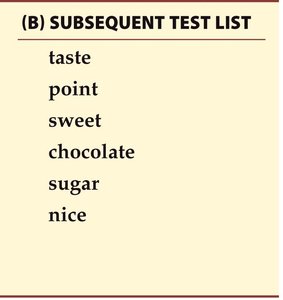
Human memory is susceptible to errors, including the generation of false memories. This can occur when individuals recall words or events that were not actually presented but are semantically related to studied material.
Example: After studying a list of sweet-related words, people may falsely recall the word "sweet" even if it was not on the list.
Motivation and Memory
Influence of Motivation on Memory
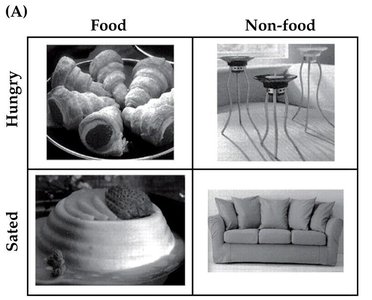
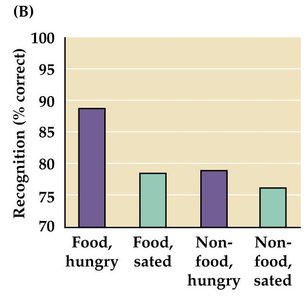
Motivational states, such as hunger, can influence memory performance. For example, hungry individuals are better at recalling food-related images compared to non-food images or when sated.
Example: Recognition accuracy is highest for food images when participants are hungry.
Neural Systems Underlying Memory
Case Study: Patient HM
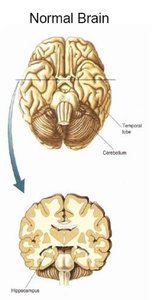
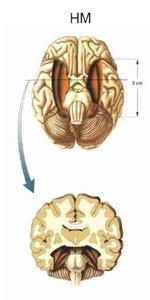
Patient HM underwent bilateral medial temporal lobe resection to treat epilepsy, resulting in profound anterograde amnesia. His case provided critical insights into the neural basis of memory.
Deficits: Inability to form new long-term memories (anterograde amnesia), but spared short-term memory, retrograde childhood memory, and procedural learning.
Brain Regions Removed: Hippocampal formation, entorhinal cortex, parahippocampal gyrus, amygdala, and parts of the temporal cortex.
Other Cases: Patient KC and Patient BJ
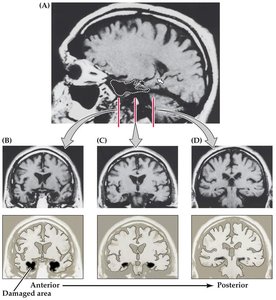
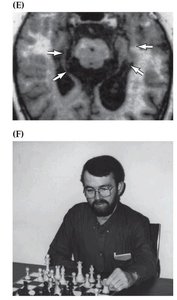
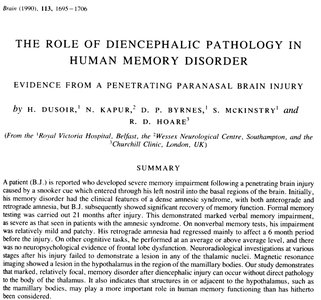
Other cases, such as Patient KC (motorcycle accident, hippocampal damage) and Patient BJ (diencephalic injury), further demonstrated the roles of the hippocampus, parahippocampal gyrus, and mammillary bodies in memory encoding and consolidation.
KC: Suffered both anterograde and retrograde amnesia for episodic memory, but spared semantic memory.
BJ: Severe amnesia following damage to the mammillary bodies, highlighting the importance of diencephalic structures.
Neuroanatomy of Memory
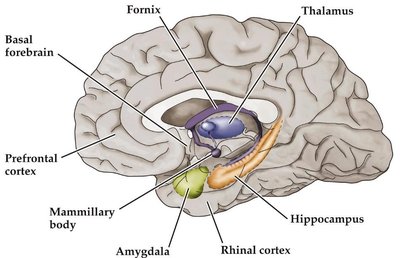
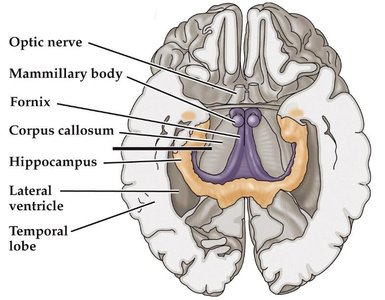
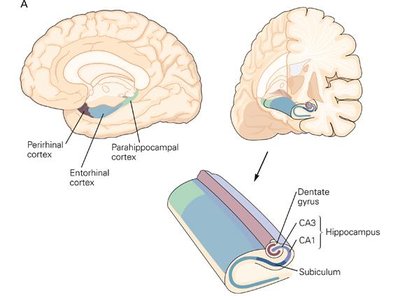
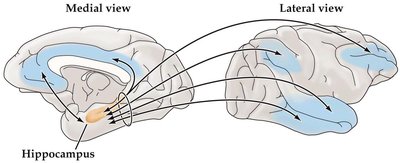
The hippocampus, entorhinal cortex, parahippocampal gyrus, and mammillary bodies are key structures in the medial temporal lobe memory system. These regions interact with cortical association areas for long-term storage of declarative memories.
Reactivation of Sensory Cortex During Recall
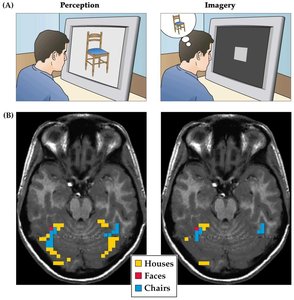
During memory recall, the same sensory cortical areas activated during perception are reactivated, supporting the idea that long-term memories are stored in modality-specific cortical regions.
Non-declarative Memory: Procedural Learning and the Striatum
Procedural Learning in Amnesiac Patients
Despite severe declarative memory deficits, amnesiac patients like HM can learn new motor skills, such as the mirror drawing task, indicating that procedural memory relies on different neural substrates, particularly the striatum.
Example: HM improved at mirror drawing over time, despite not recalling the task.

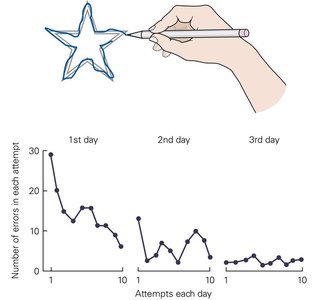
Role of the Striatum in Predictive Learning
Learning predictive relationships (e.g., weather prediction tasks) depends on the striatum. Amnesiac patients perform well on these tasks, while patients with Parkinson's disease (striatum dysfunction) do not, highlighting the dissociation between declarative and non-declarative memory systems.
Example: Parkinson's patients off medication perform poorly on prediction tasks but well on declarative tasks.
Spatial Memory and the Hippocampus
Hippocampal Place Cells
The hippocampus encodes spatial information through "place cells," which fire when an animal is in a specific location. This neural representation forms a cognitive map of the environment.
Example: In the Morris water maze, rodents use hippocampal-dependent spatial memory to locate a hidden platform.
Grid Cells in the Medial Entorhinal Cortex
Grid cells, located in the medial entorhinal cortex, fire in a grid-like pattern as an animal navigates space, providing a metric for spatial navigation and complementing the function of place cells in the hippocampus.
Example: Grid cell firing patterns form a regular, hexagonal grid across the environment.
Summary Table: Types of Long-term Memory
Memory Type | Subtypes | Brain Regions | Examples |
|---|---|---|---|
Declarative (Explicit) | Semantic, Episodic | Medial temporal lobe, hippocampus, cortex | Facts, events |
Non-declarative (Implicit) | Procedural, Priming, Associative, Non-associative | Striatum, cerebellum, amygdala, neocortex | Skills, habits, conditioned responses |
Additional info: This guide integrates foundational neuroscience and clinical case studies to illustrate the neural basis of learning and memory, emphasizing the roles of the hippocampus, striatum, and associated cortical regions.
