 Back
Lipids: Structure, Function, and Health Implications
Study Guide - Smart Notes
 Tailored notes based on your materials, expanded with key definitions, examples, and context.
Lipids: Structure, Function, and Health Implications
Section 1: Introduction to Lipids
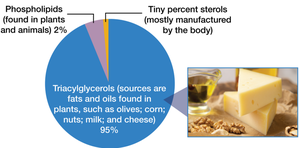
Lipids are a diverse group of organic compounds that are largely insoluble in water. They play essential roles in the human body, including energy storage, cellular structure, and signaling. The three main types of lipids are triacylglycerols, phospholipids, and sterols.
Triacylglycerols: The most abundant form of fat in the body and diet, serving as the primary energy reserve.
Phospholipids: Key structural components of cell membranes, contributing to membrane fluidity and function.
Sterols: Complex molecules, with cholesterol being the most well-known, vital for hormone and vitamin D synthesis.
Section 2: Biological Functions of Lipids
Lipids are crucial for several physiological processes:
Energy Storage: Lipids provide more than double the energy per gram compared to carbohydrates or proteins.
Cell Membrane Structure: Phospholipids and cholesterol are integral to membrane integrity and function.
Hormone Synthesis: Cholesterol is a precursor for steroid hormones and vitamin D.
Insulation and Protection: Adipose tissue cushions organs and helps maintain body temperature.
Absorption of Fat-Soluble Nutrients: Lipids facilitate the absorption of vitamins A, D, E, and K, as well as phytochemicals.
Example: Excess energy from food is stored as adipose tissue, which can be mobilized during periods of energy deficit.
Section 3: Types and Structures of Lipids
The structure of a lipid determines its function and impact on health. The main types include:
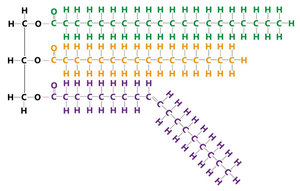
Triacylglycerols (Triglycerides): Composed of three fatty acids attached to a glycerol backbone.
Phospholipids: Contain two fatty acids and a phosphate group attached to glycerol; amphiphilic nature allows them to form cell membranes.
Sterols: Characterized by a multi-ring structure; cholesterol is the most prominent sterol in animals.
Section 4: Fatty Acids – Classification and Importance
Fatty acids are classified based on their saturation and chain length:
Saturated Fatty Acids: No double bonds; solid at room temperature; found in animal fats and some plant oils.
Monounsaturated Fatty Acids: One double bond; liquid at room temperature; found in olive oil and avocados.
Polyunsaturated Fatty Acids: Two or more double bonds; include omega-3 and omega-6 fatty acids; found in fish, nuts, and seeds.
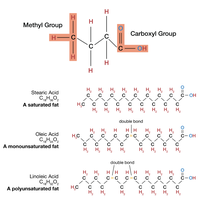
Essential Fatty Acids are those that cannot be synthesized by the body and must be obtained from the diet (e.g., linoleic acid and alpha-linolenic acid).
Section 5: Dietary Sources of Lipids
Lipids are found in a variety of foods. The type and amount of fat consumed can impact health outcomes.
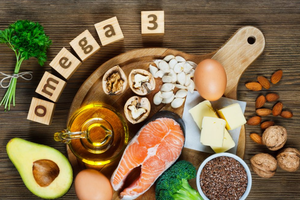
Monounsaturated Fats: Nuts, avocados, olive oil
Polyunsaturated Fats: Fish, flaxseed oil, walnuts, vegetable oils
Saturated Fats: Animal products, dairy, coconut oil, palm oil
Section 6: Lipid Digestion and Absorption
Lipid digestion begins in the mouth and continues in the stomach and small intestine. Key steps include:
Emulsification: Bile salts break down large fat globules into smaller droplets.
Enzymatic Breakdown: Lipases hydrolyze triacylglycerols into monoglycerides and free fatty acids.
Absorption: Micelles transport lipids to the intestinal brush border for absorption into enterocytes.
Transport: Chylomicrons (lipoproteins) carry absorbed fats through the lymphatic system to the bloodstream.
Section 7: Lipoproteins and Blood Cholesterol
Lipoproteins are complexes that transport lipids in the blood. Major types include:
VLDL (Very Low-Density Lipoprotein): Transports triacylglycerols from the liver to tissues.
LDL (Low-Density Lipoprotein): Delivers cholesterol to cells; high levels are associated with increased risk of heart disease.
HDL (High-Density Lipoprotein): Removes excess cholesterol from tissues and returns it to the liver; high levels are protective against heart disease.
Blood Lipid Profile Recommendations:
Component | Optimal Value | Borderline High | High |
|---|---|---|---|
Total Cholesterol | <200 mg/dL | 200–239 mg/dL | >240 mg/dL |
LDL | <100 mg/dL | 100–159 mg/dL | >160 mg/dL |
HDL | >60 mg/dL | 40–60 mg/dL | <40 mg/dL |
Triacylglycerols | 10–150 mg/dL | 150–199 mg/dL | >200 mg/dL |
Section 8: Dietary Recommendations and Health Implications
Proper dietary fat intake is essential for health. Recommendations include:
Fat should comprise 20–35% of total caloric intake for adults.
Saturated fat should be less than 10% of total calories (ideally less than 7%).
Emphasize unsaturated fats from plant and fish sources.
Balance omega-3 and omega-6 fatty acid intake to reduce inflammation and disease risk.
Excess saturated fat and cholesterol intake are linked to cardiovascular disease, obesity, and other health problems. Replacing saturated fats with monounsaturated and polyunsaturated fats, increasing physical activity, and consuming a plant-based diet can reduce disease risk.
Section 9: Key Terms and Definitions
Adipose Tissue: Fat-storing tissue in the body.
Bioavailability: The degree to which a nutrient is absorbed and utilized by the body.
Phytochemicals: Nonessential plant compounds with health benefits.
Emulsifiers: Compounds that allow fats and water to mix, essential for digestion and food processing.
Chylomicron: A lipoprotein particle that transports dietary lipids from the intestines to other locations in the body.
