 Back
Lipids: Structure, Function, and Health Implications
Study Guide - Smart Notes
 Tailored notes based on your materials, expanded with key definitions, examples, and context.
Chapter 5: Lipids
Section 5.1: What Are Lipids?
Lipids are a diverse group of organic compounds that are largely insoluble in water. They are essential for various biological functions, including energy storage, cellular structure, and signaling. Lipids are composed mainly of carbon, hydrogen, and oxygen, and yield more energy per gram than carbohydrates or proteins.
Structural Role: Lipids are key components of cell membranes, providing both structure and fluidity.
Energy Storage: Lipids, especially triacylglycerols, serve as the body's main energy reserve.
Signaling: Some lipids act as signaling molecules, influencing processes such as inflammation and hormone regulation.
Types of Lipids: The three main types are triacylglycerols, phospholipids, and sterols.
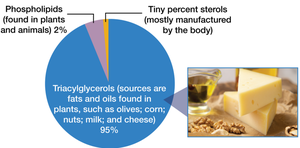
The Functions of Lipids in the Body
Adipose Tissue: Stores excess energy as fat, which is densely packed and energy-rich.
Cholesterol: Essential for cell membrane integrity, hormone synthesis, vitamin D production, and bile salt formation.
Cardiovascular Disease: Excess fat, especially saturated fat and cholesterol, is linked to heart and blood vessel diseases.
Triacylglycerols: The most common lipid, composed of three fatty acids and one glycerol molecule. They help regulate body temperature and hormone production.
Body Fat Ranges: Healthy body fat is 10–20% for males and 20–32% for females.
Phytochemicals: Nonessential plant compounds with health benefits, often transported by lipids.
The Role of Lipids in Food
Foods high in fat are calorie-dense and provide a convenient energy source, especially for individuals with high energy needs such as athletes, children, and those recovering from illness. Fats also contribute to satiety, or the feeling of fullness.

Key Takeaways
Lipids include triacylglycerols, phospholipids, and sterols.
Triacylglycerols are the main storage form of fat in the body and in food.
Fats are essential for temperature regulation, organ protection, hormone regulation, nerve transmission, memory storage, and nutrient absorption.
Lipids enhance the bioavailability of fat-soluble nutrients and phytochemicals.
Fat provides more than double the energy per gram compared to protein or carbohydrates and promotes satiety.
Section 5.2: How Lipids Work
The structure of each lipid type determines its function and impact on health. Lipids differ in their fatty acid composition, which affects their physical properties and biological roles.
Triacylglycerols: Composed of three fatty acids attached to a glycerol backbone. The fatty acids can be saturated, monounsaturated, or polyunsaturated.
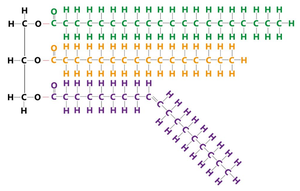
Fatty Acids: Organic compounds with a carboxylic acid group (-COOH) at one end and a methyl group (-CH3) at the other. They vary by:
Essentiality (essential vs. nonessential)
Carbon-chain length
Degree of saturation (saturated, monounsaturated, polyunsaturated)
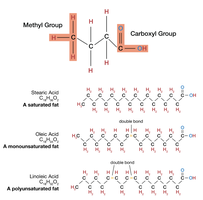
Essential Fatty Acids: Must be obtained from the diet (e.g., omega-3 and omega-6 fatty acids).
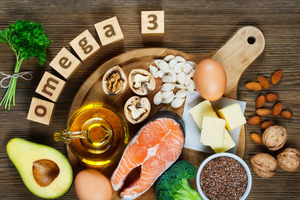
Omega-3 Sources: Fish, flaxseed oil, hemp, walnuts, leafy vegetables.
Omega-6 Sources: Vegetable oils, tofu.
Phospholipids: Consist of a glycerol backbone, two fatty acids, and a phosphate group. They are amphiphilic (both water- and fat-loving) and act as emulsifiers, making them essential for cell membrane structure and function.
Sterols: Have a multi-ring structure and include cholesterol, which is vital for hormone and vitamin D synthesis, and cell membrane structure.
Key Takeaways
Triacylglycerols are the main storage form of fat.
Fatty acids can be saturated, monounsaturated, or polyunsaturated, affecting their physical state at room temperature.
Essential fatty acids must be consumed in the diet; omega-3 and omega-6 have opposing functions and must be balanced.
Phospholipids are crucial for cell membranes and emulsification.
Sterols, especially cholesterol, are important for cell structure and hormone synthesis.
Section 5.3: Digestion and Absorption of Lipids
Lipid digestion begins in the mouth and continues in the stomach and small intestine. Enzymes and emulsifiers break down lipids for absorption and transport.
Lipase: Enzyme that breaks down triacylglycerols and phospholipids.
Bile: Produced by the liver, acts as an emulsifier to aid fat digestion and absorption.
Micelles: Aggregates that transport lipids across the intestinal wall.
Lipoproteins: Transport lipids in the blood; chylomicrons are the main transporters from the intestine to tissues.
Key Takeaways
Fat digestion involves emulsification by bile and enzymatic breakdown by lipases.
Chylomicrons transport dietary fats through the lymphatic system.
Short- and medium-chain fatty acids are absorbed directly into the bloodstream.
Cholesterol absorption is reduced by dietary fiber.
Stored fat is used for energy when needed.
Section 5.4: Understanding Blood Cholesterol
Lipoproteins transport cholesterol and other lipids in the blood. Their composition and function influence cardiovascular health.
VLDL (Very Low-Density Lipoprotein): Transports triacylglycerols and cholesterol from the liver to tissues.
IDL (Intermediate-Density Lipoprotein): Transitional form between VLDL and LDL.
LDL (Low-Density Lipoprotein): "Bad cholesterol"; high levels increase heart disease risk by depositing cholesterol in blood vessels.
HDL (High-Density Lipoprotein): "Good cholesterol"; removes excess cholesterol from tissues and returns it to the liver.
Lipoprotein | Main Function | Health Impact |
|---|---|---|
VLDL | Delivers triacylglycerols to tissues | Can contribute to plaque if in excess |
LDL | Delivers cholesterol to cells | High levels increase heart disease risk |
HDL | Removes cholesterol from cells | High levels reduce heart disease risk |
Blood Cholesterol Recommendations: Total cholesterol < 200 mg/dL; LDL < 100 mg/dL; HDL > 60 mg/dL; Triacylglycerols 10–150 mg/dL.
Oxidized LDL: Promotes atherosclerosis and increases risk for heart attack or stroke.
Key Takeaways
LDL is the main cholesterol transporter and is associated with increased heart disease risk.
HDL helps remove cholesterol and is protective against heart disease.
Maintaining a healthy lipid profile is essential for cardiovascular health.
Section 5.5: Balancing Your Diet with Lipids
Dietary recommendations focus on balancing fat intake and choosing healthy fat sources to support overall health.
Recommended Intake: Adults should get 20–35% of calories from fat, with less than 10% from saturated fat.
Sources of Healthy Fats: Monounsaturated fats (nuts, avocados, plant oils), polyunsaturated fats (fish, plant oils), and omega-3 fatty acids (flaxseed, fish, walnuts).
Omega-3 and Omega-6: Both are essential, but must be balanced. Excess omega-6 can increase inflammation and disease risk.
Key Takeaways
Choose unsaturated fats over saturated fats.
Include sources of omega-3 fatty acids for anti-inflammatory benefits.
Limit saturated fat intake to reduce heart disease risk.
Balance omega-3 and omega-6 intake for optimal health.
Section 5.6: Lipids and Disease
Excess intake of saturated fat and cholesterol is linked to cardiovascular diseases and other health problems. Dietary and lifestyle modifications can reduce these risks.
Health Risks: Cardiovascular disease, heart attack, stroke, heart failure, arrhythmia, and heart valve problems.
Prevention: Limit saturated fat, increase monounsaturated fat, consume whole grains and fiber, and engage in regular physical activity.
Key Takeaways
Dietary cholesterol has less impact on blood cholesterol than saturated fat intake.
High lipid intake is associated with obesity and cardiovascular disease.
Healthy choices include reducing saturated fat, increasing unsaturated fats, exercising, and not smoking.
