 Back
Lipids: Structure, Function, and Health Implications
Study Guide - Smart Notes
 Tailored notes based on your materials, expanded with key definitions, examples, and context.
Lipids: Structure, Function, and Health Implications
What Are Lipids?
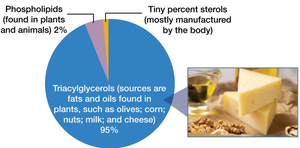
Lipids are a diverse group of organic compounds that are mostly insoluble in water. They play essential roles in the human body, including energy storage, structural functions, and signaling. Lipids are composed mainly of carbon, hydrogen, and oxygen, and are classified into three main types: triacylglycerols, phospholipids, and sterols.
Triacylglycerols: The most abundant lipid, found in fats and oils. They serve as the primary energy storehouse in the body.
Phospholipids: Key structural components of cell membranes, found in both plants and animals.
Sterols: Complex molecules, with cholesterol being the most well-known sterol, vital for hormone and vitamin D synthesis.
The Functions of Lipids in the Body
Lipids perform several critical biological functions. They are stored in adipose tissue, which acts as an energy reserve and helps regulate body temperature. Lipids also cushion vital organs, regulate hormones, transmit nerve impulses, and facilitate the absorption of fat-soluble nutrients.
Adipose tissue: Stores excess energy from food as fat.
Cholesterol: Essential for cell membrane integrity, hormone synthesis, and vitamin D production.
Triacylglycerols: Control internal climate and hormone regulation.
Types of Lipids
The three main types of lipids differ in structure and function:
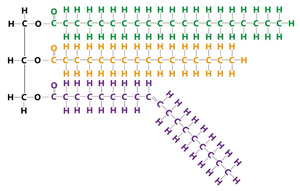
Triacylglycerols: Composed of three fatty acids and one glycerol molecule. They are the main form of fat in the diet and body.
Phospholipids: Consist of a glycerol backbone, two fatty acids, and a phosphate group. Their amphiphilic nature makes them ideal for forming cell membranes.
Sterols: Have a multiring structure and are mostly manufactured by the body. Cholesterol is the most prominent sterol.
Fatty Acids: Structure and Classification
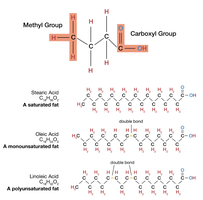
Fatty acids are organic compounds with a carboxylic acid group at one end and a methyl group at the other. They are classified based on their essentiality, carbon-chain length, and degree of saturation.
Saturated fatty acids: Contain the maximum number of hydrogen atoms, with no double bonds.
Monounsaturated fatty acids: Have one double bond, resulting in one point of unsaturation.
Polyunsaturated fatty acids: Have two or more double bonds.
Essential vs. Nonessential Fatty Acids
Essential fatty acids cannot be synthesized by the body and must be obtained from the diet. The two main families are omega-3 and omega-6 fatty acids.
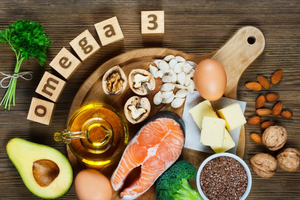
Omega-3 fatty acids: Important for brain development and inflammation reduction. Sources include fish, flaxseed oil, walnuts, and leafy vegetables.
Omega-6 fatty acids: Necessary for health but must be balanced with omega-3 intake. Sources include vegetable oils and tofu.
Phospholipids
Phospholipids are diglycerides with a phosphate group and a nitrogen-containing group. Their amphiphilic nature allows them to act as emulsifiers, keeping oil and water mixed and forming cell membranes.
Amphiphilic: Possess both hydrophilic (water-loving) and hydrophobic (fat-loving) properties.
Emulsifiers: Enable the combination of immiscible liquids.
Sterols
Sterols have a unique multiring structure and are mostly manufactured by the body. Cholesterol is the best-known sterol, essential for cell membrane structure, hormone synthesis, and vitamin D production.
Cholesterol: Vital for health but problematic when accumulated in excess in the blood.
Digestion and Absorption of Lipids
Lipid digestion begins in the mouth and continues in the stomach and small intestine. Enzymes such as lipase break down triacylglycerols and phospholipids. Bile acts as an emulsifier, aiding in fat absorption.
Lipase: Enzyme responsible for lipid breakdown.
Bile: Contains bile salts and lecithin, facilitating fat digestion.
Micelles: Aggregates that transport fats across the intestinal brush border.
Lipoproteins: Transport fats through blood and lymph; chylomicrons are formed in the intestinal lining.
Blood Cholesterol and Lipoproteins
Blood cholesterol is transported by lipoproteins, which are classified as VLDL, IDL, LDL, and HDL. LDL is considered "bad" cholesterol due to its role in depositing cholesterol in blood vessels, while HDL is "good" cholesterol, scavenging excess cholesterol and returning it to the liver.
LDL: Low-density lipoprotein, high cholesterol content, increases risk for heart disease.
HDL: High-density lipoprotein, high protein content, reduces risk for heart disease.
Oxidized LDL: Promotes atherosclerosis and increases risk for heart attack or stroke.
Blood Lipid Profile Recommendations
Component | Optimal Range | Borderline High | High |
|---|---|---|---|
Total Cholesterol | <200 mg/dL | 200–239 mg/dL | >240 mg/dL |
LDL | <100 mg/dL | 100–159 mg/dL | >160 mg/dL |
HDL | >60 mg/dL | 40–60 mg/dL | <40 mg/dL |
Triacylglycerols | 10–150 mg/dL | 150–199 mg/dL | >200 mg/dL |
Balancing Your Diet with Lipids
Dietary recommendations emphasize limiting saturated fat intake and increasing consumption of monounsaturated and polyunsaturated fats. Essential fatty acids, such as omega-3 and omega-6, must be obtained from food sources and balanced for optimal health.
Recommended fat intake: 20–35% of total calories for adults; less than 10% from saturated fats.
Sources of monounsaturated fats: Nuts, avocados, plant oils.
Sources of polyunsaturated fats: Fish, plant-based oils.
Sources of saturated fats: Animal products, dairy, palm and coconut oils.
Omega-3 and Omega-6 Fatty Acids
Omega-3 fatty acids (linolenic acid, EPA, DHA) and omega-6 fatty acids (linoleic acid, ARA) are essential for health. They play roles in inflammation, brain development, and hormone synthesis. Maintaining a proper balance between these fatty acids is crucial to prevent health issues.
Omega-3 sources: Canola oil, flaxseed oil, fish, nuts, seeds, leafy vegetables.
Omega-6 sources: Vegetable oils, eggs, poultry, whole grains, nuts, seeds.
Lipids and Disease
Excessive intake of saturated fat and cholesterol is linked to cardiovascular disease, heart attack, stroke, and other health problems. Dietary modifications, such as increasing monounsaturated fat intake, choosing whole grains, and regular exercise, can reduce these risks.
Limit saturated fats: Replace with monounsaturated and polyunsaturated fats.
Increase physical activity: Reduces risk for heart disease.
Choose high-fiber foods: Helps lower cholesterol absorption.
Key Takeaways
Lipids are essential for energy storage, cell structure, and signaling.
Triacylglycerols are the main form of fat in the body and diet.
Phospholipids form cell membranes and act as emulsifiers.
Sterols, especially cholesterol, are vital for hormone and vitamin D synthesis.
Essential fatty acids must be obtained from the diet and balanced for health.
Maintaining a healthy lipid profile reduces the risk of cardiovascular disease.
Dietary choices and physical activity are key to managing lipid-related health risks.
