 Back
Lymphatic and Immune Systems: Structure, Function, and Defense Mechanisms
Study Guide - Smart Notes
 Tailored notes based on your materials, expanded with key definitions, examples, and context.
The Lymphatic System
Functions of the Lymphatic System
The lymphatic system is essential for maintaining fluid balance, defending against pathogens, and absorbing dietary lipids. It recovers excess tissue fluid, screens lymph for pathogens, and transports absorbed fats from the digestive tract.
Fluid Recovery: Returns interstitial fluid to the bloodstream, preventing edema.
Immunity: Lymph is filtered through lymph nodes containing immune cells, which detect and respond to pathogens.
Lipid Absorption: Specialized lymphatic vessels called lacteals absorb dietary fats in the small intestine.
Anatomy of the Lymphatic System
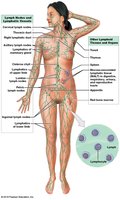
The lymphatic system consists of lymphatic vessels, lymph nodes, and lymphatic organs. Lymphatic vessels are one-way, beginning in blind-ended capillaries and progressing through collecting vessels, trunks, and ducts.
Lymphatic Capillaries: Intertwined with blood capillaries, they collect lymph from tissues.
Lymph Nodes: Filter lymph and house immune cells.
Lymphatic Organs: Include the thymus, spleen, tonsils, and bone marrow.
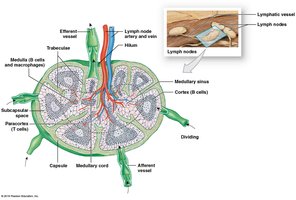
Lymph Nodes: Structure and Function
Lymph nodes are encapsulated structures located along lymphatic vessels. They filter lymph and initiate immune responses. Lymph enters via afferent vessels, percolates through the cortex and medulla, and exits via efferent vessels.
Cortex: Contains B cells.
Medulla: Contains B cells and macrophages.
Paracortex: Contains T cells.
Trabeculae: Provide structural support.
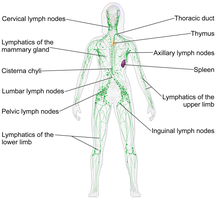
Major Lymphatic Organs
Thymus: Site of T cell maturation.
Spleen: Filters blood, recycles red blood cells, and initiates immune responses.
Tonsils: Protect against inhaled and ingested pathogens.
Bone Marrow: Site of B cell maturation.
The Immune System
Overview of Immune Defense
The immune system protects the body from pathogens through three lines of defense: barriers, innate immunity, and adaptive immunity.
First Line: Physical and chemical barriers (skin, mucous membranes).
Second Line: Innate immunity (cells, chemicals, processes).
Third Line: Adaptive immunity (specific responses by lymphocytes).
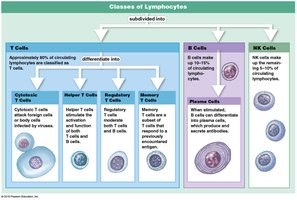
Classes of Lymphocytes
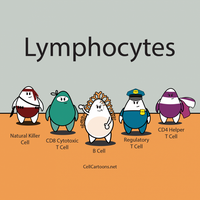
Lymphocytes are central to immune function and are classified into T cells, B cells, and natural killer (NK) cells.
T Cells: Include cytotoxic, helper, regulatory, and memory T cells.
B Cells: Differentiate into plasma cells that produce antibodies.
NK Cells: Destroy abnormal cells.
Innate Immunity: Cells and Processes
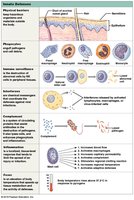
Innate immunity provides immediate, non-specific defense against pathogens. Key cells include neutrophils, macrophages, and NK cells.
Phagocytes: Neutrophils and macrophages engulf and destroy pathogens.
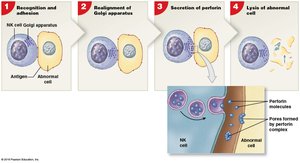
Natural Killer Cells: Recognize and destroy infected or abnormal cells by releasing perforins.
Innate Immunity: Chemical Defenses
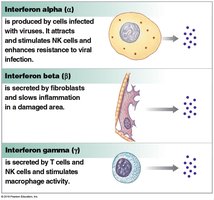
Chemical mediators such as interferons and complement proteins enhance immune responses.
Interferons: Proteins that inhibit viral replication and activate immune cells.
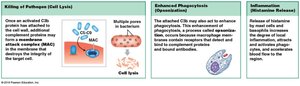
Complement System: Cascade of proteins that lyse pathogens, enhance phagocytosis, and promote inflammation.
Innate Immunity: Inflammatory Response
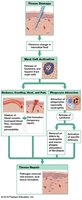
Inflammation is a non-specific response to tissue injury, characterized by redness, swelling, heat, and pain. It recruits immune cells, promotes healing, and prevents infection.
Vasodilation: Increases blood flow to the area.
Increased Permeability: Allows immune cells and proteins to enter tissues.
Chemotaxis: Attracts immune cells to the site of injury.
Summary of Innate Defenses
Innate defenses include physical barriers, phagocytes, immune chemicals, and processes such as inflammation and fever.
Adaptive Immunity
Characteristics of Adaptive Immunity
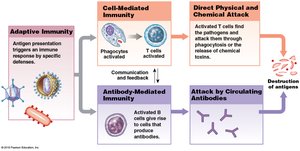
Adaptive immunity is specific, self-tolerant, and has memory. It is mediated by T cells and B cells, which respond to specific antigens and remember past infections.
Self-Tolerance: Ability to distinguish self from non-self.
Specificity: Targets specific pathogens.
Memory: Rapid and robust response upon re-exposure.
Types of Lymphocytes and Their Functions
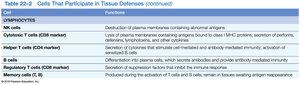
Cell | Function |
|---|---|
NK cells | Destruction of abnormal cells |
Cytotoxic T cells (CD8+) | Lysis of infected or abnormal cells |
Helper T cells (CD4+) | Activation of other immune cells |
B cells | Production of antibodies |
Regulatory T cells (CD4+) | Suppression of immune response |
Memory T cells | Rapid response upon re-exposure |
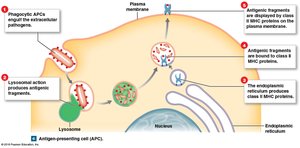
Antigen Presentation and Activation
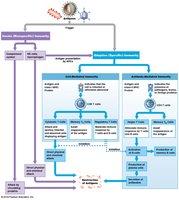
Antigen-presenting cells (APCs) such as macrophages and dendritic cells process and present antigens to T cells using major histocompatibility complex (MHC) proteins.
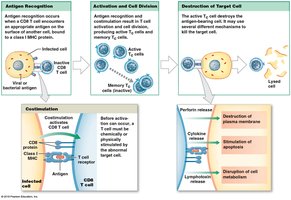
Cell-Mediated Immunity
Cytotoxic T cells recognize and destroy infected or abnormal cells. Helper T cells coordinate the immune response by releasing cytokines.
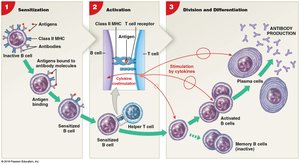
Humoral Immunity
B cells recognize antigens, become activated, and differentiate into plasma cells that produce antibodies. Helper T cells assist in B cell activation.
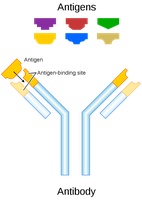
Antibody Structure and Classes
Antibodies are Y-shaped proteins with variable regions that bind specific antigens. There are five classes: IgG, IgM, IgA, IgE, and IgD.
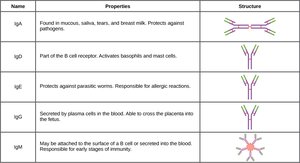
Name | Properties | Structure |
|---|---|---|
IgA | Found in mucous, saliva, tears, breast milk; protects against pathogens | Y-shaped dimer |
IgD | B cell receptor; activates basophils and mast cells | Y-shaped monomer |
IgE | Protects against parasitic worms; allergic reactions | Y-shaped monomer |
IgG | Most abundant; crosses placenta; secondary response | Y-shaped monomer |
IgM | First antibody produced; pentamer; primary response | Pentamer |
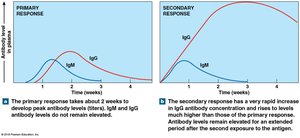
Primary and Secondary Immune Responses
The primary response occurs upon first exposure to an antigen and is slower. The secondary response is faster and stronger due to memory cells.
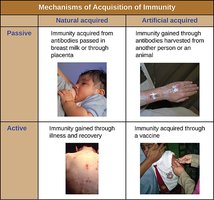
Types of Immunity: Active and Passive
Immunity can be acquired naturally or artificially, and can be active (body produces its own antibodies) or passive (antibodies are received from another source).
Natural | Artificial | |
|---|---|---|
Passive | Antibodies from mother (placenta, breast milk) | Antibodies from another person/animal |
Active | Illness and recovery | Vaccination |
Summary
The lymphatic and immune systems work together to maintain fluid balance, defend against pathogens, and provide adaptive protection through humoral and cellular mechanisms. Understanding these systems is fundamental to human health and disease prevention.
