 Back
BackLymphatic System and Immunity: Anatomy & Physiology Study Guide
Study Guide - Smart Notes
 Tailored notes based on your materials, expanded with key definitions, examples, and context.
Lymphatic System Overview
Structure and Function
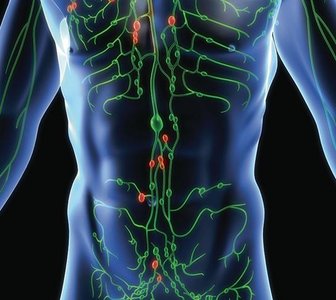
The lymphatic system is a network of vessels, nodes, and organs that helps maintain fluid balance, filter pathogens, and support immune function. It returns excess tissue fluid to the bloodstream and provides sites for immune cell development and activity.
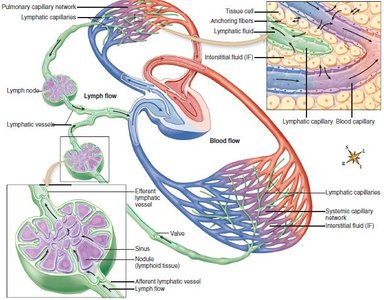
Lymph: Fluid in tissue spaces carrying proteins and other substances back to the blood.
Lymphatic vessels: Permit one-way movement of lymph; include lymphatic capillaries (tiny, blind-ended tubes in tissue spaces).
Lacteals: Specialized lymphatic capillaries in the intestinal wall for fat transport.
Lymphatic Vessels and Ducts
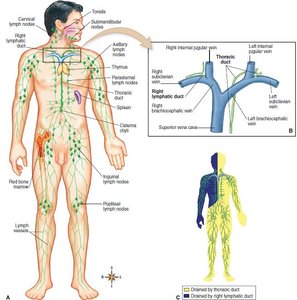
Lymphatic vessels collect lymph from tissues and return it to the bloodstream via two main ducts:
Right lymphatic duct: Drains lymph from the right upper extremity and right side of head, neck, and upper torso.
Thoracic duct: Largest lymphatic vessel; drains lymph from about three-fourths of the body. Contains the cisterna chyli, an enlarged pouch along its course.
Lymphedema and Lymphatic Disorders
Lymphedema
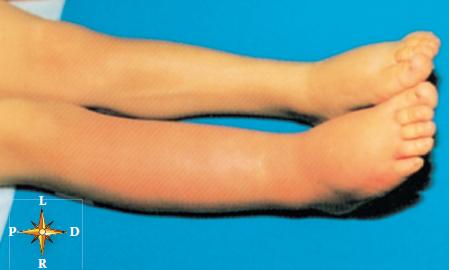
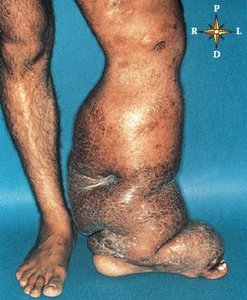
Lymphedema is swelling caused by blockage of lymphatic vessels, leading to accumulation of lymph in tissues.
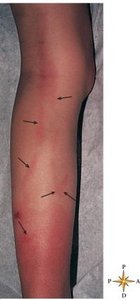
Lymphangitis: Inflammation of lymphatic vessels, may progress to septicemia.
Elephantiasis: Severe lymphedema due to parasite infestation.
Lymphoid Organs
Lymph Nodes
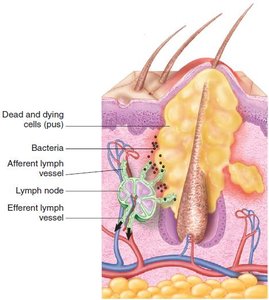
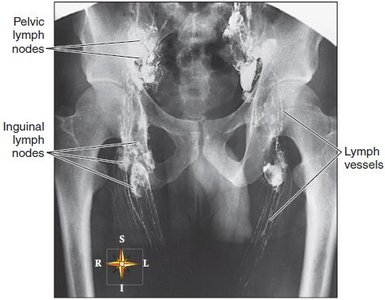
Lymph nodes filter lymph and are located in clusters along lymphatic vessels. They contain lymphoid tissue, which is a mass of lymphocytes and related cells providing immune function and development of immune cells.
Defense: Lymph nodes trap pathogens and cancer cells.
WBC formation: Site for white blood cell development.
Lymphadenitis: Swelling and tenderness of lymph nodes.
Metastasis: Cancer cells can spread via lymphatic vessels.
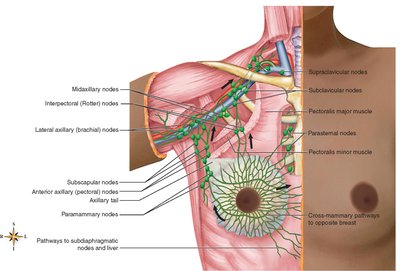
Lymphatic Drainage of the Breast
The breast is drained by an extensive network of lymphatic vessels and nodes, which is clinically important in breast cancer metastasis and post-surgical lymphedema.
Thymus
The thymus is a lymphoid organ located in the mediastinum. It is essential for the development of T lymphocytes (T cells) and secretes thymosins, hormones that influence T-cell development. The thymus undergoes involution, being replaced by fat during childhood.
Tonsils
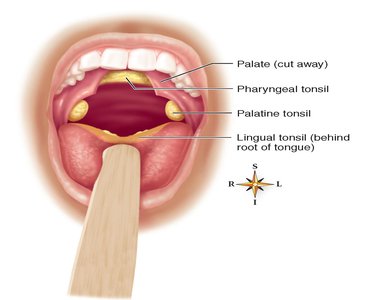
Tonsils are masses of lymphoid tissue around the openings of the mouth and throat. They include palatine tonsils, pharyngeal tonsils (adenoids), and lingual tonsils. Tonsils are subject to chronic infection and enlargement may impair breathing.
Spleen
The spleen is the largest lymphoid organ, located in the upper left quadrant of the abdomen. It functions in phagocytosis of bacteria and old red blood cells, acts as a blood reservoir, and can be enlarged (splenomegaly) or removed (splenectomy).
Lymphoma
Lymphoma is a malignant tumor of lymph nodes. The two principal types are Hodgkin disease and non-Hodgkin lymphoma, which cause enlarged, painless lymph nodes and systemic symptoms.
Immune System Function
Overview
The immune system protects the body from pathogens, foreign tissue cells, and cancerous cells. It consists of defensive cells and molecules and is divided into nonspecific (innate) and specific (adaptive) immunity.
Innate Immunity
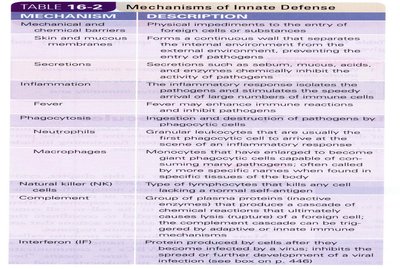
Innate immunity is nonspecific and provides rapid defense against a variety of pathogens. It includes physical barriers, leukocytes, inflammation, and chemical mediators.
Skin: Mechanical barrier.
Tears and mucus: Wash eyes and trap bacteria.
Inflammation: Attracts immune cells, increases blood flow and vascular permeability, promotes movement of WBCs (chemotaxis).
Signs: Heat, redness, pain, swelling.
Adaptive Immunity
Adaptive immunity is specific, recognizing and remembering harmful substances or bacteria. It can be inherited or acquired.
Inherited immunity: Immunity to certain diseases from birth.
Acquired immunity: Can be natural (exposure not deliberate) or artificial (deliberate exposure, e.g., vaccination).
Active immunity: Body produces its own antibodies.
Passive immunity: Antibodies are transferred from another individual.
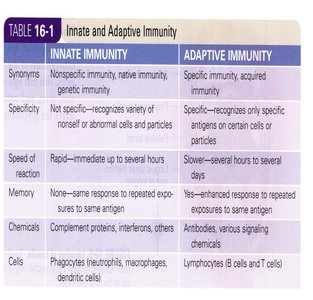
Comparison of Innate and Adaptive Immunity
Feature | Innate Immunity | Adaptive Immunity |
|---|---|---|
Synonyms | Nonspecific, native, genetic | Specific, acquired |
Specificity | Not specific | Specific to antigens |
Speed | Rapid | Slower |
Memory | None | Yes |
Chemicals | Complement, interferons | Antibodies, cytokines |
Cells | Phagocytes, NK cells | Lymphocytes (B and T cells) |
Mechanisms of Innate Defense
Mechanism | Description |
|---|---|
Mechanical/Chemical Barriers | Physical impediments to entry |
Skin/Mucous Membranes | Continuous wall separating internal/external environments |
Secretions | Inhibit pathogens |
Inflammation | Isolates pathogens, attracts immune cells |
Fever | Enhances immune response |
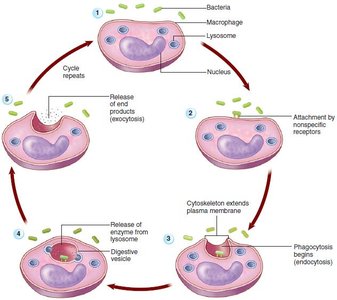
Phagocytosis | Ingestion/destruction of pathogens |
Neutrophils | Granular leukocytes, short-lived |
Macrophages | Large phagocytes, often found in tissues |
Natural Killer Cells | Kill any cell lacking self-antigen |
Complement | Protein group producing cascade |
Interferon | Proteins produced by cells after viral infection |
Immune System Molecules
Antibodies
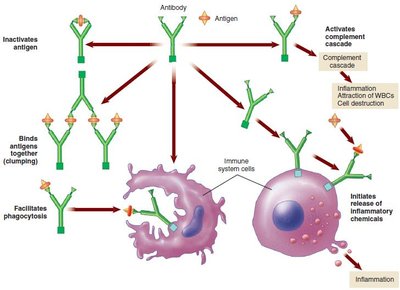
Antibodies are protein compounds with specific combining sites that attach to antigens, forming antigen-antibody complexes. This is called humoral or antibody-mediated immunity.
Functions: Neutralize toxins, agglutinate enemy cells, promote phagocytosis.
Complement Proteins
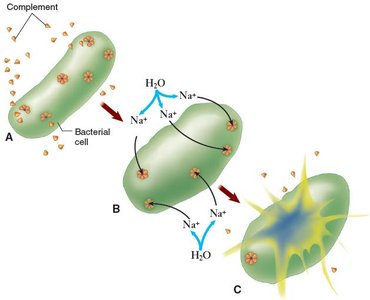
Complement proteins are present in blood in an inactive state and are activated by antigen-antibody complexes. The complement cascade produces protein rings that create holes in foreign cell membranes, causing cell lysis.
Role: Cell lysis, inflammation, chemotaxis.
Immune System Cells
Phagocytes
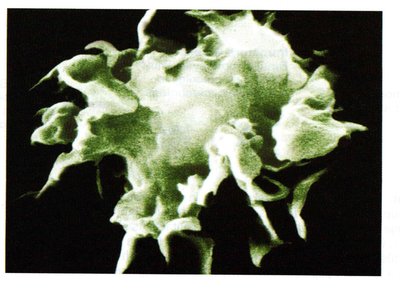
Phagocytes ingest and destroy foreign cells or substances. Macrophages and dendritic cells act as antigen-presenting cells (APCs), displaying ingested antigens to trigger specific immune responses.
Neutrophils: Short-lived phagocytic cells.
Monocytes: Develop into macrophages.
Dendritic cells: Often found near external surfaces.
Lymphocytes
Lymphocytes are the most numerous immune system cells. Three major types are natural killer cells (innate immunity), B lymphocytes, and T lymphocytes (adaptive immunity).
Natural Killer Cells: Kill tumor cells and virus-infected cells without prior exposure to antigen.
B Cells: Produce humoral immunity by secreting antibodies.
T Cells: Produce cell-mediated immunity; include cytotoxic, helper, and regulatory T cells.
B Cell Development
B cells develop in the liver and bone marrow before birth, and in bone marrow in adults. After maturation, they migrate to lymph nodes. Upon activation by antigen and T cell signals, B cells form plasma cells (secrete antibodies) and memory cells (stored in lymph nodes).
T Cell Development
T cells develop from stem cells in the thymus, then migrate to lymph nodes. Upon activation by antigen and T cell signals, T cells form effector cells and memory cells.
Immune System Disorders
Hypersensitivity
Hypersensitivity is an inappropriate or excessive immune response. Allergies are hypersensitivity to harmless environmental antigens (allergens). Immediate responses involve humoral immunity; delayed responses involve cell-mediated immunity.
Autoimmunity
Autoimmunity is an excessive response to self-antigens, causing autoimmune diseases such as systemic lupus erythematosus (SLE).
Alloimmunity
Alloimmunity is an excessive reaction to antigens from another human, important in pregnancy and tissue transplants (rejection syndrome).
Immune System Deficiency
Congenital immune deficiency: Results from improper lymphocyte development before birth (e.g., severe combined immune deficiency, SCID).
Acquired immune deficiency: Develops after birth (e.g., AIDS caused by HIV infection of T cells).
Review Questions
What are lacteals and their function?
Which structures filter lymph?
What is lymphadenitis?
Which are the types of tonsils?
What type of immunity involves memory?
What is the complement system?
What is congenital immune deficiency?
