 Back
BackLymphatic System and Immunity: Structure, Function, and Body Defenses
Study Guide - Smart Notes
 Tailored notes based on your materials, expanded with key definitions, examples, and context.
Lymphatic System
Functions of the Lymphatic System
The lymphatic system is a crucial component of the circulatory and immune systems, responsible for fluid balance and defense against pathogens.
Fluid Transport: Collects excess interstitial fluid from tissues and returns it to the bloodstream, preventing edema.
Immunity: Houses and transports immune cells, and filters lymph to remove pathogens and debris.
Absorption: Absorbs dietary fats from the digestive tract via specialized lymphatic vessels called lacteals.
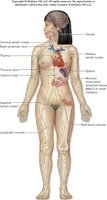
Distribution and Structure of Lymphatic Capillaries
Lymphatic capillaries are microscopic, blind-ended vessels that collect interstitial fluid. Their unique structure allows for efficient uptake of fluid, proteins, and particulate matter.
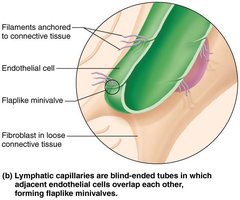
Blind-Ended Tubes: Lymphatic capillaries begin as closed-ended vessels in tissue spaces.
Minivalves: Overlapping endothelial cells form flaplike minivalves that open to allow fluid entry when interstitial pressure rises.
Anchoring Filaments: Attach capillaries to surrounding connective tissue, preventing collapse during increased tissue pressure.
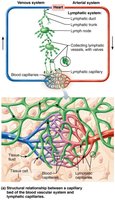
Lymphatic Ducts
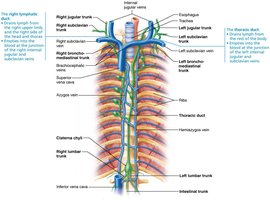
Lymphatic ducts are large vessels that return lymph to the venous circulation. There are two main ducts:
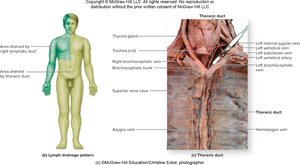
Right Lymphatic Duct: Drains lymph from the right upper limb, right side of the head, and thorax into the right subclavian vein.
Thoracic Duct: Drains lymph from the rest of the body into the left subclavian vein.
Immunology and Body Defenses
Overview of Body Defenses
The body employs multiple lines of defense against pathogens, categorized as innate (nonspecific) and adaptive (specific) defenses.
Innate Defenses: Present at birth, provide immediate but general protection.
Adaptive Defenses: Develop after exposure to specific antigens, providing targeted and long-lasting immunity.
Innate (Nonspecific) Defenses
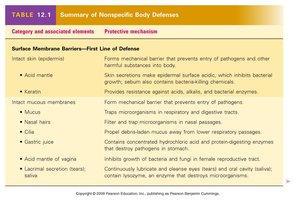
Surface Membrane Barriers: First Line of Defense
Physical and chemical barriers prevent pathogen entry.
Skin: Acts as a physical barrier; acidic pH and sebum inhibit bacterial growth.
Mucous Membranes: Trap pathogens; secretions contain antimicrobial enzymes like lysozyme.
Other Secretions: Gastric juice, saliva, and vaginal secretions provide additional chemical protection.
Cells and Chemicals: Second Line of Defense
When pathogens bypass surface barriers, internal defenses are activated.
Phagocytes: Neutrophils and macrophages engulf and digest pathogens.
Natural Killer (NK) Cells: Destroy virus-infected and cancerous cells by inducing apoptosis.
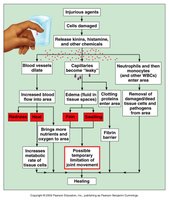
Inflammatory Response: Localized response to injury or infection, characterized by redness, heat, swelling, and pain.
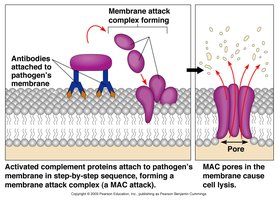
Antimicrobial Proteins: Complement proteins and interferons attack pathogens and hinder their reproduction.
Fever: Elevated body temperature inhibits microbial growth and accelerates tissue repair.
Adaptive (Specific) Defenses
The adaptive immune system targets specific pathogens and retains memory for faster responses upon re-exposure.
Antigen Specificity: Recognizes and responds to unique antigens.
Systemic Response: Not limited to the site of infection.
Memory: Enhanced response to previously encountered antigens.
Humoral (Antibody-Mediated) Immunity
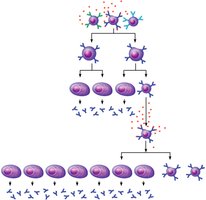
B lymphocytes (B cells) produce antibodies that circulate in body fluids and bind to antigens, neutralizing or marking them for destruction.
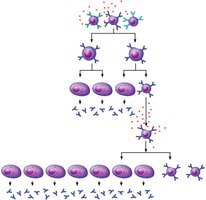
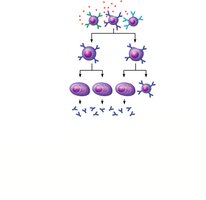
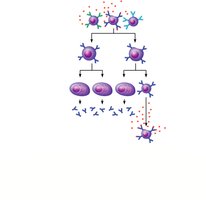
Primary Response: First exposure to an antigen stimulates B cells to proliferate and differentiate into plasma cells (antibody producers) and memory B cells.
Secondary Response: Subsequent exposures elicit a faster, stronger response due to memory cells.
Antibodies (Immunoglobulins)
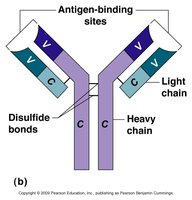
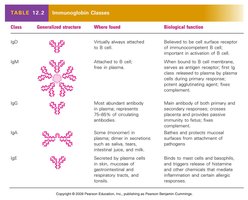
Antibodies are Y-shaped proteins that specifically bind antigens. There are five major classes, each with distinct roles:
Class | Main Function |
|---|---|
IgM | First antibody produced; effective in agglutination and complement activation. |
IgA | Found in mucosal areas; protects body surfaces. |
IgD | Functions mainly as a B cell receptor. |
IgG | Main antibody in blood; crosses placenta; provides long-term immunity. |
IgE | Involved in allergic responses and defense against parasites. |
Cellular (Cell-Mediated) Immunity
T lymphocytes (T cells) directly attack infected or abnormal cells. There are several types of T cells:
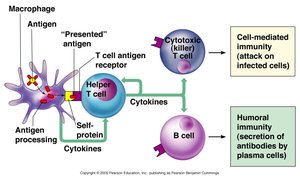
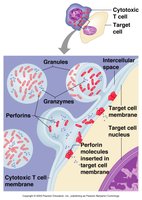
Cytotoxic (Killer) T Cells: Destroy infected or cancerous cells by releasing perforin and granzymes.
Helper T Cells: Activate B cells, cytotoxic T cells, and other immune cells by releasing cytokines.
Regulatory T Cells: Suppress immune responses to prevent overactivity.
Memory T Cells: Provide long-term immunity by remembering past infections.
Clinical Applications and Disorders
Organ Transplants and Rejection
Transplantation involves moving tissue from one individual to another. Immune rejection can occur if the recipient's immune system recognizes the graft as foreign.
Autografts: Tissue from the same individual.
Isografts: Tissue from an identical twin.
Allografts: Tissue from a genetically different person.
Xenografts: Tissue from a different species.
Disorders of Immunity
Allergies (Hypersensitivity): Exaggerated immune responses to harmless antigens (allergens), mediated by IgE and mast cells.
Immunodeficiencies: Impaired production or function of immune components (e.g., AIDS).
Autoimmune Diseases: Immune system attacks self-tissues (e.g., multiple sclerosis, type I diabetes, rheumatoid arthritis).
