 Back
BackMacromolecules, Photosynthesis, and Cellular Respiration: ANP Study Notes
Study Guide - Smart Notes
 Tailored notes based on your materials, expanded with key definitions, examples, and context.
Macromolecules
Monomers and Polymers
Macromolecules are large organic molecules essential for life, built from smaller units called monomers. When monomers join together, they form polymers through a process called polymerization.
Monomer: A single, basic molecular unit.
Polymer: A chain of many monomers bonded together.
Polymerization: The chemical process of linking monomers to form polymers.
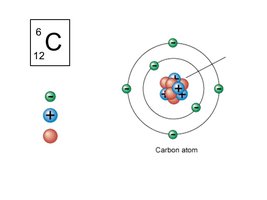



Example: Glucose is a monomer; starch is a polymer made of many glucose units.
Dehydration Synthesis and Hydrolysis
Polymers are assembled and disassembled by two key reactions:
Dehydration Synthesis: Monomers are joined to form polymers, releasing water as a byproduct.
Hydrolysis: Polymers are broken down into monomers by the addition of water.
Example: During digestion, enzymes hydrolyze starch into glucose monomers.
Types of Macromolecules
There are four main types of biological macromolecules, each with distinct structures and functions:
Carbohydrates
Lipids
Proteins
Nucleic Acids
Carbohydrates
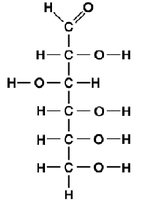
Carbohydrates are composed of carbon, hydrogen, and oxygen, typically in a 1:2:1 ratio. They serve as the main short-term energy source for cells.
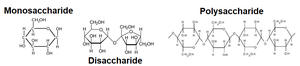
Monomer: Monosaccharide (simple sugar, e.g., glucose)
Polymer: Polysaccharide (e.g., starch, cellulose)
Function: Provide energy for cellular processes
Lipids
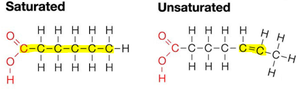
Lipids are hydrophobic molecules composed mainly of carbon, hydrogen, and oxygen. They are not soluble in water and serve as long-term energy storage, insulation, and protection for organs.
Monomer: Glycerol and fatty acids
Function: Energy storage, membrane structure, insulation

Proteins
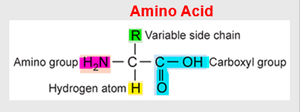
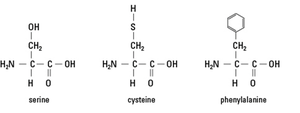
Proteins are composed of carbon, hydrogen, oxygen, nitrogen, and sometimes sulfur. They are made of amino acid monomers and perform a wide variety of functions, including catalyzing reactions (enzymes), transport, support, and movement.
Monomer: Amino acid
Function: Enzymes, structural support, transport, movement
Nucleic Acids
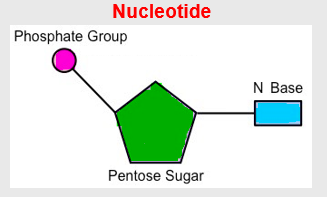
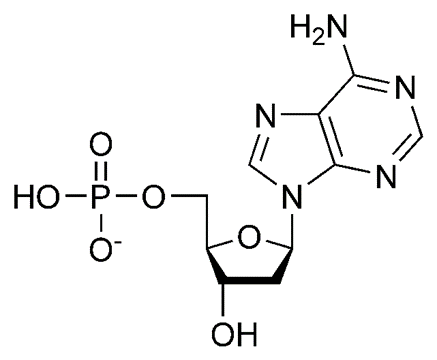
Nucleic acids store and transmit genetic information. They are composed of carbon, hydrogen, oxygen, nitrogen, and phosphorus. The two main types are DNA and RNA.
Monomer: Nucleotide
Function: Store and communicate genetic information
Photosynthesis
Overview and Purpose
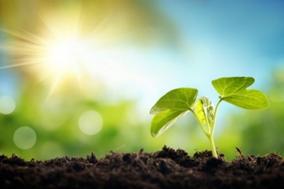
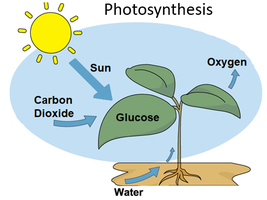
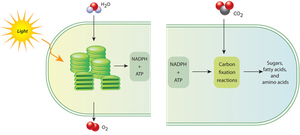
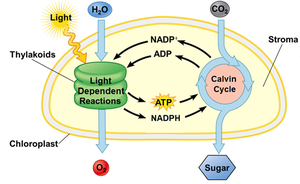
Photosynthesis is the process by which plants, algae, and some bacteria convert light energy into chemical energy stored in glucose. This process is essential for life on Earth as it provides oxygen and organic compounds for other organisms.
Equation: $6\ \mathrm{CO}_2 + 6\ \mathrm{H}_2\mathrm{O} + \text{light energy} \rightarrow \mathrm{C}_6\mathrm{H}_{12}\mathrm{O}_6 + 6\ \mathrm{O}_2$
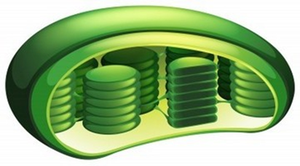
Organelle: Chloroplast
Stages: Light-dependent reactions and light-independent reactions (Calvin Cycle)
Stages of Photosynthesis
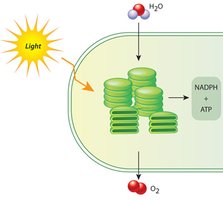
Light-Dependent Reactions: Occur in the thylakoid membranes; require sunlight and water; produce ATP, NADPH, and oxygen as a byproduct.
Light-Independent Reactions (Calvin Cycle): Occur in the stroma; use ATP, NADPH, and carbon dioxide to produce glucose; do not require sunlight directly.
Cellular Respiration
Overview and Purpose
Cellular respiration is the process by which cells convert glucose and oxygen into ATP (usable energy), carbon dioxide, and water. It occurs in all eukaryotic cells and is essential for energy production.
Equation: $\mathrm{C}_6\mathrm{H}_{12}\mathrm{O}_6 + 6\ \mathrm{O}_2 \rightarrow 6\ \mathrm{CO}_2 + 6\ \mathrm{H}_2\mathrm{O} + \text{ATP}$
Location: Cytoplasm (glycolysis) and mitochondria (Krebs cycle and electron transport chain)
Stages of Cellular Respiration
Glycolysis: Occurs in the cytoplasm; does not require oxygen (anaerobic); breaks glucose into 2 pyruvic acid molecules and produces 2 ATP.
Krebs Cycle: Occurs in the mitochondria; requires oxygen (aerobic); produces CO2, H2O, and 2 ATP.
Electron Transport Chain: Occurs in the mitochondria; requires oxygen; produces the majority of ATP and water.
Fermentation (Anaerobic Respiration)
When oxygen is not available, cells can produce energy through fermentation, which is much less efficient than aerobic respiration.
Lactic Acid Fermentation: Occurs in muscle cells and some bacteria; produces lactic acid and ATP.
Alcohol Fermentation: Occurs in yeast and some bacteria; produces alcohol, carbon dioxide, and ATP.
Comparison: Aerobic vs. Anaerobic Respiration
Feature | Aerobic Respiration | Anaerobic Fermentation |
|---|---|---|
Oxygen Required? | Yes | No |
ATP Yield | High (up to 38 ATP) | Low (2 ATP) |
End Products | CO2, H2O, ATP | Lactic acid or alcohol, ATP |
Example: Human muscle cells use lactic acid fermentation during intense exercise when oxygen is scarce.
*Additional info: The above content integrates foundational biochemistry and cell biology concepts essential for understanding human anatomy and physiology at the college level.*
