 Back
Major Themes of Anatomy & Physiology: The Human Body—An Orientation
Study Guide - Smart Notes
 Tailored notes based on your materials, expanded with key definitions, examples, and context.
Major Themes of Anatomy & Physiology
Introduction to Anatomy and Physiology
Anatomy and physiology are foundational sciences in understanding the structure and function of the human body. Anatomy focuses on the form and organization of body parts, while physiology explores how these parts function and interact to sustain life.
Anatomy: The study of body structure, including the relationships among body parts.
Physiology: The study of body function, emphasizing mechanisms at the cellular and molecular levels.
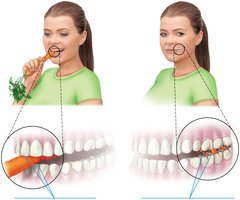
Principle of Complementarity: Structure and function are closely related; what a structure can do depends on its form.
Example: Sharp incisors are adapted for cutting, while flat molars are suited for grinding food.
Levels of Structural Organization
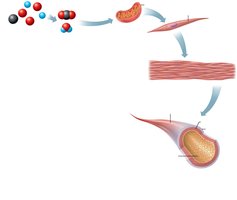
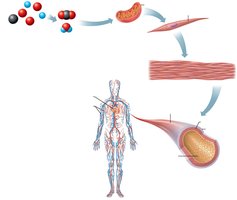
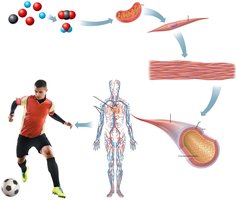
The human body is organized in a hierarchy from the simplest chemical level to the complex organismal level. Each level builds on the previous one, reflecting increasing complexity.
Chemical Level: Atoms combine to form molecules.
Cellular Level: Cells are made up of molecules and are the basic units of life.
Tissue Level: Groups of similar cells perform a common function. Four basic tissue types: epithelial, connective, nervous, and muscular.
Organ Level: Organs are composed of at least two types of tissues working together.
Organ System Level: Organ systems consist of different organs that work closely together.
Organismal Level: The human organism is made up of many organ systems.
Necessary Life Functions
To maintain life, organisms must perform certain functions:
Maintaining Boundaries: Separation between internal and external environments (e.g., skin, plasma membranes).
Movement: Muscular system allows movement of body parts and substances.
Responsiveness: Ability to sense and respond to stimuli.
Digestion: Breakdown of food for absorption and use by the body.
Metabolism: All chemical reactions in the body, including catabolism and anabolism.
Excretion: Removal of metabolic wastes.
Reproduction: Cellular division for growth/repair and production of offspring.
Growth: Increase in size of a body part or organism.
Organ Systems of the Human Body
The human body contains 11 organ systems, each with specific functions essential for survival and homeostasis.
Organ System | Major Function |
|---|---|
Integumentary | Protection, vitamin D synthesis, sensory reception |
Skeletal | Support, protection, blood cell formation, mineral storage |
Muscular | Movement, posture, heat production |
Nervous | Control system, responds to stimuli |
Endocrine | Hormone secretion, regulation of growth and metabolism |
Cardiovascular | Transport of blood, nutrients, gases, wastes |
Lymphatic/Immune | Fluid return, immunity |
Respiratory | Gas exchange (O2/CO2) |
Digestive | Breakdown and absorption of nutrients, waste elimination |
Urinary | Elimination of nitrogenous wastes, water/electrolyte balance |
Reproductive | Production of offspring |
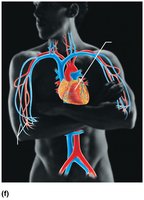
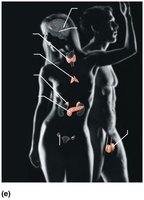
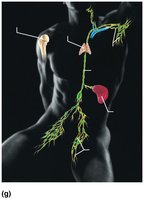
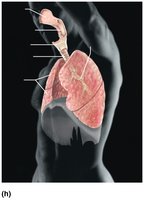
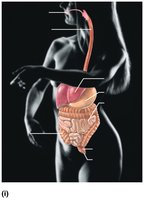
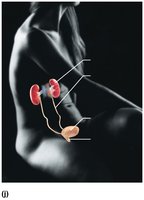
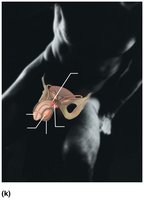
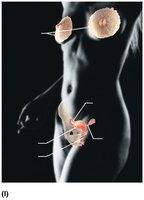
Interrelationships Among Body Organ Systems
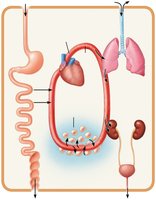
Organ systems interact to maintain the internal environment and support life. For example, nutrients and wastes are exchanged between blood plasma and cells via interstitial fluid, involving the digestive, respiratory, urinary, and cardiovascular systems.
Homeostasis
Definition and Importance
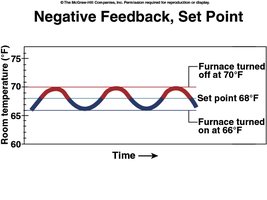
Homeostasis is the maintenance of relatively stable internal conditions despite continuous changes in the environment. It is a dynamic equilibrium, with variables fluctuating within a narrow range around a set point. Loss of homeostatic control can lead to illness or death.
Components of Homeostatic Control
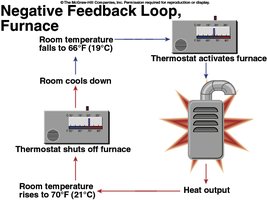
Receptor: Detects changes in the environment (stimuli).
Control Center: Determines the set point and appropriate response.
Effector: Carries out the response to restore balance.
Negative Feedback Mechanisms
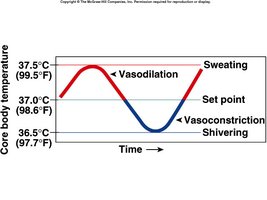
Negative feedback is the primary mechanism for maintaining homeostasis. It reduces or shuts off the original stimulus, causing the variable to change in the opposite direction of the initial change.
Example: Regulation of body temperature and blood glucose levels.
Positive Feedback Mechanisms
Positive feedback amplifies the original stimulus, causing the variable to continue in the same direction. It is less common and usually controls infrequent events that require a rapid response.
Example: Enhancement of labor contractions by oxytocin, and platelet plug formation in blood clotting.
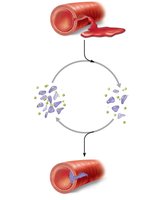
Homeostatic Imbalance
Disturbances in homeostasis increase the risk of disease and contribute to aging. If negative feedback mechanisms are overwhelmed, harmful positive feedback may take over, leading to further imbalance.
Anatomical Terminology and Body Organization
Anatomical Position and Directional Terms
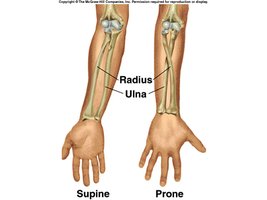
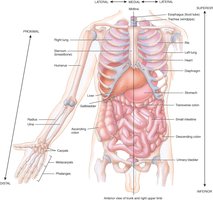
The anatomical position is the standard reference for describing body parts and positions. Directional terms describe the location of one body part relative to another.
Supine: Lying face up; Prone: Lying face down.
Proximal/Distal: Closer to/farther from the point of attachment.
Superior/Inferior: Above/below.

Body Regions and Planes
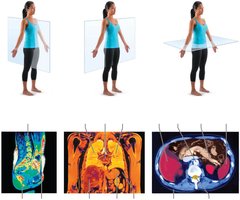
The body is divided into axial (head, neck, trunk) and appendicular (limbs) regions. Body planes are used to describe sections and cuts through the body:
Sagittal Plane: Divides body into right and left parts.
Frontal (Coronal) Plane: Divides body into anterior and posterior parts.
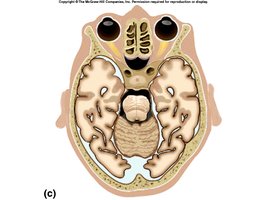
Transverse (Horizontal) Plane: Divides body into superior and inferior parts.
Body Cavities and Membranes
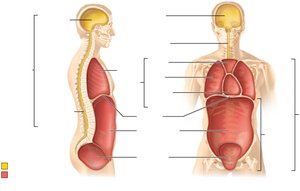
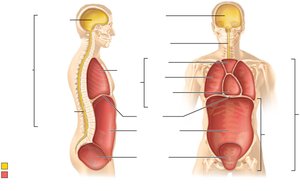
The body contains internal cavities that protect organs and allow for organ movement and growth. The two main cavities are:
Dorsal Body Cavity: Contains the cranial and vertebral cavities (brain and spinal cord).
Ventral Body Cavity: Contains the thoracic and abdominopelvic cavities, separated by the diaphragm.
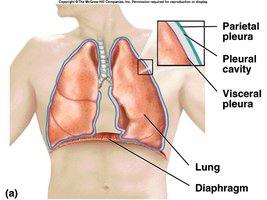
Membranes in the ventral cavity include serosae, which secrete serous fluid to reduce friction:
Parietal Serosa: Lines cavity walls.
Visceral Serosa: Covers organs.
Examples: Pericardium (heart), pleurae (lungs), peritoneum (abdominopelvic cavity).
Abdominopelvic Quadrants and Regions
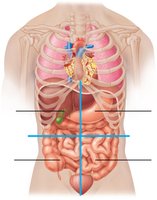
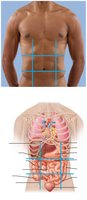
The abdominopelvic cavity is divided into quadrants and nine regions for clinical and anatomical reference.
Quadrant | Location |
|---|---|
Right Upper (RUQ) | Liver, gallbladder |
Left Upper (LUQ) | Stomach, spleen |
Right Lower (RLQ) | Appendix, cecum |
Left Lower (LLQ) | Descending colon, sigmoid colon |
Region | Location |
|---|---|
Right hypochondriac | Liver, gallbladder |
Epigastric | Stomach |
Left hypochondriac | Spleen |
Right lumbar | Ascending colon |
Umbilical | Small intestine |
Left lumbar | Descending colon |
Right iliac (inguinal) | Cecum, appendix |
Hypogastric (pubic) | Urinary bladder |
Left iliac (inguinal) | Sigmoid colon |
Other Body Cavities
Additional cavities include oral, nasal, orbital, middle ear, and synovial (joint) cavities. These provide specialized environments for sensory organs and joint movement.
Review of Major Themes
Cell Theory: All structure and function result from cellular activity.
Homeostasis: Maintaining stable internal conditions is essential for health.
Evolution: The human body is shaped by evolutionary processes.
Hierarchy of Structure: Increasing complexity from atoms to organism.
Unity of Form and Function: Anatomy and physiology are inseparable.
