 Back
Mechanics of Breathing and Gas Exchange: Study Notes for ANP College Students
Study Guide - Smart Notes
 Tailored notes based on your materials, expanded with key definitions, examples, and context.
Mechanics of Breathing
Function of the Respiratory System
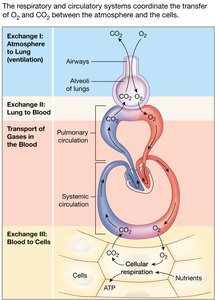
The respiratory system is essential for gas exchange, pH regulation, protection, and vocalization. It coordinates the transfer of oxygen (O2) and carbon dioxide (CO2) between the atmosphere, blood, and cells.
Gas Exchange: O2 is taken in and CO2 is expelled.
Homeostatic Regulation: Maintains body pH by controlling CO2 levels.
Protection: Filters pathogens and irritants.
Vocalization: Air movement through vocal cords produces sound.
Structures Involved in Ventilation and Gas Exchange
Ventilation involves airways, alveoli, and thoracic muscles. The airways conduct air, alveoli provide the exchange surface, and thoracic muscles drive breathing movements.
Upper Respiratory Tract: Mouth, nasal cavity, pharynx, larynx.
Lower Respiratory Tract: Trachea, bronchi, bronchioles.
Alveoli: Site of gas exchange.
Thoracic Muscles: Intercostals, diaphragm, sternocleidomastoids, scalenes.
Pleural Sacs
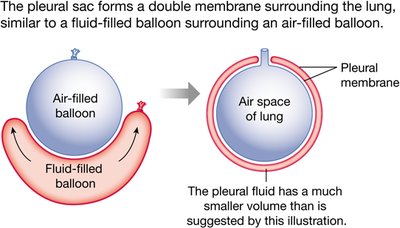
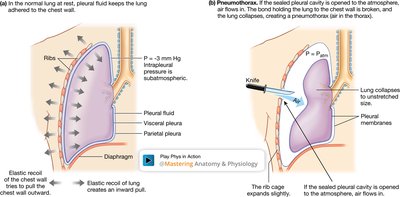
Each lung is encased in a double-walled pleural sac containing a thin layer of pleural fluid. This structure minimizes friction and adheres the lungs to the thoracic wall.
Moist, Slippery Surface: Reduces friction during breathing.
Adhesion: Keeps lungs expanded against the thoracic wall.
Airway Anatomy and Conditioning
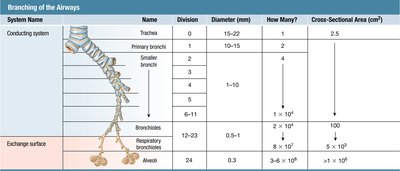
The airway branches extensively, increasing total cross-sectional area and decreasing airflow velocity. Air is conditioned (warmed, humidified, filtered) before reaching the alveoli.
Branching: Trachea → Primary bronchi → Bronchioles → Alveoli.
Conditioning: Warming, humidifying, and filtering air.
Mucociliary Escalator: Moves mucus and trapped particles out of the airways.
Name | Division | Diameter (mm) | How Many? | Cross-Sectional Area (cm2) |
|---|---|---|---|---|
Trachea | 0 | 15-22 | 1 | 2.5 |
Primary bronchi | 1 | 10-15 | 2 | 4 |
Smaller bronchi | 2-5 | 1-10 | 4 | 10 |
Bronchioles | 6-11 | 0.5-1 | 2 x 10⁴ | 1000 |
Respiratory bronchioles | 12-23 | 0.5-1 | 8 x 10⁵ | 5 x 10³ |
Alveoli | 24 | 0.3 | 3-6 x 10⁸ | 3 x 10⁴ |
Mechanics of Breathing
Muscles of Inspiration and Expiration
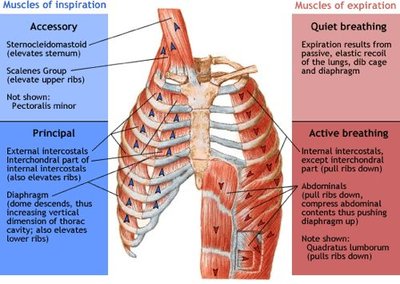
Breathing is driven by contraction and relaxation of thoracic muscles. Inspiration increases thoracic volume, while expiration decreases it.
Inspiration: Diaphragm contracts, external intercostals elevate ribs, accessory muscles assist.
Expiration: Passive during quiet breathing; active during forced breathing (abdominals, internal intercostals).
Pressure Gradients and Air Flow
Air flows into and out of the lungs due to pressure gradients created by muscle activity. Boyle’s law governs the relationship between pressure and volume.
Boyle’s Law:
Inspiration: Increased volume → decreased pressure → air flows in.
Expiration: Decreased volume → increased pressure → air flows out.
Intrapleural Pressure and Pneumothorax
The lungs are kept expanded by negative intrapleural pressure. If the pleural cavity is breached, the lung collapses (pneumothorax).
Elastic Recoil: Opposing forces between chest wall and lung create subatmospheric pressure.
Pneumothorax: Air enters pleural cavity, breaking the seal and causing lung collapse.
Lung Compliance and Elastance
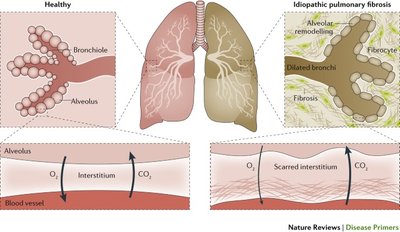
Compliance is the ability of the lung to stretch; elastance is the ability to return to original shape. Diseases can affect these properties.
High Compliance: Lungs stretch easily (e.g., emphysema).
Low Elastance: Lungs do not recoil well (e.g., emphysema).
Restrictive Disease: Reduced compliance (e.g., pulmonary fibrosis).

Obstructive Lung Disease
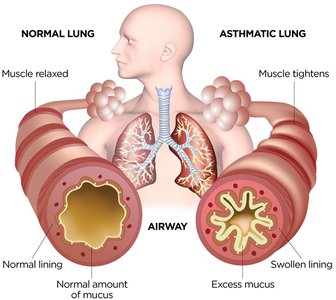
Obstructive diseases increase airway resistance, reducing airflow. Asthma is a common example, characterized by inflammation and bronchoconstriction.
Asthma: Airways narrow, swell, and produce excess mucus.
Symptoms: Wheezing, difficulty breathing.
Alveolar Mechanics and Gas Exchange
Surface Tension and Law of LaPlace
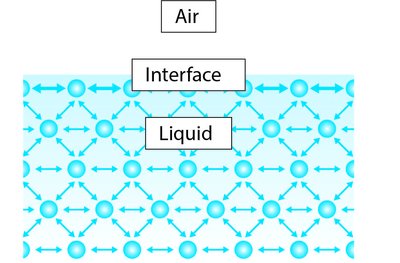
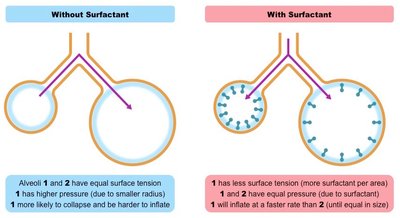
Alveoli are lined with fluid, creating surface tension that resists expansion. The Law of LaPlace describes the relationship between pressure, surface tension, and radius.
Law of LaPlace:
Smaller alveoli: Higher pressure, harder to inflate.
Surfactant
Surfactant reduces surface tension, making it easier for alveoli to expand. It is especially important in smaller alveoli and in newborns.
Produced by: Type II alveolar cells.
Deficiency: Leads to respiratory distress in premature infants.
Gas Exchange and Transport
Overview of Gas Exchange
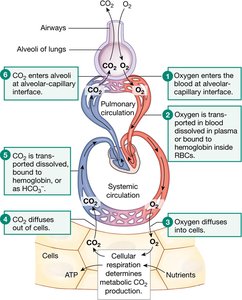
Gas exchange occurs in three stages: atmosphere to lung, lung to blood, and blood to cells. Oxygen supports cellular respiration, while carbon dioxide is a waste product.
Oxygen: Essential for ATP production.
Carbon Dioxide: Must be removed to maintain pH.
Diffusion of Gases
Gases diffuse down their partial pressure gradients. Efficiency depends on surface area, barrier permeability, and diffusion distance.
Diffusion Equation:
Diseases: Emphysema reduces surface area; fibrosis increases barrier thickness; edema increases diffusion distance.
Gas Transport in Blood
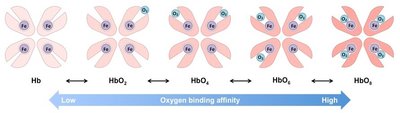
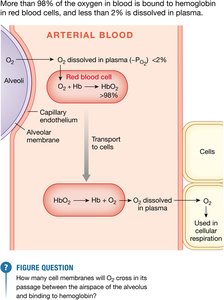
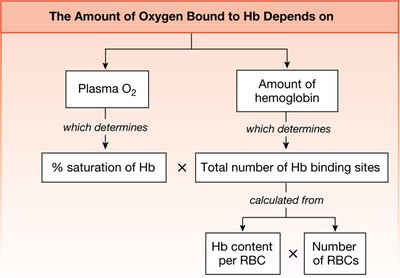
Oxygen is transported dissolved in plasma and bound to hemoglobin. Hemoglobin can carry up to four oxygen molecules.
Dissolved O2: Less than 2%.
Bound to Hemoglobin: Majority of O2 transport.
Factors Affecting Hb-O2 Binding
Hemoglobin’s affinity for oxygen is affected by pH, temperature, and CO2 levels. The Bohr effect describes the rightward shift in the saturation curve under acidic conditions.
Low pH, High Temperature, High PCO2: Decrease O2 binding.
2,3-BPG: Released during chronic hypoxia, decreases O2 binding.
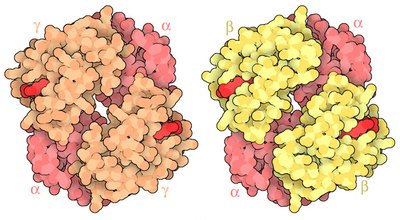
Fetal Hemoglobin: Higher affinity for O2 due to gamma proteins.
Transport of Carbon Dioxide
CO2 is transported dissolved in plasma, bound to hemoglobin, or converted to bicarbonate. The chloride shift maintains electrical neutrality.
Dissolved: 7% in plasma.
Bound: 23% as carbaminohemoglobin.
Bicarbonate: 70% converted by carbonic anhydrase.
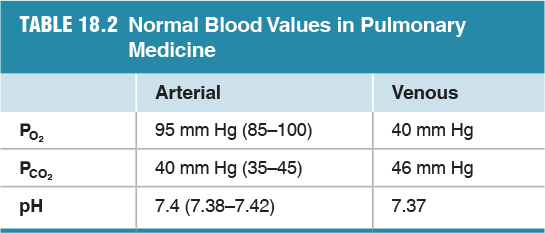
Normal Blood Values in Pulmonary Medicine
Blood gas values are important for assessing respiratory function.
Arterial | Venous | |
|---|---|---|
PO2 | 95 mm Hg (85–100) | 40 mm Hg |
PCO2 | 40 mm Hg (35–45) | 46 mm Hg |
pH | 7.4 (7.38–7.42) | 7.37 |
Regulation of Ventilation
Neural Control of Breathing
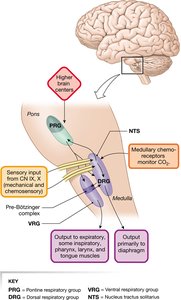
Breathing is regulated by the brainstem, specifically the pons and medulla oblongata. These centers coordinate respiratory rhythm and respond to blood gas levels.
Pons: Integrates sensory information.
Medulla: Controls inspiratory and expiratory muscles.
Chemoreceptor Regulation
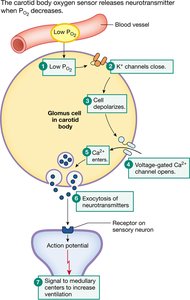
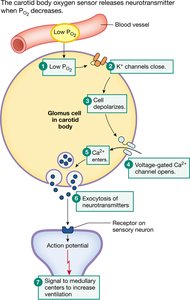
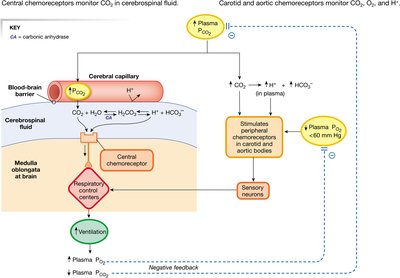
Chemoreceptors in the carotid bodies and medulla monitor blood gases and pH. CO2 is the primary stimulus for changes in ventilation.
Peripheral Chemoreceptors: Respond to low pH and high PCO2.
Central Chemoreceptors: Respond to CO2 in cerebrospinal fluid.
Summary
The mechanics of breathing and gas exchange are fundamental to human physiology. Understanding the structure, function, and regulation of the respiratory system is essential for maintaining homeostasis and responding to disease.
