 Back
Medical Terminology Foundations for Anatomy & Physiology
Study Guide - Smart Notes
 Tailored notes based on your materials, expanded with key definitions, examples, and context.
Forming Medical Terms
Basic Structure of Medical Terms
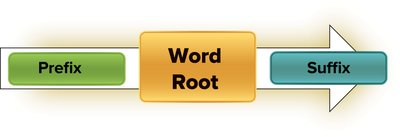
Medical terms are constructed from specific word parts that provide clues to their meaning. Understanding these components is essential for interpreting and using medical vocabulary in anatomy and physiology.
Word Root: The core part of the word that contains its fundamental meaning, often indicating a body part or system. Examples: cardi (heart), dent (tooth), gastr (stomach), laryng (larynx), rhin (nose)
Combining Form: A word root plus a combining vowel (usually 'o') that links word parts for easier pronunciation. Examples: laryng/o (as in laryngoscope), gastr/o (as in gastrology), rhin/o (as in rhinoplasty)
Prefix: A word part attached to the beginning of a word root to modify its meaning, often indicating location, direction, quality, or quantity. Examples: peri- (around, as in pericardium), dis- (apart, as in disinfection), retro- (behind, as in retroperitoneum)
Suffix: A word part attached to the end of a word or word root that modifies its meaning, often indicating a test, procedure, specialty, function, or disorder. Examples: -oid (like or resembling, as in fibroid), -phobia (fear, as in acrophobia), -lysis (destruction, as in electrolysis)
Combining Forms in Medical Terms
Combining forms are essential for constructing pronounceable and meaningful medical terms, especially when linking roots and suffixes that would otherwise be difficult to say.
The combining vowel is most often 'o' (used about 70% of the time).
Combining forms allow for the creation of complex terms, such as laryngoplasty (surgical repair of the larynx) and cardiology (study of the heart).

Word Building Practice
Understanding how to assemble medical terms from their components is a key skill in anatomy and physiology. Practice exercises help reinforce this knowledge.
peri-colic: peri- (prefix) + colic (root) = around the colon
dent-algia: dent (root) + -algia (suffix) = tooth pain
dys-menorrhea: dys- (prefix) + menorrhea (root/suffix) = painful menses
hepato-megaly: hepato- (combining form) + -megaly (suffix) = enlarged liver
hypo-tension: hypo- (prefix) + tension (root) = abnormally low blood pressure
epi-gastric: epi- (prefix) + gastric (root) = area above the stomach
phlebo-tomy: phlebo- (combining form) + -tomy (suffix) = incision into the vein
Pronunciation and Spelling
Correct pronunciation and spelling are crucial for clear communication in medical settings. Practice by reading terms aloud and writing their definitions.
retroperitoneum: The space behind the peritoneum
disinfection: Removal of infection or sterilization
epigastric: Area above the stomach
phlebotomy: Incision into the vein
Matching Word Parts to Definitions
Word Part | Definition |
|---|---|
Suffix | After word root |
Word Root | Main structure of term |
Combining Vowel | Used to link word parts together |
Prefix | In front of a word root |
Application: Creating Medical Terms
By mixing and matching word roots, prefixes, and suffixes, students can create new medical terms and check their validity using a medical dictionary.
Example: gastritis = gastr (stomach) + -itis (inflammation) = inflammation of the stomach
Example: rhinoplasty = rhin (nose) + -plasty (surgical repair) = surgical repair of the nose
Example: laryngoscope = laryng (larynx) + -scope (instrument for viewing) = instrument for viewing the larynx
Example: osteopathy = oste (bone) + -pathy (disease) = disease of the bone
Study Tip
Begin making flash cards of word roots, prefixes, and suffixes to practice forming and pronouncing new medical terms. This will help reinforce your understanding as you progress through anatomy and physiology.

Additional info: Mastery of medical terminology is foundational for success in anatomy and physiology, as it enables precise communication and understanding of complex concepts throughout the course.
