 Back
BackMetabolism: Catabolic and Anabolic Pathways in Human Physiology
Study Guide - Smart Notes
 Tailored notes based on your materials, expanded with key definitions, examples, and context.
Metabolism: The Chemistry of Life
Introduction to Metabolism
Metabolism refers to the sum of all chemical reactions occurring within a living organism. It is a complex network of interactions that enables the conversion of food into energy and cellular components, essential for maintaining life.
Metabolism: All chemical reactions in the body, including both breakdown and synthesis of molecules.
Catabolism: The process of breaking down complex molecules into simpler ones, releasing energy.
Anabolism: The process of building complex molecules from simpler ones, consuming energy.
Catabolic Pathways
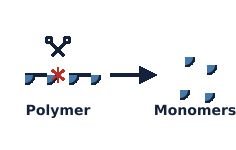
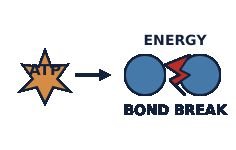
Catabolic pathways involve the breakdown of large, complex molecules (such as polymers) into smaller monomers. This process releases energy, often in the form of ATP, and provides raw materials for other cellular reactions.
Breakdown: Large molecules are broken into smaller units.
Release: Energy is released from chemical bonds, typically captured as ATP.
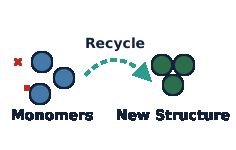
Recycle: Simple building blocks are reused in other reactions, such as digestion.
Example: Digestion of proteins into amino acids.
Anabolic Pathways
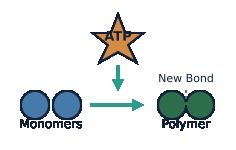
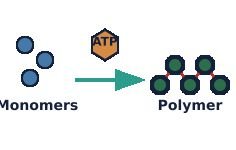
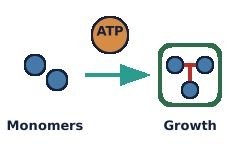
Anabolic pathways require energy input (usually from ATP) to form new chemical bonds, linking simple monomers into complex polymers. These processes are essential for growth, repair, and maintenance of cellular structures.
Consume Energy: ATP is used to drive synthesis reactions.
Synthesis: Monomers are joined to form polymers like proteins and DNA.
Growth: Complex molecules facilitate cell and tissue growth and repair.
Example: Muscle growth through protein synthesis.
Concept Check: Catabolism vs. Anabolism
Digesting a large protein into amino acids is a catabolic process, not anabolic. Catabolism breaks down molecules to release energy, while anabolism builds complex structures.
Catabolic Example: Protein digestion.
Anabolic Example: Protein synthesis from amino acids.
Energy Coupling and ATP
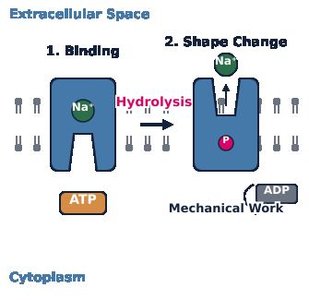
Cells manage energy through energy coupling, linking exergonic (energy-releasing) catabolic reactions to endergonic (energy-consuming) anabolic reactions. ATP acts as the primary energy currency, transferring energy between these processes.
ATP (Adenosine Triphosphate): Stores and transfers energy for cellular reactions.
Exergonic Reactions: Release energy (catabolic).
Endergonic Reactions: Consume energy (anabolic).
ATP Structure and Cycle
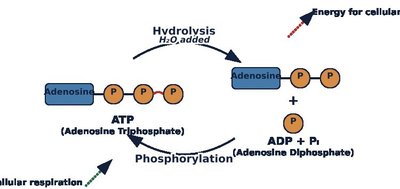
ATP consists of adenosine and three phosphate groups. Energy is released when ATP is hydrolyzed to ADP and inorganic phosphate (Pi), and regenerated through phosphorylation during cellular respiration.
Hydrolysis: ATP + H2O → ADP + Pi + energy
Phosphorylation: ADP + Pi → ATP (requires energy input)
Equation:
Metabolic Pathways and Enzyme Regulation
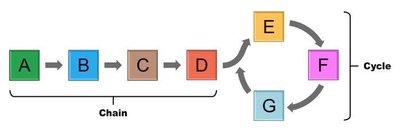
Cellular reactions occur in chain or cycle-like pathways, controlled by enzymes. These pathways allow for regulation, lower activation energies, and accessibility of intermediates for other reactions.
Enzymes: Biological catalysts that regulate metabolic pathways.
Pathways: Chains or cycles of reactions, each step catalyzed by a specific enzyme.
Regulation: Multiple points of control, including feedback inhibition.

Measuring Metabolism: Basal Metabolic Rate (BMR)
BMR is the amount of energy used by the body at complete rest. It can be measured directly (calorimetry) or estimated using factors such as sex, body mass, height, and age.
BMR: Energy expenditure at rest.
Measurement: Joules per hour or per kilogram.
Estimation Factors: Sex, body mass, height, age.

Energy Transfer: Catabolism and Anabolism Relationship
Catabolism releases energy that is used to drive anabolic reactions. These processes are interconnected and essential for cellular function.
Catabolism: Provides energy for anabolism.
Anabolism: Uses energy to build cellular structures.
Lesson Summary
Key Takeaways:
Metabolism includes all chemical reactions in an organism, divided into catabolism (breakdown) and anabolism (building).
Energy coupling links exergonic and endergonic processes, primarily through ATP.
Enzymes regulate these pathways to maintain efficiency and balance within the cell.
