 Back
Metabolism, Energetics, and Nutrition: Study Notes for ANP College Students
Study Guide - Smart Notes
 Tailored notes based on your materials, expanded with key definitions, examples, and context.
Metabolism and Energetics
Introduction to Cellular Metabolism
Metabolism encompasses all chemical reactions occurring within an organism, essential for maintaining homeostasis and supporting life functions. Cellular metabolism refers specifically to the collective chemical reactions within cells, which are categorized as either anabolic (building up) or catabolic (breaking down) processes.
Anabolism: Synthesis of organic compounds (e.g., protein synthesis, glycogen formation).
Catabolism: Breakdown of organic compounds to release energy (e.g., glycolysis, fatty acid oxidation).
Metabolic turnover: Continuous breakdown and replacement of cellular components, except DNA.
Nutrient pool: Reserve of organic molecules available for energy production or biosynthesis.
During mitochondrial catabolism, about 40% of energy is used for ATP production; 60% is lost as heat.
Cells can utilize various substrates (glucose, fatty acids, amino acids) for energy, with glucose being the primary fuel for most tissues and the exclusive fuel for neural tissue under normal conditions. The liver, adipocytes, and skeletal muscle play key roles in nutrient storage and mobilization.
Redox Reactions
Oxidation: Loss of hydrogen ions (often electrons); common coenzymes include NAD and FAD.
Reduction: Gain of hydrogen ions; reduced forms (NADH, FADH2) carry energy for ATP synthesis.
Carbohydrate Digestion, Absorption, and Metabolism
Digestion and Absorption
Begins in the mouth with salivary amylase breaking down starches into disaccharides and oligosaccharides.
Stomach acid inactivates amylase; digestion resumes in the duodenum with pancreatic amylase.
Brush border enzymes (maltase, sucrase, lactase) convert disaccharides to monosaccharides (glucose, fructose, galactose).
Monosaccharides are absorbed into the bloodstream via the hepatic portal vein.
Indigestible carbohydrates (fiber) are metabolized by gut bacteria, producing flatus.
Metabolism of Carbohydrates
Liver converts fructose and galactose to glucose; excess glucose is stored as glycogen (glycogenesis).
When needed, glycogen is broken down to glucose (glycogenolysis); glucose can also be synthesized from non-carbohydrate sources (gluconeogenesis).
Glucose catabolism occurs in three main stages:
Glycolysis: Anaerobic process in cytoplasm; glucose → 2 pyruvate + 2 ATP (net) + 2 NADH.
Citric Acid Cycle (Krebs Cycle): Aerobic process in mitochondria; acetyl-CoA enters cycle, producing NADH, FADH2, CO2, and ATP.
Electron Transport System (ETS): Aerobic process on mitochondrial cristae; NADH and FADH2 donate electrons, generating ATP and water.
Overall equation for glucose catabolism:
40% of glucose energy is converted to ATP; 60% is lost as heat.
Hormonal regulation: Insulin (lowers blood glucose), glucagon (raises blood glucose).
Lipid Digestion, Absorption, and Metabolism
Digestion and Absorption
Begins with lingual lipase in the mouth; continues in the stomach and duodenum.
Bile emulsifies fats; pancreatic lipase breaks triglycerides into fatty acids, monoglycerides, and glycerol.
Lipids form micelles with bile salts, are absorbed by brush border cells, reassembled into triglycerides, and packaged as chylomicrons.
Chylomicrons enter lymphatic system, then bloodstream; lipoprotein lipase releases fatty acids for tissue use or storage.
Metabolism of Lipids
Lipolysis: Breakdown of triglycerides into fatty acids and glycerol.
Glycerol enters glycolysis; fatty acids undergo beta-oxidation to form acetyl-CoA (each step yields 17 ATP).
Lipogenesis: Synthesis of lipids; essential fatty acids (e.g., omega-3, omega-6) must be obtained from diet.
Excessive lipid catabolism can lead to ketosis and ketoacidosis (dangerous drop in blood pH).
Protein Digestion, Absorption, and Metabolism
Digestion and Absorption
Mechanical processing in mouth and stomach; chemical digestion begins in stomach with pepsin.
Pancreatic proteases (trypsin, chymotrypsin, carboxypeptidase, elastase) further digest proteins in small intestine.
Brush border enzymes (aminopeptidase, dipeptidase) complete digestion to amino acids, which are absorbed into the bloodstream.
Metabolism of Proteins
Liver synthesizes and catabolizes amino acids; some are essential and must be obtained from diet.
Amination: Formation of amino acids from ammonium ions.
Transamination: Transfer of amino group to form new amino acids.
Deamination: Removal of amino group, producing ammonia, which is converted to urea for excretion.
Energy yield from amino acid catabolism is similar to carbohydrates, but not preferred for energy.
Energetics and Thermoregulation
Energetics
Energetics: Study of energy flow and transformation in biological systems.
Basal metabolic rate (BMR): Minimum energy expenditure at rest.
Energy content of food is measured in calories (c) and kilocalories (kcal or Cal).
Thermoregulation
Heat is produced during metabolism; must be balanced with heat loss to maintain body temperature.
Heat-loss mechanisms: Sweating, vasodilation, behavioral changes, radiation, conduction, convection, evaporation.
Heat-promoting mechanisms: Vasoconstriction, increased metabolism, shivering, behavioral changes, thyroxine release.
Body core temperature is highest; skin (shell) temperature is lowest. Blood redistributes heat between core and shell.
Hypothalamus acts as the body’s thermostat, integrating sensory input and initiating responses.
Failure to regulate temperature can result in severe physiological consequences, including death.
Nutrition and Diet
Vitamins
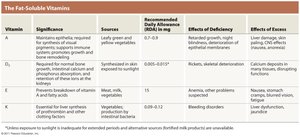
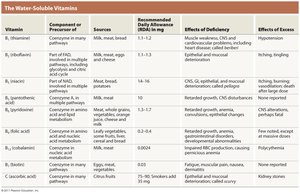
Vitamins are organic compounds required in small amounts for metabolic pathways. They are classified as fat-soluble or water-soluble.
Fat-Soluble Vitamins
Water-Soluble Vitamins
Minerals
Major minerals: Needed in amounts >100 mg/day (e.g., calcium, phosphorus, potassium, sulfur, sodium, chloride, magnesium).
Trace minerals: Needed in amounts <100 mg/day (e.g., iron, fluorine, manganese, copper, iodide, selenium, zinc, cobalt, chromium).
Balanced Diet
Includes all nutrients required for homeostasis: substrates for ATP, essential amino and fatty acids, vitamins, minerals, and water.
Prevents malnutrition, which results from inadequate or excessive nutrient intake.
USDA’s My Plate provides guidelines for balanced nutrition.
Malnutrition, Eating Disorders, and Metabolic Disorders
Malnutrition
Kwashiorkor: Protein deficiency with adequate caloric intake; leads to edema and ascites.
Marasmus: Severe energy deficiency; marked by emaciation and low body weight.
Eating Disorders
Anorexia nervosa: Self-induced starvation, psychological in origin, high mortality rate.
Bulimia: Binge eating followed by purging; more common than anorexia.
Obesity
Defined as >20% over ideal weight; increases health risks.
Regulatory obesity: Imbalance of intake and activity.
Metabolic obesity: Due to underlying metabolic dysfunction (rare).
Metabolic Disorders
Phenylketonuria (PKU): Inability to convert phenylalanine to tyrosine; leads to CNS damage if untreated.
Ketoacidosis: Excessive ketone bodies lower blood pH; can cause coma or death.
Gout: Accumulation of uric acid crystals in joints, causing painful inflammation (gouty arthritis).
