 Back
BackMicrocirculation, Blood Pressure Regulation, and the Lymphatic System
Study Guide - Smart Notes
 Tailored notes based on your materials, expanded with key definitions, examples, and context.
Microcirculation and Blood Vessel Function
Components of Microcirculation
The microcirculation consists of small blood vessels, including arterioles, capillaries, and venules, which facilitate the exchange of gases, nutrients, and waste products between blood and tissues. Pericytes and smooth muscle cells play key roles in regulating vessel tone and permeability.
Determinants of Arterial Blood Pressure
Arterial blood pressure is influenced by several factors:
Resistance: Primarily determined by arteriolar diameter.
Myogenic autoregulation: Vessels respond to changes in pressure by constricting or dilating.
Sympathetic innervation/neurohormones: Regulate vessel tone and heart function.
Hormones: Such as angiotensin II and vasopressin.
Paracrine signals: Local mediators like nitric oxide.
Blood volume: Directly affects pressure.
Cardiac output: Product of heart rate and stroke volume.
Blood distribution: Flow is redirected based on tissue needs.
Blood Distribution and Arteriolar Resistance
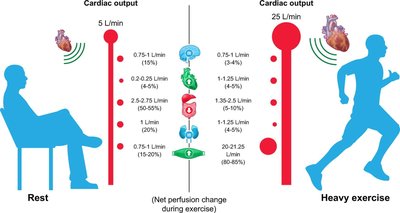
Blood flow through arterioles is regulated by myogenic responses, autonomic control, local signals, and hormones. When an arteriole constricts, resistance increases and blood flow decreases, diverting blood to other regions.
Cerebral Blood Flow and Neurovascular Coupling
Blood Flow to the Brain
The brain, though only 2% of body weight, consumes about 20% of the blood’s oxygen supply. Blood flow to the brain remains constant and is tightly regulated by local factors such as O2, CO2, H+, K+, and metabolic byproducts.
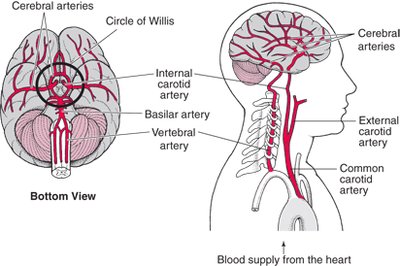
Loss of blood flow: Results in rapid loss of consciousness and irreversible damage within minutes.
Neurovascular Coupling
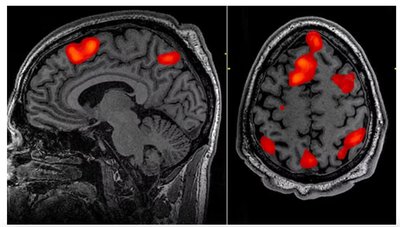
Neurovascular coupling refers to the process by which increased neuronal activity leads to increased local blood flow (active hyperemia) via vasodilation, primarily through paracrine signals. Functional MRI (fMRI) measures this activity by detecting changes in blood oxygen levels, known as the BOLD response.
Regulation of Cardiovascular Function by the Central Nervous System
Medulla Oblongata and Baroreceptor Reflex
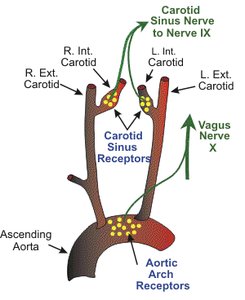
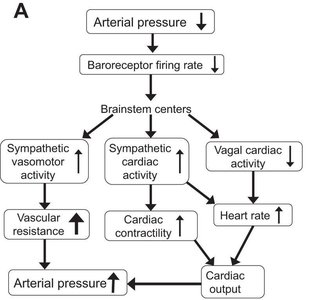
The medulla oblongata monitors mean arterial pressure (MAP) and adjusts cardiovascular outputs to maintain homeostasis. The baroreceptor reflex is a key mechanism:
Baroreceptors: Stretch receptors in the carotid and aortic arteries, firing action potentials in response to changes in blood pressure.
Carotid baroreceptors: Monitor blood flow to the brain.
Aortic baroreceptors: Monitor blood flow to the body.
Increased BP stretches baroreceptors, increasing firing rate; decreased BP reduces firing rate.
Baroreceptor Reflex Pathway
Changes in arterial pressure are detected by baroreceptors, which signal the brainstem to adjust sympathetic and vagal activity, affecting heart rate, contractility, and vascular resistance.
Orthostatic Hypotension
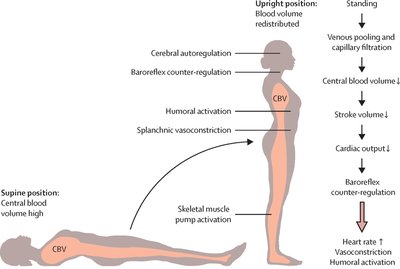
Standing up causes a drop in venous return and central blood volume, triggering the baroreceptor reflex to maintain blood pressure.
Capillary Exchange: Hydrostatic and Colloid Osmotic Pressure
Calculation of Net Pressure
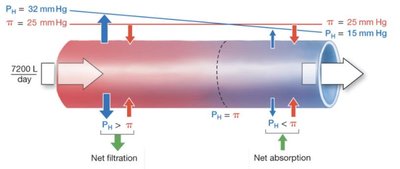
Capillary exchange is governed by hydrostatic and colloid osmotic pressures:
Net pressure at arterial end:
Net pressure at venous end:
Filtration occurs at the arterial end; absorption at the venous end.
The Lymphatic System
Structure and Function
The lymphatic system is a parallel vascular system that carries lymph, drains excess fluid from tissues, and returns it to the venous circulation. It is an open system with blind-ended vessels, lymph nodes for filtration, and relies on skeletal muscle contraction, smooth muscle contraction, and valves for lymph propulsion.
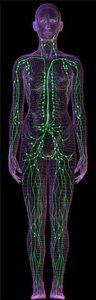
Functions: Uptake of extravasated fluid and protein, dietary lipid absorption, immune cell trafficking.
Edema: Consequences of Lymphatic Dysfunction
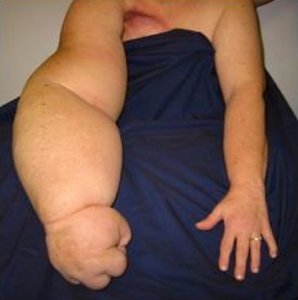
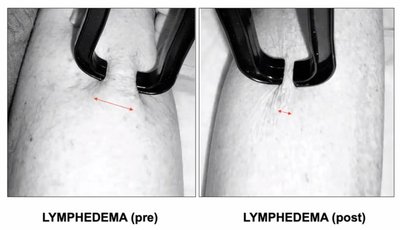
Failure of the lymphatic system to remove excess fluid results in edema, characterized by swelling. Causes include congenital defects, physical obstructions, heart failure, decreased plasma protein, and increased capillary permeability.
Lymphatic Dysfunction and Lipid Uptake
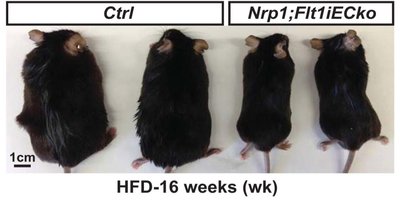
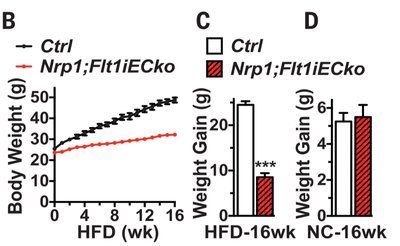
Impaired lymphatic uptake of lipids in the gastrointestinal tract can lead to resistance to diet-induced obesity, as demonstrated in animal models.

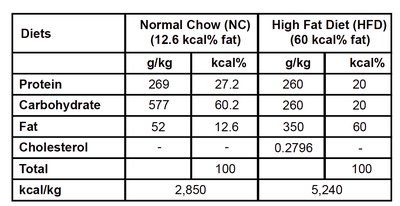
Summary Table: Diet Composition
The following table compares the composition of normal chow and high fat diet used in experimental studies:
Diets | Normal Chow (NC) (12.6 kcal% fat) | High Fat Diet (HFD) (60 kcal% fat) |
|---|---|---|
Protein | 269 g/kg 27.2 kcal% | 260 g/kg 20 kcal% |
Carbohydrate | 577 g/kg 60.2 kcal% | 260 g/kg 20 kcal% |
Fat | 52 g/kg 12.6 kcal% | 350 g/kg 60 kcal% |
Cholesterol | - | 0.2796 g/kg |
Total | 100 | 100 |
kcal/kg | 2,850 | 5,240 |
Example: High fat diet significantly increases fat content and caloric density compared to normal chow, affecting metabolic outcomes in animal studies.
