 Back
BackMini-Textbook Study Guide: Joints and Skeletal System in Anatomy & Physiology
Study Guide - Smart Notes
 Tailored notes based on your materials, expanded with key definitions, examples, and context.
Joints and the Skeletal System
Classification of Joints
Joints, also known as articulations, are the connections between bones that allow for movement and provide mechanical support. They are classified based on their structure and function.
Structural Classification: Joints are categorized by the material binding the bones and whether a joint cavity is present. The main types are:
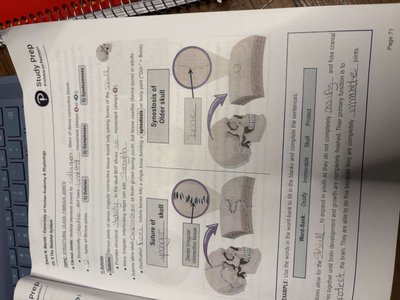
Fibrous Joints: Bones are joined by dense connective tissue; no joint cavity. Examples include sutures of the skull.
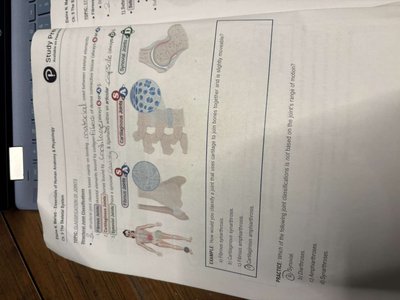
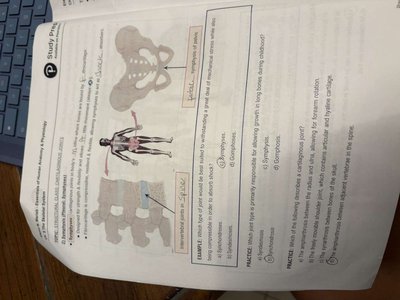
Cartilaginous Joints: Bones are connected by cartilage; no joint cavity. Examples include intervertebral discs.
Synovial Joints: Bones are separated by a fluid-filled joint cavity; most movable type. Examples include the knee and shoulder.
Functional Classification: Joints are classified by the degree of movement allowed:
Synarthroses: Immovable joints (e.g., sutures).
Amphiarthroses: Slightly movable joints (e.g., intervertebral discs).
Diarthroses: Freely movable joints (e.g., synovial joints).

Fibrous Joints
Fibrous joints are held together by fibrous connective tissue and are generally immovable. The main types include:
Sutures: Found in the skull; bones are tightly bound by minimal fibrous tissue.
Syndesmoses: Bones are connected by a ligament; allows slight movement (e.g., distal tibiofibular joint).
Gomphoses: Peg-in-socket joints (e.g., teeth in their sockets).
Cartilaginous Joints
Cartilaginous joints unite bones with cartilage and allow limited movement. Types include:
Synchondroses: Bones are joined by hyaline cartilage (e.g., epiphyseal plates in children).
Symphyses: Bones are joined by fibrocartilage (e.g., pubic symphysis, intervertebral discs).
Synovial Joints
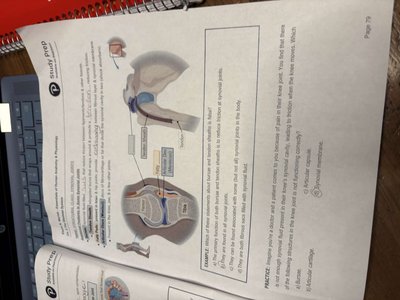
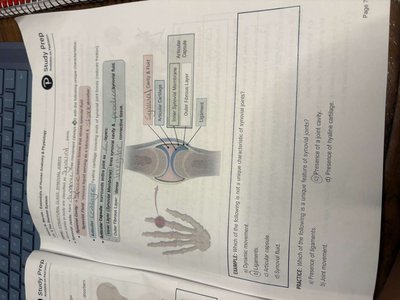
Synovial joints are the most common and most movable type of joint in the body. They feature a joint cavity filled with synovial fluid, articular cartilage, and a joint capsule.
Components:
Articular cartilage: Covers bone surfaces to reduce friction.
Joint cavity: Contains synovial fluid for lubrication.
Joint capsule: Encloses the joint cavity; consists of fibrous and synovial layers.
Ligaments: Reinforce the joint.
Types of Synovial Joints:
Hinge: Allows flexion and extension (e.g., elbow).
Ball-and-socket: Allows movement in all axes (e.g., shoulder, hip).
Pivot: Allows rotation (e.g., atlas and axis vertebrae).
Condyloid, Saddle, Plane: Allow various movements.

Range of Motion and Joint Function
The range of motion of a joint depends on its structural type and the arrangement of bones and ligaments. Synovial joints provide the greatest range of motion, while fibrous joints are mostly immobile.
Factors Affecting Range of Motion:
Shape of articulating surfaces
Strength and tension of ligaments
Arrangement and tension of muscles
Contact of soft parts
Clinical Relevance: Joint disorders such as arthritis can affect mobility and function.
Examples and Applications
Understanding joint types is essential for diagnosing and treating musculoskeletal disorders. For example, synovial joints are commonly affected in rheumatoid arthritis, while fibrous joints may be involved in cranial suture abnormalities.
Example: The knee is a synovial hinge joint, allowing flexion and extension. The pubic symphysis is a cartilaginous joint, allowing slight movement during childbirth.
Summary Table: Joint Classification
Structural Type | Functional Type | Example | Movement |
|---|---|---|---|
Fibrous | Synarthrosis | Sutures (skull) | Immovable |
Cartilaginous | Amphiarthrosis | Pubic symphysis | Slightly movable |
Synovial | Diarthrosis | Knee, shoulder | Freely movable |
Practice Questions
Which joint classification allows the greatest range of motion?
What is the main structural difference between fibrous and cartilaginous joints?
Which type of joint is most commonly affected in osteoarthritis?
Additional info:
Some diagrams and tables were inferred for completeness and clarity.
Clinical examples were added to reinforce practical understanding.
