 Back
BackMiscellaneous Bacterial Agents of Disease: Spirochetes, Vibrios, Rickettsias, Chlamydias, and Mycoplasmas
Study Guide - Smart Notes
 Tailored notes based on your materials, expanded with key definitions, examples, and context.
Spirochetes
General Characteristics
Spirochetes are thin, helically shaped bacteria that move in a corkscrew fashion due to axial filaments. This unique motility enables them to penetrate host tissues, contributing to their pathogenicity. The main genera causing human disease are Treponema, Borrelia, and Leptospira.
Helical shape: Spiral, tightly coiled morphology.
Corkscrew motility: Movement via axial filaments.
Pathogenicity: Ability to invade tissues and cause disease.
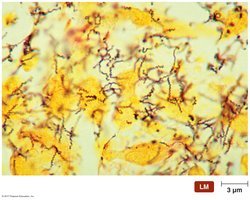
Treponema pallidum pallidum (Syphilis)
Treponema pallidum pallidum is the causative agent of syphilis, a sexually transmitted disease. It can also be transmitted congenitally from mother to fetus.
Transmission: Sexual contact; congenital transmission possible.
Phases of Disease: Primary (chancre), secondary (rash), latent, and tertiary (gummas, neurological symptoms).
Congenital Syphilis: May cause fetal death, mental retardation, and malformations.
Diagnosis: Antibody tests against bacterial antigens; tertiary syphilis is difficult to diagnose.
Treatment: Penicillin (ineffective against tertiary syphilis).
Prevention: Abstinence and safe sex practices.
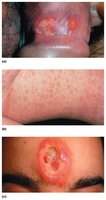
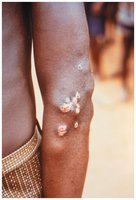
Nonvenereal Treponemal Diseases
These diseases, including bejel, yaws, and pinta, are seen in impoverished children and cause skin lesions. They are transmitted via direct contact with skin lesions.
Bejel: T. pallidum endemicum
Yaws: T. pallidum pertenue
Pinta: T. carateum
Treatment: Penicillin.
Prevention: Limiting contact with skin lesions.
Leptospira interrogans (Leptospirosis)
Leptospira interrogans are motile, obligately aerobic bacteria found in wild and domestic animals. Leptospirosis occurs when bacteria enter through skin or mucous membranes and spread via the bloodstream, causing hemorrhaging and liver/kidney dysfunction.
Transmission: Contact with contaminated water or animal urine.
Treatment: Intravenous penicillin.
Prevention: Vaccine for livestock and pets; eradication is impractical due to animal reservoirs.
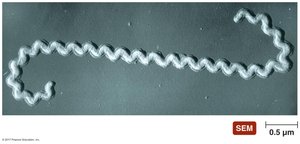
Borrelia
Borrelia species are lightly staining spirochetes causing relapsing fever and Lyme disease.
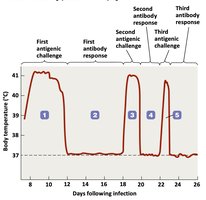
Relapsing Fever: Caused by Borrelia recurrentis (louse-borne) and other species (tick-borne). Characterized by recurring episodes of septicemia and fever due to antigenic variation.
Diagnosis: Observation of spirochetes in blood.
Treatment: Antimicrobial drugs.
Prevention: Avoidance of ticks and lice, good hygiene, and use of repellents.
Lyme Disease
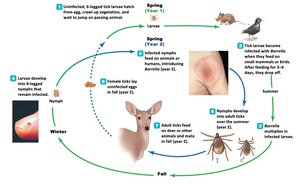
Lyme disease is caused by Borrelia burgdorferi and transmitted via the bite of hard ticks (Ixodes genus). The tick life cycle is crucial for understanding the spread of Lyme disease.
Phases of Disease: Expanding red "bull's-eye" rash, neurological symptoms/cardiac dysfunction, severe arthritis.
Diagnosis: Based on signs, symptoms, and serological tests.
Treatment: Antimicrobial drugs are effective in early stages; later stages are harder to treat.
Prevention: Avoiding ticks.

Curviform Gram-Negative Vibrios
Vibrio
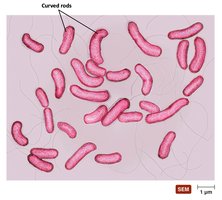
Vibrio species are curved, Gram-negative rods found in aquatic environments. Vibrio cholerae is the most clinically significant, causing cholera, a severe diarrheal disease.
Transmission: Ingestion of contaminated food and water.
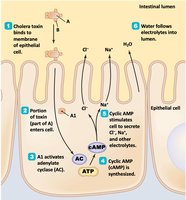
Pathogenesis: Cholera toxin causes massive fluid and electrolyte loss ("rice-water stool").
Treatment: Fluid and electrolyte replacement; antimicrobials can reduce exotoxin production.
Prevention: Proper sewage and water treatment; oral vaccine available.
Other Vibrio Species
Other Vibrio species include V. parahaemolyticus (gastroenteritis from shellfish) and V. vulnificus (septicemia and wound infections from contaminated shellfish or seawater).
V. parahaemolyticus: Gastroenteritis from shellfish ingestion.
V. vulnificus: Septicemia and wound infections from contaminated shellfish or seawater.
Campylobacter jejuni
Campylobacter jejuni is likely the most common cause of gastroenteritis in the United States. Infection is usually acquired from contaminated poultry, food, milk, or water.
Symptoms: Self-limiting bloody and frequent diarrhea.
Prevention: Proper food handling and preparation.
Helicobacter pylori
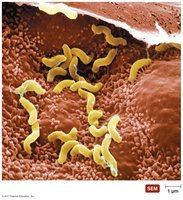
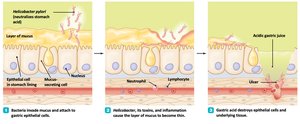
Helicobacter pylori is a slightly helical, motile bacterium that colonizes the stomach and is associated with gastritis and peptic ulcers. It possesses several virulence factors, including proteins that inhibit stomach acid, flagella for motility, adhesins for binding, and enzymes to neutralize acid.
Transmission: Ingestion from contaminated hands, water, or fomites.
Diagnosis: Positive urease test and biochemical identification.
Treatment: Antimicrobials and acid-inhibiting drugs.
Prevention: Good hygiene, sewage treatment, and food handling.
Rickettsias
General Characteristics
Rickettsias are extremely small, obligate intracellular parasites transmitted via arthropod vectors. They appear almost wall-less due to minimal peptidoglycan and possess functional genes for protein synthesis, ATP production, and reproduction. Four genera cause human disease: Rickettsia, Orientia, Ehrlichia, and Anaplasma.
Rickettsia
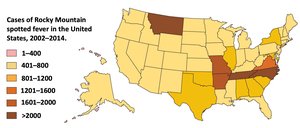
R. rickettsii: Causes Rocky Mountain spotted fever, transmitted by hard ticks. Symptoms include rash on trunk and appendages; can be fatal if untreated.
R. prowazekii: Causes epidemic typhus, transmitted by body lice. Symptoms include high fever, depression, and rash; prevalent in crowded, unsanitary conditions.
R. typhi: Causes murine typhus, transmitted by fleas from rodents. Symptoms include fever, headache, chills, muscle pain, and nausea; not usually fatal.
Chlamydias
General Characteristics
Chlamydias are obligate intracellular bacteria lacking cell walls, with two membranes and a unique developmental cycle involving elementary bodies (EBs) and reticulate bodies (RBs). Both forms can be found within the phagosome of a host cell.
No peptidoglycan: Unique among bacteria.
Developmental cycle: Alternates between infectious EBs and replicative RBs.
Intracellular growth: Requires host cell for survival.
Chlamydia trachomatis
This species infects the conjunctiva and mucous membranes, causing the most common reportable sexually transmitted disease in the U.S. and a major cause of eye infections worldwide.
Lymphogranuloma venereum: Genital lesions and buboes.
Nongonococcal urethritis, proctitis, and trachoma: Trachoma is the leading cause of nontraumatic blindness.
Diagnosis: Demonstration of bacteria inside cells from infection site.
Treatment: Antibiotics for genital and ocular infections; surgical correction for trachoma deformities.
Prevention: Abstinence, prompt antibacterial treatment to prevent blindness.
Chlamydia pneumoniae
Causes bronchitis, pneumonia, and sinusitis, usually presenting as malaise and chronic cough. Severe cases can resemble atypical pneumonia. Treated with doxycycline or azithromycin.
Chlamydia psittaci
Causes ornithosis, a disease of birds that can be transmitted to humans, usually resulting in flulike symptoms. Greatest risk is to those handling birds. Treated with tetracycline or azithromycin.
Mycoplasmas
General Characteristics
Mycoplasmas are the smallest free-living microbes, lacking cell walls and many metabolic enzymes. They require various growth factors and can colonize mucous membranes of the respiratory and urinary tracts.
Diseases: Associated with pneumonia and urinary tract infections.
Mycoplasma pneumoniae
Attaches to epithelial cells of the respiratory tract, impairing mucus removal and causing primary atypical pneumonia ("walking pneumonia"). Spread by nasal secretions, especially among children 5–15 years old.
Diagnosis: Difficult due to small size and slow growth in culture.
Treatment: Macrolides, doxycycline, or fluoroquinolones.
Prevention: Proper hygiene and avoidance of aerosols and contaminated fomites.
