 Back
BackMuscles: Structure, Function, and Classification
Study Guide - Smart Notes
 Tailored notes based on your materials, expanded with key definitions, examples, and context.
Muscles
Origin and Insertion
Muscles attach to bones at two main points: the origin and the insertion. Understanding these attachment sites is essential for predicting muscle action and movement.
Origin: The fixed or less movable attachment site of a muscle, typically proximal on the limb.
Insertion: The movable attachment site, usually distal, which moves toward the origin during contraction.
Movement: The type of movement produced (e.g., flexion, extension, abduction, adduction, rotation) depends on the relative positions of the origin and insertion.
Key Principle: During muscle contraction, the insertion moves toward the origin.
Example: If a muscle's origin is on the pubis and its insertion is on the xiphoid process, contraction will bring the xiphoid process closer to the pubis, resulting in flexion of the trunk.
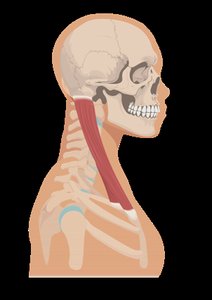
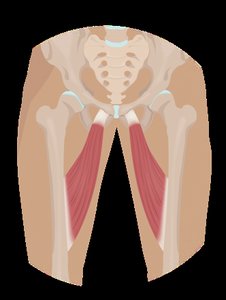
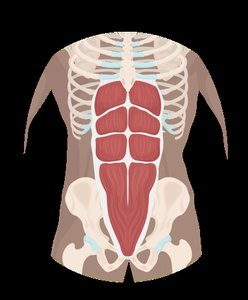
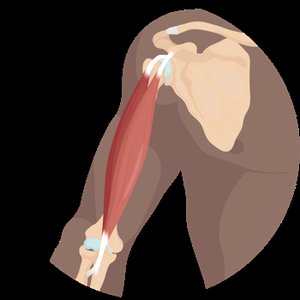
Muscle Actions
Muscles work together to produce coordinated movements. Each muscle can play different roles depending on the movement:
Agonist (Prime Mover): The main muscle responsible for a specific movement.
Antagonist: The muscle that opposes the action of the agonist.
Synergist: A muscle that assists the agonist by adding extra force or reducing unnecessary movement.
Fixator: A muscle that stabilizes the origin of the agonist, allowing efficient movement.
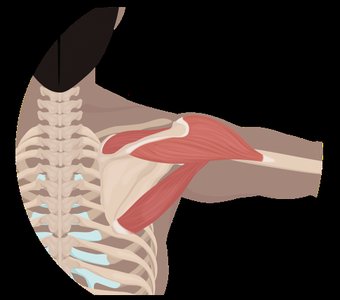
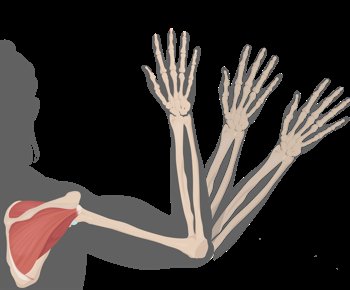
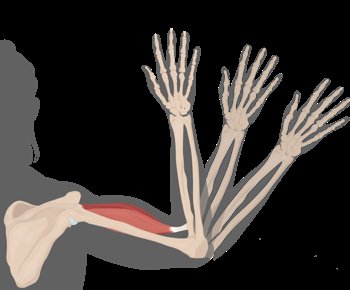
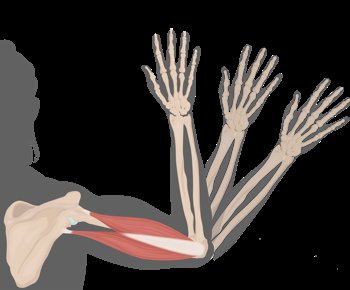
Example: During elbow flexion, the biceps brachii is the agonist, the triceps brachii is the antagonist, and the brachialis acts as a synergist. The rotator cuff muscles serve as fixators by stabilizing the shoulder joint.
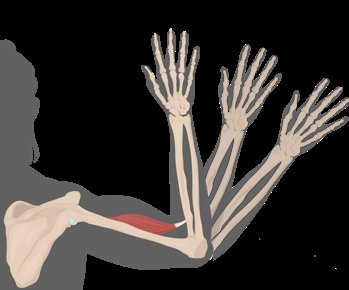
Levers in the Musculoskeletal System
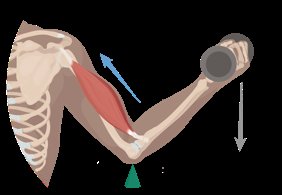
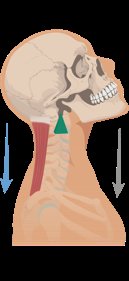
Muscles generate force using lever systems, which consist of a rigid rod (bone), a fulcrum (joint), and forces (muscle contraction and load). The arrangement of these components determines the mechanical advantage or disadvantage of the movement.
Load: The weight or resistance to be moved.
Fulcrum: The pivot point, typically a joint.
Effort: The force applied by the muscle.
Mechanical Advantage: When the fulcrum is closer to the load, less effort is needed but movement is slower and less extensive.
Mechanical Disadvantage: When the fulcrum is farther from the load, more effort is needed but movement is faster and has a greater range.
Types of Levers:
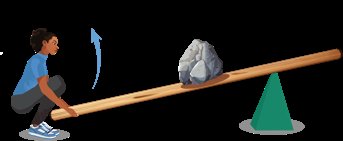
First-Class Lever: Fulcrum is between the load and the effort (e.g., neck muscles).
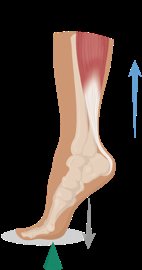
Second-Class Lever: Load is between the fulcrum and the effort (e.g., standing on tiptoe).
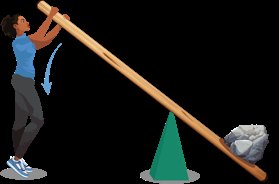
Third-Class Lever: Effort is between the fulcrum and the load (e.g., biceps brachii flexing the forearm).
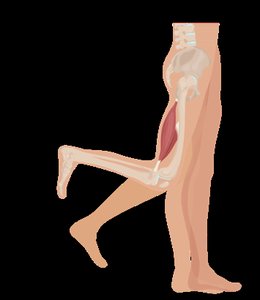
Fascicle Arrangements
The arrangement of muscle fascicles (bundles of muscle fibers) affects both the force a muscle can generate and its range of motion.
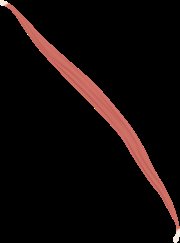
Parallel: Fascicles run parallel to the long axis of the muscle (e.g., sartorius). Optimized for range of motion.
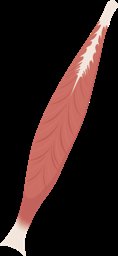
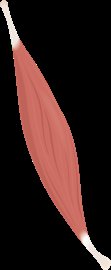
Fusiform: Spindle-shaped with a central belly (e.g., biceps brachii).
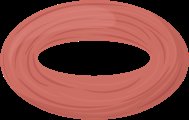
Circular (Sphincter): Fascicles arranged in concentric rings (e.g., orbicularis oculi).
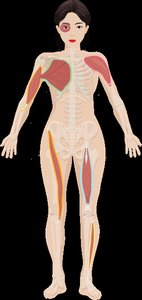
Convergent: Broad origin with fascicles converging toward a single tendon (e.g., pectoralis major).
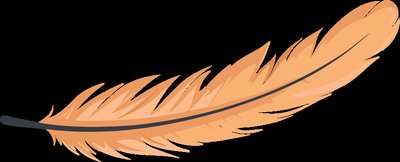
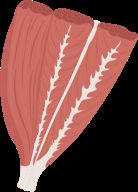
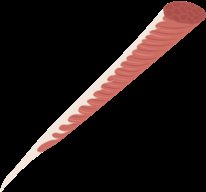
Pennate: Short fascicles attach obliquely to a central tendon. Includes unipennate, bipennate, and multipennate arrangements (e.g., rectus femoris, deltoid).
Key Principle: Muscles with more fibers (pennate) generate more force, while those with longer fibers (parallel) have greater range of motion.
Muscle Naming Conventions
Muscle names often describe their characteristics, which can help in identifying and remembering them. The main conventions include:
Body Region: Indicates the location (e.g., brachialis—arm).
Shape: Describes the muscle's form (e.g., deltoid—triangular).
Size: Relative size (e.g., maximus—largest, brevis—short).
Muscle Action: The movement produced (e.g., flexor, extensor).
Direction of Fibers: Orientation of muscle fibers (e.g., rectus—straight, transverse—across).
Location of Attachments: Points of origin and insertion (e.g., sternocleidomastoid—originates on sternum and clavicle, inserts on mastoid process).
Number of Heads (Origins): Number of tendons of origin (e.g., biceps—two heads).
Muscle | Body Region | Shape | Size | Muscle Action | Direction of Fibers | Location of Attachments | Number of Heads |
|---|---|---|---|---|---|---|---|
Biceps Femoris | ✔ | ✔ | |||||
Brachioradialis | ✔ | ✔ | |||||
Transverse Abdominis | ✔ | ✔ | |||||
Serratus Anterior | ✔ | ✔ | ✔ | ||||
Flexor Hallucis Brevis | ✔ | ✔ | ✔ | ||||
Gluteus Maximus | ✔ | ✔ | |||||
Rhomboid Major | ✔ | ✔ | ✔ | ||||
Extensor Digitorum | ✔ | ✔ |
Example: The fibularis brevis muscle is shorter than the fibularis longus, as indicated by the terms "brevis" (short) and "longus" (long).
Example: The orbicularis oris muscle is circular in shape, as suggested by "orbicularis." The transverse abdominis muscle name indicates the direction of its fibers (transverse), not its action.
