 Back
BackMuscular System: Origin, Insertion, Actions, Levers, Fascicle Arrangements, and Muscle Naming
Study Guide - Smart Notes
 Tailored notes based on your materials, expanded with key definitions, examples, and context.
Q1. What are the definitions of muscle origin and insertion, and how do they relate to movement?
Background
Topic: Muscle Attachments and Movement
This question tests your understanding of the anatomical terms "origin" and "insertion" as they relate to muscle function and movement.
Key Terms:
Origin: The fixed attachment site of a muscle, typically proximal or closer to the center of the body.
Insertion: The movable attachment site, usually distal or farther from the center of the body.
Step-by-Step Guidance
Recall that muscles contract to pull on bones, causing movement at joints.
Identify which attachment (origin or insertion) is typically stationary during contraction, and which moves.
Think about how the direction of muscle contraction determines the movement produced.
Try solving on your own before revealing the answer!
Q2. During a muscle contraction, which part moves toward the other: the origin or the insertion?
Background
Topic: Muscle Contraction Mechanics
This question checks your understanding of the basic mechanics of muscle contraction and the roles of origin and insertion.
Key Concept:
During contraction, one attachment site moves toward the other, producing movement at a joint.
Step-by-Step Guidance
Recall the definitions of origin (fixed) and insertion (movable).
Consider what happens to the insertion and origin during contraction—does the movable part approach the fixed part, or vice versa?
Think about examples, such as flexing your arm at the elbow.
Try solving on your own before revealing the answer!
Q3. The flexor carpi ulnaris attaches to the humerus and the base of the 5th metacarpal. Which attachment is the origin?
Background
Topic: Identifying Muscle Origins and Insertions
This question asks you to use knowledge of muscle actions and attachment sites to determine which is the origin.
Key Terms:
Flexion and Adduction: Movements performed by the flexor carpi ulnaris at the wrist.
Humerus: Proximal bone of the upper limb.
5th Metacarpal: Bone in the hand, distal to the humerus.
Step-by-Step Guidance
Recall that the origin is usually the more proximal and stationary attachment.
Identify which bone (humerus or 5th metacarpal) is closer to the trunk of the body.
Consider which attachment would move during wrist flexion and adduction.
Try solving on your own before revealing the answer!
Q4. Identify the insertion of the masseter muscle from the following options: Temporal Bone, Zygomatic, Mandible, Maxilla.
Background
Topic: Muscle Attachments in Mastication
This question tests your knowledge of the muscles involved in chewing and their attachment sites.
Key Terms:
Masseter: A major muscle of mastication (chewing).
Insertion: The site where the muscle attaches to the bone that moves during contraction.
Step-by-Step Guidance
Recall the function of the masseter muscle (elevating the mandible).
Think about which bone moves during chewing (mandible or others listed).
Match the muscle's action to the correct insertion site from the options.
Try solving on your own before revealing the answer!
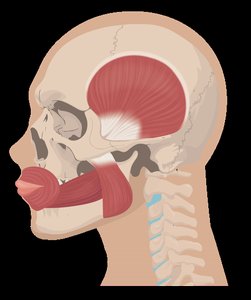
Q5. What are the roles of agonist, antagonist, synergist, and fixator muscles in movement?
Background
Topic: Muscle Actions and Coordination
This question explores how different muscles work together to produce and control movement.
Key Terms:
Agonist (Prime Mover): Main muscle responsible for a movement.
Antagonist: Muscle that opposes the action of the agonist.
Synergist: Muscle that assists the agonist.
Fixator: Muscle that stabilizes the origin of the agonist.
Step-by-Step Guidance
Define each role and consider how they interact during a typical movement (e.g., flexing the elbow).
Think about which muscle initiates the movement and which resists or controls it.
Identify how synergists and fixators contribute to smooth, controlled motion.
Try solving on your own before revealing the answer!
Q6. For the movement of lifting your arm to the side, identify the agonist, antagonist, and likely location of a synergist.
Background
Topic: Muscle Actions in Abduction
This question asks you to apply your knowledge of muscle roles to a specific movement (arm abduction).
Key Terms:
Abduction: Movement of a limb away from the midline of the body.
Deltoid: Common agonist for arm abduction.
Step-by-Step Guidance
Identify the main muscle responsible for lifting the arm to the side (agonist).
Determine which muscle would oppose this movement (antagonist).
Consider where a synergist might be located to assist the agonist.
Try solving on your own before revealing the answer!
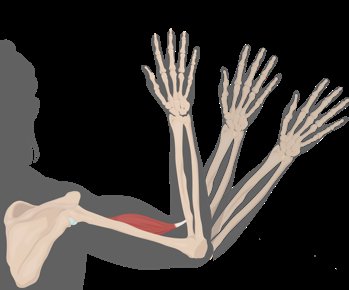
Q7. True or False: A fixator works to stabilize the insertion of the antagonist.
Background
Topic: Muscle Stabilization
This question tests your understanding of the specific role of fixator muscles during movement.
Key Concept:
Fixators stabilize a part of the body to allow efficient action of the agonist.
Step-by-Step Guidance
Recall the definition of a fixator and what it stabilizes during movement.
Consider whether the fixator acts on the origin or insertion, and whether it relates to the agonist or antagonist.
Try solving on your own before revealing the answer!
Q8. The genioglossus sticks out your tongue, and the styloglossus pulls it back in. What is the role of the styloglossus in this movement?
Background
Topic: Muscle Actions—Agonist vs. Antagonist
This question asks you to classify the role of a muscle based on its action relative to another muscle.
Key Terms:
Agonist: Muscle causing the primary movement.
Antagonist: Muscle causing the opposite movement.
Step-by-Step Guidance
Identify the primary movement (sticking out the tongue) and the muscle responsible (genioglossus).
Determine what role the styloglossus plays if it reverses this movement.
Try solving on your own before revealing the answer!
Q9. Which statement is most likely true about the gastrocnemius, soleus, and tibialis anterior muscles based on their location?
Background
Topic: Muscle Location and Function
This question tests your ability to infer muscle relationships (antagonist, synergist, fixator) based on anatomical location.
Key Terms:
Posterior: Back side of the body (gastrocnemius, soleus).
Anterior: Front side of the body (tibialis anterior).
Step-by-Step Guidance
Recall that muscles on opposite sides of a joint often act as antagonists.
Consider which muscles are likely to work together (synergists) or oppose each other (antagonists).
Try solving on your own before revealing the answer!
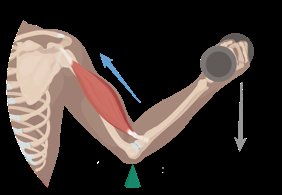
Q10. What are the components of a lever system in the body, and how does the location of the fulcrum affect mechanical advantage?
Background
Topic: Levers in the Muscular System
This question explores how muscles use bones and joints as levers to produce movement.
Key Terms:
Lever: Rigid bar (bone).
Fulcrum: Pivot point (joint).
Load: Weight or resistance to be moved.
Effort: Force applied by muscle contraction.
Step-by-Step Guidance
Identify the three main components of a lever system: lever, fulcrum, and load.
Understand how the position of the fulcrum relative to the load and effort determines mechanical advantage or disadvantage.
Recall that a fulcrum closer to the load increases force, while a fulcrum closer to the effort increases speed and range of motion.
Try solving on your own before revealing the answer!
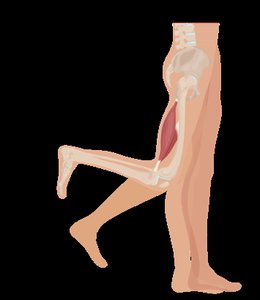
Q11. In what type of lever is the force applied between the fulcrum and the load?
Background
Topic: Types of Levers
This question tests your ability to classify levers based on the arrangement of fulcrum, load, and effort.
Key Terms:
First-Class Lever: Fulcrum between load and effort.
Second-Class Lever: Load between fulcrum and effort.
Third-Class Lever: Effort between fulcrum and load.
Step-by-Step Guidance
Recall the three classes of levers and their arrangements.
Identify which class has the effort applied between the fulcrum and the load.
Try solving on your own before revealing the answer!
Q12. Which fascicle arrangement is most well suited to a muscle that needs to generate a lot of force over a small distance?
Background
Topic: Fascicle Arrangements and Muscle Function
This question tests your understanding of how muscle fiber arrangement affects force and range of motion.
Key Terms:
Pennate: Short fibers attach obliquely to a tendon; can be unipennate, bipennate, or multipennate.
Fusiform: Spindle-shaped muscle with a central belly.
Circular: Fibers arranged in a ring.
Step-by-Step Guidance
Recall that force generation is related to the number of fibers in parallel.
Consider which arrangement allows for the most fibers in a given area.
Think about the trade-off between force and range of motion for each arrangement.
Try solving on your own before revealing the answer!
Q13. Based on the name, how does the fibularis brevis compare to the fibularis longus?
Background
Topic: Muscle Naming Conventions
This question tests your ability to interpret muscle names based on Latin/Greek roots and anatomical terminology.
Key Terms:
Brevis: Short.
Longus: Long.
Step-by-Step Guidance
Break down the names into their Latin/Greek roots.
Compare the meanings of "brevis" and "longus" to infer the relative size or length of each muscle.
Try solving on your own before revealing the answer!
Q14. Based on the name, how would you expect the orbicularis oris muscle to be shaped?
Background
Topic: Muscle Naming and Shape
This question asks you to use the name of a muscle to predict its shape.
Key Terms:
Orbicularis: Circular.
Oris: Refers to the mouth.
Step-by-Step Guidance
Analyze the root "orbicularis" to determine the likely shape.
Consider the function of the muscle around the mouth.
Try solving on your own before revealing the answer!
Q15. Which of the following muscle names does NOT provide information about the muscle’s actions: Flexor pollicis brevis, Abductor digiti minimi, Transverse abdominis, Extensor carpi radialis longus?
Background
Topic: Muscle Naming and Function
This question tests your ability to distinguish between muscle names that describe action and those that do not.
Key Terms:
Flexor, Abductor, Extensor: Indicate the action of the muscle.
Transverse: Refers to the direction of fibers, not action.
Step-by-Step Guidance
Identify which names include terms that describe movement (action).
Determine which name only describes orientation or location, not action.
Try solving on your own before revealing the answer!
